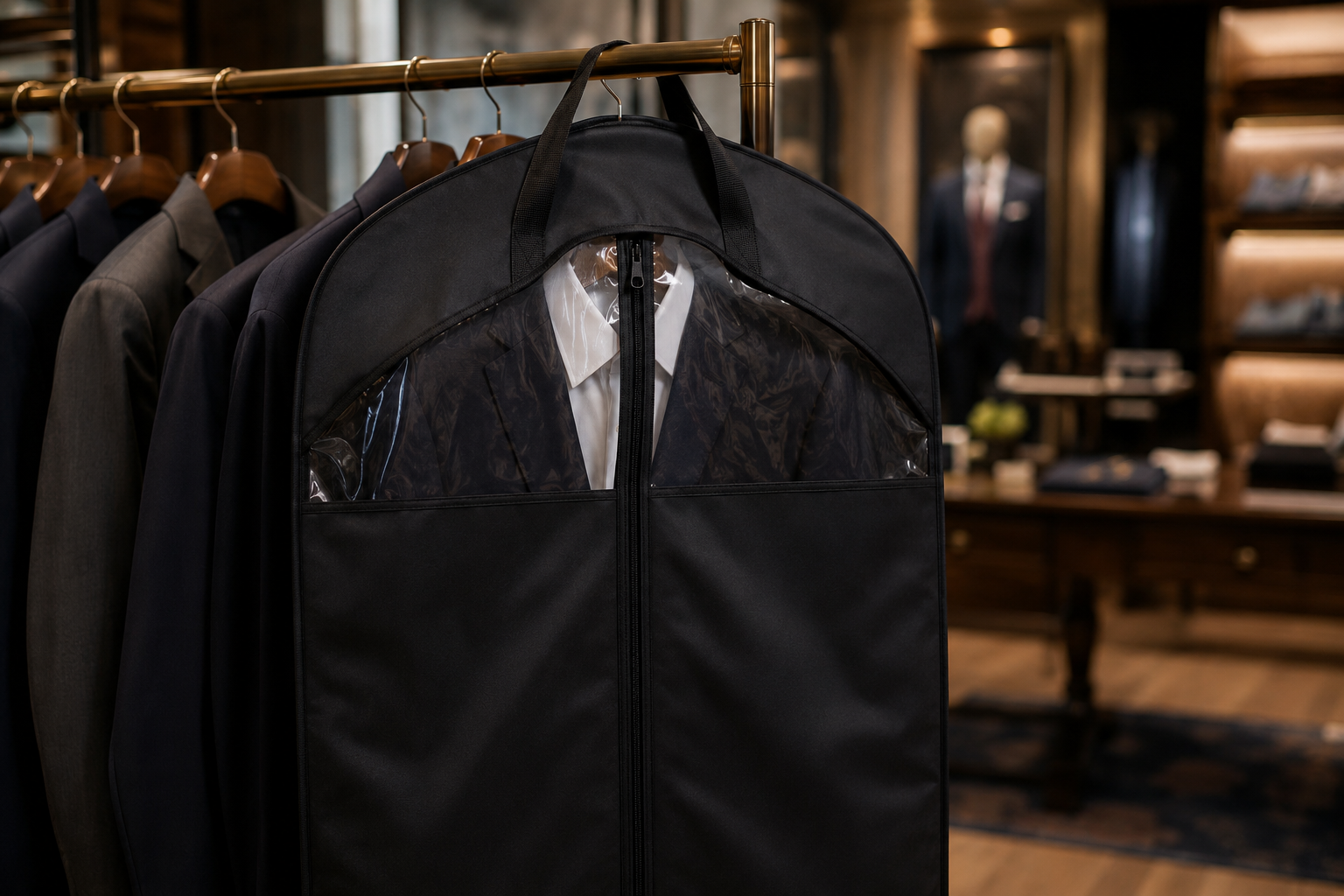
Custom Clothes Bags: Better Packaging for Apparel Brands
Clothing may be the reason a customer buys, but how it leaves the store or arrives at their door shapes the final impression. A thoughtfully designed bag makes the purchase feel complete, protects the garments inside, and gives the brand another opportunity to present itself with purpose.
For boutiques, fashion labels, department stores, formalwear retailers, designers, and ecommerce brands, custom clothes bags can serve several different roles. Some need to protect hanging garments. Others need to carry folded clothing comfortably through a retail environment. Premium purchases may call for a more structured presentation, while gift purchases may need packaging that feels finished without requiring another layer of wrapping.
The best solution starts with the clothing, the customer, and the way the purchase moves from the business into the customer’s hands.
What Are Custom Bags For Clothing?
Clothing bags aren’t one specific type of packaging. The category includes several formats designed around different garments, buying environments, and presentation goals.
An apparel retailer might use:
- Garment bags for suits, dresses, gowns, coats, uniforms, and other hanging apparel.
- Euro tote bags for premium boutique and department store purchases.
- Custom paper shopping bags for folded garments and everyday retail transactions.
- Larger shopping bags for multi-item orders or bulkier apparel.
- Coordinated bags for shoes, accessories, and clothing purchased together.
Each format serves a different purpose. A garment bag primarily addresses protection, storage, and transportation. A premium shopping bag focuses more heavily on carryout convenience and presentation. Many apparel businesses benefit from using several formats rather than trying to make one bag work for every purchase.
This approach fits naturally within a larger custom packaging strategy for clothing brands that can also include boxes, tissue, stickers, ribbons, and other presentation elements.
Match The Bag To The Clothing Inside
Start with the product itself. A lightweight T-shirt doesn’t have the same requirements as a tailored suit, and a single blouse shouldn’t leave the store in the same bag as a customer’s entire seasonal wardrobe purchase.
Start by looking at actual garment dimensions and how customers typically shop.
Consider:
- Whether garments are folded or transported on hangers.
- The average number of items purchased in one transaction.
- How much volume bulky sweaters, jackets, denim, or outerwear require.
- Whether footwear or accessories are frequently added to clothing purchases.
- How much room is needed for tissue or other presentation materials.
- Whether the customer will carry the bag for a few minutes or through an extended shopping trip.
Bag size affects more than capacity. A bag that’s far too large can make a smaller purchase feel lost inside the packaging. A bag that’s too small can compress clothing, wrinkle garments, or create an awkward customer experience.
A well-planned apparel packaging program often includes several sizes that cover the brand’s most common purchasing patterns.
Garment Bags Protect Apparel And Extend The Presentation
Some clothing should stay on the hanger from the moment it leaves the retailer.
Suits, formal dresses, bridalwear, gowns, coats, uniforms, tailored clothing, and other specialty garments often benefit from a garment bag that helps protect the product during transportation and storage. Instead of folding an item into a shopping bag, the garment can maintain its shape while remaining easier for the customer to carry.
When customizing garment bags, consider the garment size, closure style, handle placement, construction, and exterior branding.
Branding can also turn a purely functional piece of packaging into part of the overall presentation. Logo placement, color, material selection, and other visual elements can carry the same identity customers see throughout the store, website, tags, and additional packaging.
For businesses selling high-value hanging garments, that consistency helps customers leave with packaging that feels appropriate for what they just purchased.
Euro Tote Bags Create A More Polished Retail Experience
Euro totes are a strong option for apparel brands looking for a more structured retail shopping bag. Their shape and presentation can work especially well for boutiques, fashion retailers, luxury collections, department stores, and branded events.
The design can stay minimal or become a more detailed part of the brand identity. Paper selection, printing, handles, and finishing treatments can all influence the final appearance.
Depending on the desired presentation, brands may consider details such as:
- Matte or gloss finishes.
- Foil accents.
- Embossed or debossed elements.
- Spot treatments.
- Ribbon, rope, or other handle styles.
- Interior printing.
- Seasonal artwork or collection-specific graphics.
The goal isn’t to add every possible finishing treatment. A bag should look like it belongs to the brand.
A clean design with carefully selected materials can be just as effective as a highly decorated package. Brands considering this format can also explore how euro tote bags work as premium retail packaging.
Choose Bag Sizes Around Real Customer Purchases
Sizing is one of the most practical packaging decisions an apparel business can make.
Instead of selecting bag dimensions in isolation, look at what customers actually buy. Fold the garments the way they would normally be packed. Add tissue if it will be part of the final presentation. Test combinations of common products and larger purchases.
A boutique might need a smaller format for tops and accessories, a medium bag for typical clothing purchases, and a larger option for coats, multiple garments, or larger orders.
This creates better proportions and helps reduce situations where a small purchase disappears inside an oversized bag.
Handle length and placement should also be considered in sizing. A filled bag needs to remain comfortable and practical for the customer to carry.
Use Materials And Finishes To Reinforce The Brand
Packaging should feel connected to the clothing inside it.
A fashion label built around understated luxury may prefer restrained artwork, substantial paper, subtle printing, and a carefully selected handle. A colorful boutique might take a more expressive approach with patterns, bold graphics, or collection-specific artwork.
The physical details can support that visual direction.
Paper texture, surface finish, typography, color, handle material, logo placement, interior printing, and finishing treatments all contribute to how the finished package feels.
Consistency is more valuable than decoration for its own sake. Customers should be able to move from the store environment to the packaging and recognize the same visual language.
That same approach can extend across bags, boxes, tissue, stickers, ribbons, and other packaging components.
Build A Connected Apparel Packaging System
A clothing brand doesn’t have to rely on one piece of packaging to carry the entire experience.
Shopping bags can work alongside garment bags, folding boxes, tissue, ribbons, stickers, cards, and additional accessories. Each piece can serve a different purpose while still looking like part of one system.
Color is one way to create that connection, but it isn’t the only option. Brands can also coordinate logo placement, typography, artwork, material textures, finishing techniques, and structural details.
For example, a boutique could use a premium euro tote for retail purchases, a garment bag for hanging products, and a folding box for ecommerce orders while maintaining the same visual identity across all three.
This creates continuity from the store to the customer’s home and supports a more cohesive apparel packaging experience from purchase through unboxing.
Think About Retail, Ecommerce, And Gifting Separately
The same brand may need packaging to perform very differently depending on where the purchase takes place.
In retail, the shopping bag becomes part of the physical transaction. It needs to fit the merchandise, feel comfortable to carry, and present the brand well as the customer leaves the store.
Ecommerce introduces another set of considerations. The exterior shipping package handles much of the transportation, while the interior clothing packaging can focus on keeping garments organized and creating a polished reveal once the order is opened.
Gift purchases add another layer. Tissue, ribbons, premium shopping bags, folding boxes, and coordinated finishing details can help apparel packaging feel ready to give without requiring customers to start over with separate wrapping.
Brands can also create apparel packaging that doubles as gift wrap for holidays, special collections, events, and everyday gifting occasions.
Build The Bag Around The Brand, Not A Template
The strongest packaging starts with questions, not a predetermined format.
What clothing is going inside? How is it folded or stored? What does a typical customer purchase? Will the bag be carried through a shopping district, taken directly to a car, shipped inside another package, or given as a gift?
The answers help determine the right structure, proportions, materials, handles, printing, and finishing details.
A clothing brand with several product categories may need a small family of bags rather than one universal solution. Planning the system around real products and purchasing habits creates packaging that looks better and works better.
Create Custom Apparel Bags With Prime Line Packaging
At Prime Line Packaging, we help brands develop packaging around the products they’re actually selling and the customer experience they want to create.
That can include selecting bag formats and sizes, evaluating materials and handles, planning printing and finishes, and coordinating bags with boxes, tissue, accessories, and other packaging components.
Whether you’re developing a boutique shopping bag, packaging for a seasonal collection, garment bags for specialty apparel, or a larger retail packaging program, our team can help bring the pieces together.
Bring us the clothing, the brand direction, and the experience you want customers to have. We’ll help build the packaging around it. Start Your Project.
Frequently Asked Questions About Custom Clothes Bags
What Are Custom Clothes Bags?
Custom clothing bags are packaging designed specifically around apparel products and a brand’s visual identity. They can include retail shopping bags, euro totes, garment bags, and other formats used to package clothing. The right option depends on the garment, the sales environment, and how the customer will transport or receive the purchase.
What Type Of Bag Is Best For A Clothing Store?
The best bag depends on what the store sells and how customers typically shop. A boutique selling folded apparel may benefit from several shopping bag sizes, while a formalwear retailer may need garment bags for suits and dresses. Many clothing businesses use more than one format to cover different types of purchases.
What Is The Difference Between A Garment Bag And A Shopping Bag?
A garment bag is generally designed to cover and protect clothing that remains on a hanger. Shopping bags are designed primarily to carry purchases such as folded apparel, accessories, footwear, or multiple items. Both formats can be customized to support a consistent brand presentation.
What Clothing Should Be Packaged In Garment Bags?
Garment bags work especially well for apparel that benefits from remaining on a hanger. Common examples include suits, dresses, gowns, coats, bridalwear, uniforms, tailored clothing, and specialty garments. Choose the exact size and construction based on the garments the business sells.
Can Clothing Bags Be Custom Printed?
Custom printing lets apparel brands carry their visual identity onto the packaging. Logos, brand colors, patterns, artwork, interior printing, and selected finishing details can all contribute to the final presentation. The design should stay consistent with the clothing, store environment, and other branded materials.
What Size Bag Should An Apparel Brand Use?
Base bag dimensions on real product sizes and typical customer purchases. Brands should test folded garments, multi-item combinations, accessories, and any tissue or inserts that will normally go inside. Using several practical sizes often looks better than relying on one oversized bag.
Can Clothing Bags Be Used For Gift Packaging?
Yes. Premium shopping bags can be coordinated with tissue, ribbon, boxes, and other presentation details to create a gift-ready package. This is especially useful during holidays, seasonal promotions, events, and occasions when customers buy apparel as a gift.
Should A Clothing Brand Use More Than One Bag Size?
For many apparel retailers, multiple sizes make sense. Smaller bags can handle accessories or single lightweight garments, while larger sizes can accommodate coats, multiple products, or bulkier clothing. Creating a focused size range can improve both presentation and practicality without making the packaging program unnecessarily complicated.
How Can Prime Line Packaging Help Create Custom Bags For Clothing?
Prime Line Packaging can help apparel brands evaluate bag formats, sizing, materials, printing, handles, finishes, and coordinated packaging components. We start with the merchandise and customer experience so the finished packaging supports both presentation and function. From individual packaging pieces to broader apparel programs, the goal is to create a system that feels consistent with the brand.