Luxury Retail Shopping Bags: Design, Materials and Branding
A beautifully packaged purchase can make a lasting impression long after a customer leaves the store. From the paper’s texture to the quality of the handles and the placement of a brand’s logo, every element of a shopping bag shapes the overall retail experience. For luxury brands, these details matter even more because customers expect packaging that reflects the quality of the merchandise inside.
Luxury retail shopping bags do more than transport merchandise. They communicate a brand’s personality, complement its visual identity, and create a sense of exclusivity around each purchase. Whether customers are shopping at an upscale fashion boutique, jewelry store, beauty retailer, or specialty gift shop, premium packaging helps create a more memorable experience.
At Prime Line Packaging, we understand that shopping bags represent an important part of a brand’s presentation. Choosing the right materials, construction, printing, and finishing details allows businesses to create custom packaging that looks exceptional while meeting the practical demands of everyday retail.
What Makes A Retail Shopping Bag Feel Luxurious?
Luxury shopping bags stand apart from standard retail packaging through their construction, appearance, and attention to detail. A premium bag should feel substantial without being unnecessarily heavy, maintain its shape when carrying merchandise, and feature materials that complement the products being sold.
The difference often becomes apparent the moment a customer picks up the bag. Thick paper, reinforced handles, smooth surfaces, and carefully applied decorative elements can create a more refined presentation. Even subtle features, such as paper texture or how the bag opens, shape the customer’s experience.
Several characteristics help create a luxury appearance:
- Premium Materials: Heavyweight paper, specialty textures, and carefully selected surface treatments enhance the bag’s look and feel.
- Thoughtful Construction: Reinforced bottoms, structured side panels, and dependable handles support both appearance and functionality.
- Custom Branding: Well-positioned logos, coordinated colors, and distinctive graphic designs reinforce brand recognition.
- Decorative Finishes: Foil stamping, embossing, spot UV, and specialty laminations add visual interest.
- Consistent Presentation: Packaging that complements other branded materials creates a more cohesive purchasing experience.
The goal isn’t necessarily to make every shopping bag elaborate. Some of the most sophisticated designs use minimal graphics, carefully selected colors, and high-quality materials to create an understated premium appearance.
Popular Types Of Luxury Retail Shopping Bags
Different retail environments require different packaging structures. A small jewelry boutique may need compact bags with ribbon handles, while a designer apparel retailer might prefer larger shopping bags with reinforced construction.
Understanding the available styles helps retailers select packaging that supports their products and branding requirements.
Euro Tote Shopping Bags
Euro tote bags are among the most recognizable premium shopping bag styles. Their structured shape, folded top edges, reinforced construction, and decorative handle options make them popular with luxury retailers.
These bags can accommodate custom printing, specialty materials, and decorative finishes, allowing retailers to develop packaging that complements their brand.
Custom Paper Shopping Bags
Custom paper bags offer considerable flexibility in sizing, appearance, and construction. Retailers can select from a range of paper materials, printing options, and handle configurations to create packaging that fits their merchandise.
These bags work particularly well for apparel, accessories, cosmetics, and specialty retail products.
Reinforced Retail Shopping Bags
Larger or heavier merchandise may require additional structural support. Reinforced bottoms, stronger handles, and carefully selected paper weights can help bags carry their intended contents securely.
These construction details are particularly useful for retailers selling footwear, multiple garments, boxed gifts, and accessories.
Choosing The Right Materials For Luxury Shopping Bags
Material selection influences how a shopping bag looks, feels, and performs. Luxury retailers should evaluate paper weight, surface texture, printing compatibility, and structural requirements before finalizing their packaging.
- Coated paper provides a smooth surface suitable for detailed graphics and vibrant printing. It can be paired with matte or gloss lamination to create different visual effects.
- Uncoated paper offers a more natural, tactile surface. Depending on the stock, its texture can create a sophisticated appearance that works particularly well with minimal branding and carefully chosen colors.
- Specialty papers introduce additional design possibilities through unique textures, subtle patterns, and decorative surfaces. These materials can complement luxury jewelry, cosmetics, fashion accessories, and premium gift products.
- Paper weight also deserves attention. Heavier stock can improve a bag’s structure, but thickness alone doesn’t guarantee strength. Handle attachment, bottom reinforcement, overall dimensions, and merchandise weight must work together.
Retailers should begin with the products they intend to package. A bag designed for lightweight cosmetics will have different requirements from one intended to carry boots or several pieces of clothing.
Custom Printing And Finishing Options That Elevate Brand Presentation
Customization lets retailers turn ordinary packaging into an extension of their brand identity. From subtle finishes to bold printed graphics, the right combination of design elements can create a shopping bag customers immediately associate with a particular store.
Foil Stamping
Foil stamping adds metallic or specialty accents to selected areas of the bag. Gold, silver, and other decorative foil treatments can highlight logos, patterns, or individual design elements.
This technique is especially well suited to jewelry stores, designer boutiques, and luxury gift retailers seeking a refined presentation.
Embossing And Debossing
Embossing creates raised design elements, while debossing presses designs into the material. Both techniques introduce texture and depth without requiring elaborate graphics.
A simple embossed logo on a solid-colored shopping bag can create an elegant presentation that feels intentional and sophisticated.
Spot UV Coating
Spot UV applies a glossy treatment to selected areas of a printed design. Retailers can use it to emphasize logos, decorative patterns, or other visual elements.
When paired with a matte background, spot UV creates contrast that draws attention to specific details.
Matte, Gloss, And Soft-Touch Finishes
The surface finish influences both the appearance and tactile experience of a shopping bag.
- Matte Finishes: Create a smooth, understated look that complements minimalist luxury branding.
- Gloss Finishes: Produce reflective surfaces that emphasize printed colors and graphics.
- Soft-Touch Finishes: Provide a velvety feel that can make the packaging more tactile and memorable.
Custom Colors And Printing
Color consistency is important for brands with an established visual identity. Custom printing allows retailers to incorporate signature colors, graphics, and logo designs into their packaging.
Coordinating bag colors with storefront signage, merchandise packaging, and other branded elements helps create a unified presentation.
Decorative Handle Options
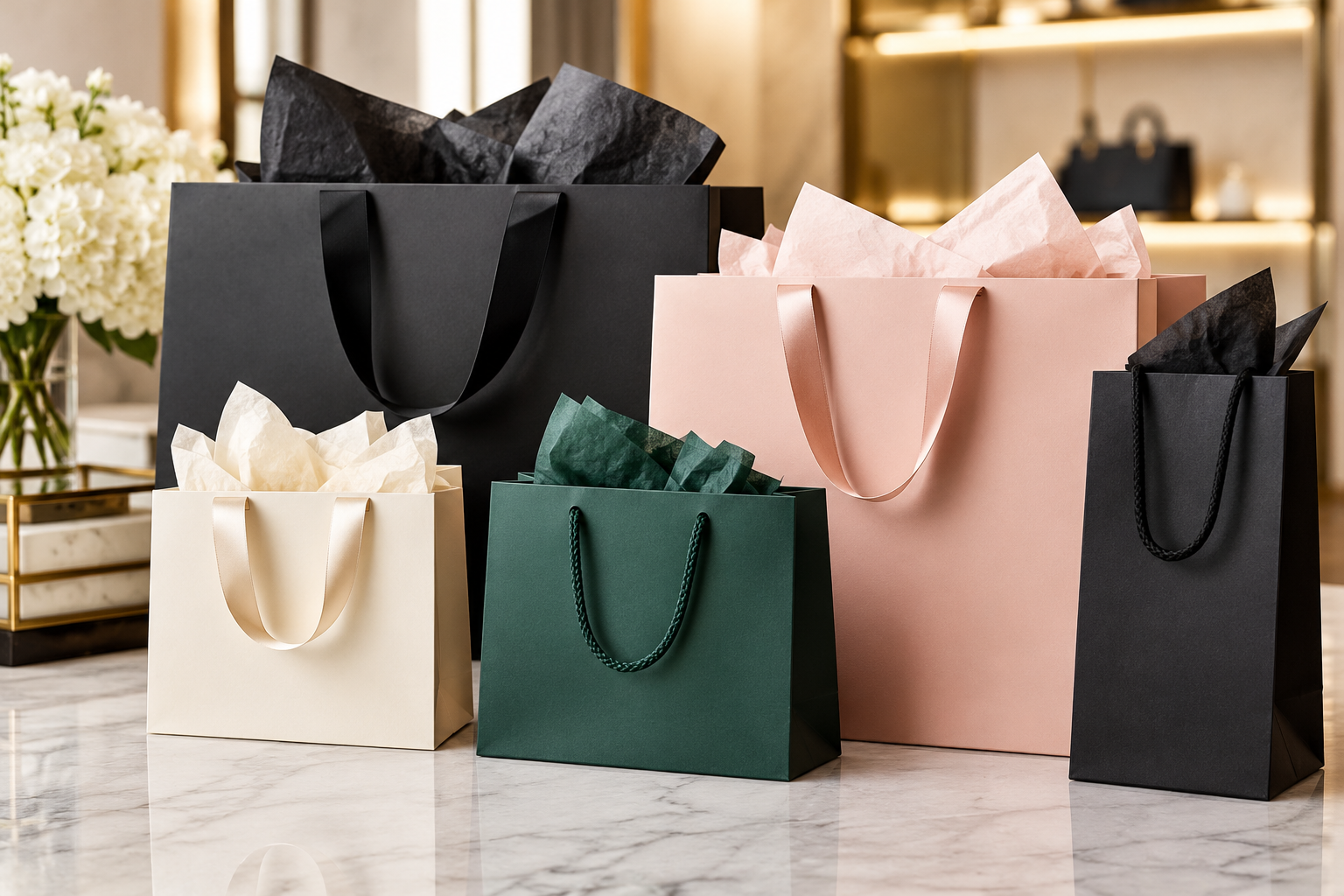
Handles are both functional and visual components of premium shopping bags. Ribbon, cotton, twill, grosgrain, and rope-style handles offer different textures and appearances.
A wide satin ribbon may suit a luxury jewelry boutique, while sturdy cotton or rope handles can complement larger apparel shopping bags.
How Luxury Shopping Bags Strengthen Brand Identity
A customer’s interaction with a brand doesn’t end at the checkout counter. The shopping bag often becomes the final physical representation of the purchasing experience, carrying the retailer’s identity beyond the store.
A thoughtfully designed bag can reinforce recognition through consistent colors, typography, and logo placement. When those elements match the store’s visual identity, customers experience a cohesive brand presentation from the sales floor to the packaging they carry home.
Shopping bags also create opportunities for visibility outside the retail environment. Customers may carry them through shopping districts, restaurants, hotels, and other public spaces, where the design can attract attention.
Premium packaging may also encourage customers to retain bags for gifting, storage, or future use, extending their visibility beyond the original purchase.
Ultimately, effective luxury packaging should feel consistent with the brand itself. A minimalist fashion retailer may prefer a clean bag with subtle embossing, while a colorful beauty brand may choose vibrant printing and decorative handles.
Designing Luxury Shopping Bags For Different Retail Industries
Luxury retail packaging is not a one-size-fits-all solution. Different industries have unique merchandise dimensions, customer expectations, and presentation requirements.
Fashion And Apparel Boutiques
Designer clothing and accessories often require larger shopping bags with enough room to accommodate folded garments, tissue paper, and branded inserts.
Structured bags with reinforced handles can provide dependable support while maintaining a polished appearance.
Jewelry And Accessories
Jewelry boutiques generally benefit from smaller shopping bags designed to hold presentation boxes securely. Compact proportions, ribbon handles, and subtle metallic accents can complement the merchandise’s elegance.
The shopping bag should feel proportionate to the product while reinforcing the premium presentation established by the jewelry box.
Cosmetics And Beauty Retailers
Beauty brands frequently use shopping bags as an extension of their product packaging. Coordinated colors, printed graphics, and specialty finishes can create consistency between the products displayed on shelves and the bags customers receive at checkout.
Luxury Gift Shops
Premium gift retailers can benefit from shopping bags that are attractive enough to become part of the gift presentation. Decorative handles, coordinated tissue paper, and specialty printing can reduce the need for additional wrapping.
High-End Department Stores
Department stores often need multiple bag sizes to accommodate a broad product assortment. A consistent design system across sizes helps maintain brand recognition while meeting different merchandise requirements.
Prime Line Packaging’s custom shopping bag collection includes options for boutiques, jewelry retailers, gift stores, and other retail environments.
What To Consider Before Ordering Custom Luxury Shopping Bags
Design is only one part of developing successful retail packaging. Businesses also need to consider functionality, purchasing requirements, and how the bags will perform during daily operations.
Before ordering custom shopping bags, retailers should evaluate several important factors.
- Bag Dimensions: Measure the products that will be placed inside, allowing adequate space for tissue paper, protective packaging, and comfortable loading.
- Weight Capacity: Consider the weight of typical purchases and select appropriate paper, handles, and reinforcement.
- Handle Comfort: Choose handles suited to the bag’s size, contents, and intended carrying experience.
- Printing Requirements: Confirm that the selected materials support the desired graphics, colors, and decorative finishes.
- Budget: Evaluate material choices, printing complexity, customization, and order quantities together.
- Storage: Consider how the bags will be stored at retail locations and how much room different sizes will require.
- Production Planning: Allow sufficient time for artwork preparation, sampling, approvals, manufacturing, and shipping.
Requesting samples can be especially useful before committing to a production order. Physical samples allow businesses to evaluate the bag’s proportions, handle comfort, texture, and overall appearance.
Businesses planning large orders should also consider maintaining a consistent core bag design across multiple merchandise categories. A coordinated packaging system can simplify purchasing while preserving visual consistency.
Creating A Cohesive Luxury Retail Packaging Experience
The shopping bag is one part of a larger packaging experience. Luxury brands can strengthen their presentation by coordinating bags with gift boxes, tissue paper, ribbons, inserts, and other packaging components.
For example, a fashion boutique might use a cream-colored shopping bag with a black embossed logo, matching tissue paper, and branded garment boxes. A jewelry retailer may prefer a compact bag with ribbon handles that complement its presentation boxes.
These coordinated details help the entire purchase feel carefully considered.
Seasonal packaging also offers opportunities for creative variation. Retailers can introduce limited-edition colors, special printing, or decorative accents for holiday collections, product launches, and exclusive events while maintaining recognizable brand elements.
The most effective packaging systems balance appearance with practicality. Every component should protect or support the merchandise while contributing to a consistent customer experience.
Create Custom Luxury Retail Shopping Bags With Prime Line Packaging
The right shopping bag can enhance merchandise presentation, reinforce your brand identity, and create a more memorable customer experience.
At Prime Line Packaging, we help retailers develop custom packaging that balances premium design with everyday functionality. From selecting materials and bag dimensions to exploring custom printing, handle styles, and specialty finishes, our team works with businesses to create shopping bags that complement their merchandise and visual identity.
Whether you’re developing packaging for a new boutique, refreshing your existing retail bags, or introducing a seasonal collection, we can help you evaluate the possibilities.
Give your brand the presentation it deserves. Contact Prime Line Packaging to discuss custom luxury shopping bags designed around your products and branding needs.
Frequently Asked Questions About Luxury Retail Shopping Bags
- What Are Luxury Retail Shopping Bags?
Luxury retail shopping bags are premium packaging solutions designed to carry merchandise while reinforcing a brand’s upscale identity. They typically incorporate quality paper materials, thoughtful construction, decorative handles, and customized printing or finishes. Fashion boutiques, jewelry stores, beauty brands, and specialty retailers frequently use them to create a more polished shopping experience.
- What Materials Are Best For Luxury Shopping Bags?
The best materials depend on the intended appearance, merchandise weight, and printing requirements. Coated paper offers a smooth surface for detailed graphics, while uncoated and specialty papers provide different textures and visual effects. Heavier paper stocks can improve structure, although handle construction and reinforcement are equally important for supporting merchandise.
- What Is The Difference Between Euro Tote Bags And Standard Paper Shopping Bags?
Euro tote bags generally feature more elaborate construction, including folded top edges, reinforced areas, and decorative handle options. Standard paper shopping bags often use simpler construction and handle designs. Both can be customized, but Euro totes are particularly popular with retailers seeking a structured, premium presentation.
- Can Luxury Shopping Bags Be Customized With A Brand Logo?
Yes. Custom luxury shopping bags can incorporate logos through printing and decorative treatments such as foil stamping, embossing, and spot UV coating. Retailers can also select custom colors and coordinate their graphics with other branded packaging. The available techniques depend on the selected bag materials and construction.
- What Handle Options Are Available For Luxury Retail Shopping Bags?
Common premium handle options include cotton rope, satin ribbon, twill, grosgrain, and other decorative materials. Each offers a different appearance and carrying experience. Retailers should choose handles based on the intended bag design, merchandise weight, and overall brand presentation.
- How Do Luxury Shopping Bags Improve The Customer Experience?
Premium shopping bags can make purchases feel more thoughtfully presented while providing customers with a convenient way to transport merchandise. Strong handles, appropriate sizing, and quality materials improve practicality, while coordinated branding reinforces the store’s identity. Attractive packaging can also be kept for gifting or other uses after purchase.
- What Size Luxury Shopping Bags Should Retailers Choose?
Bag dimensions should reflect the size, shape, and weight of the merchandise being sold. Jewelry stores may require compact bags, while clothing boutiques often need larger designs that accommodate folded garments and tissue paper. Retailers carrying multiple product categories may benefit from several coordinated bag sizes.
- Can Luxury Retail Shopping Bags Be Designed For Seasonal Collections?
Yes. Luxury shopping bags can feature seasonal colors, limited-edition artwork, specialty foil treatments, and decorative handles for holidays or promotional collections. These variations let retailers refresh their packaging while keeping recognizable brand elements. Planning seasonal packaging in advance helps accommodate design approvals and manufacturing requirements.
- What Should Businesses Consider Before Ordering Custom Luxury Shopping Bags In Bulk?
Businesses should evaluate bag dimensions, materials, construction, printing specifications, quantities, and available storage space before placing a bulk order. Reviewing physical samples and approving final artwork can help prevent unexpected results. Retailers should also discuss production requirements and delivery schedules with their packaging supplier before confirming the order.