The Accents Are the Strategy: How Smart Brands Turn Tissue, Stickers, and Insert Cards Into Performance Assets
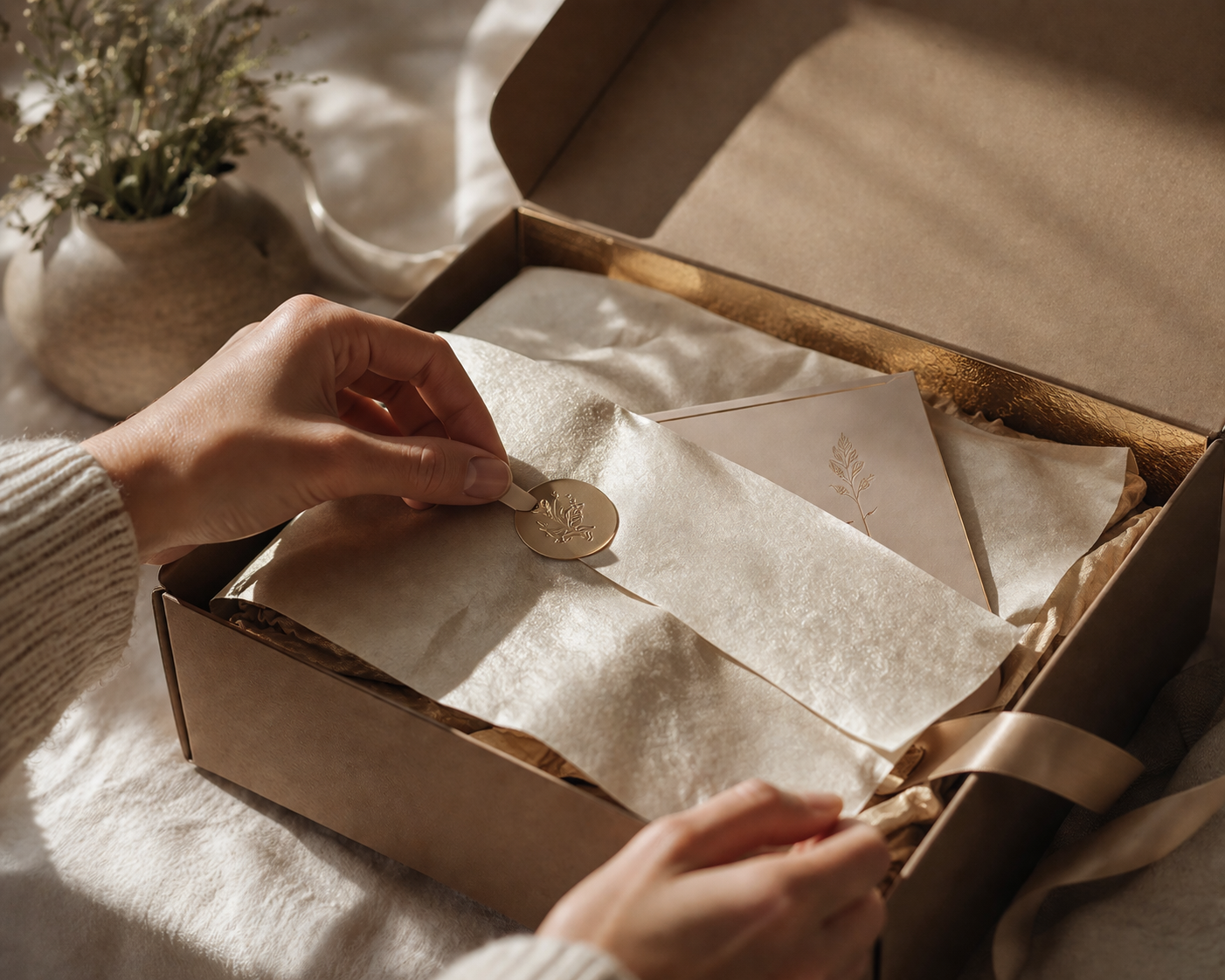
The bag or box is the foundation — the structure, the print, the finish. Get that right and you’ve earned the open. But the most effective packaging programs don’t stop there. The moment a customer opens an order, it’s often the additional touches that complete the brand story: the rustle of tissue, the satisfying press of a wax seal, the small card that feels like it was written just for them.
Packaging accents aren’t finishing touches — they’re performance drivers.
“The brands winning in retail today aren’t just shipping products — they’re designing moments.”
When Custom Tissue Outperforms Generic
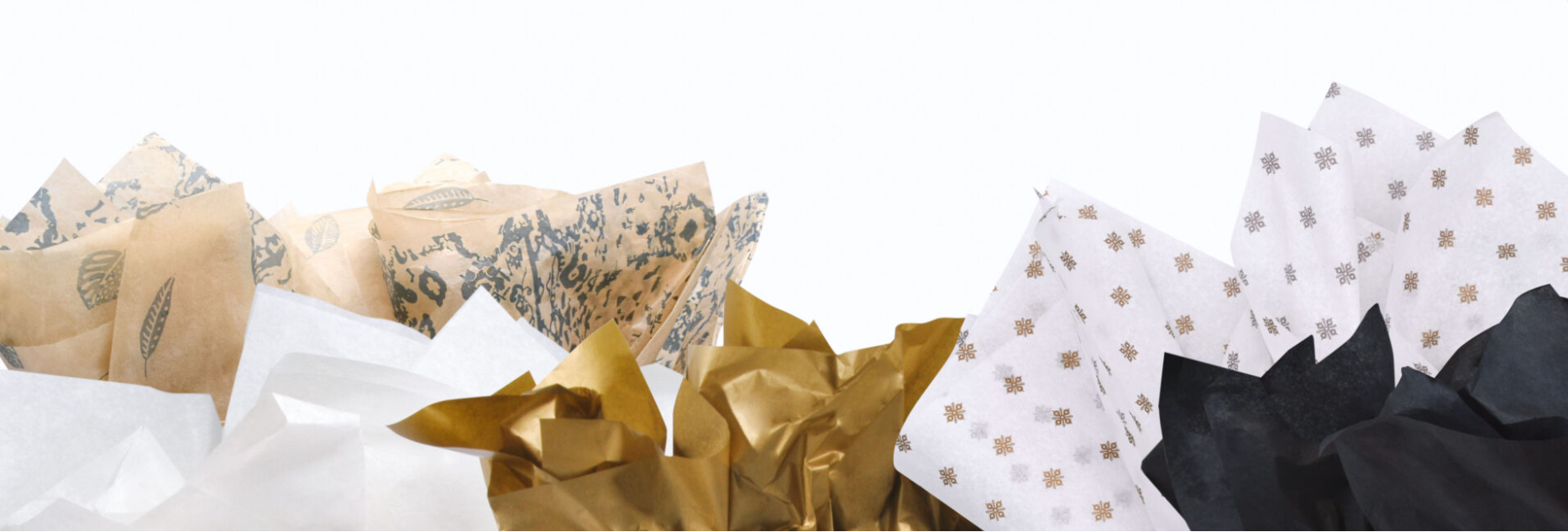
Tissue paper is one of the highest-ROI investments in the packaging mix, yet it’s frequently treated as an afterthought. Generic white tissue ships product. Branded tissue sells the brand.
Academic research shows that packaging plays a critical role in shaping post-purchase satisfaction and repeat buying behavior. In e-commerce, it often represents the first physical interaction between the customer and the product — making the unboxing experience a key driver of loyalty and brand perception.
For gift-adjacent retail categories — apparel, beauty, home goods, accessories — branded tissue also does critical work in gift presentation. A customer wrapping a birthday gift in your tissue is extending your brand into their social world at zero additional cost to you.
Prime Line’s custom tissue paper is available in a range of colors and print options, with MOQs designed to work for both growing brands and high-volume retailers.
Sticker Strategies That Actually Move the Needle
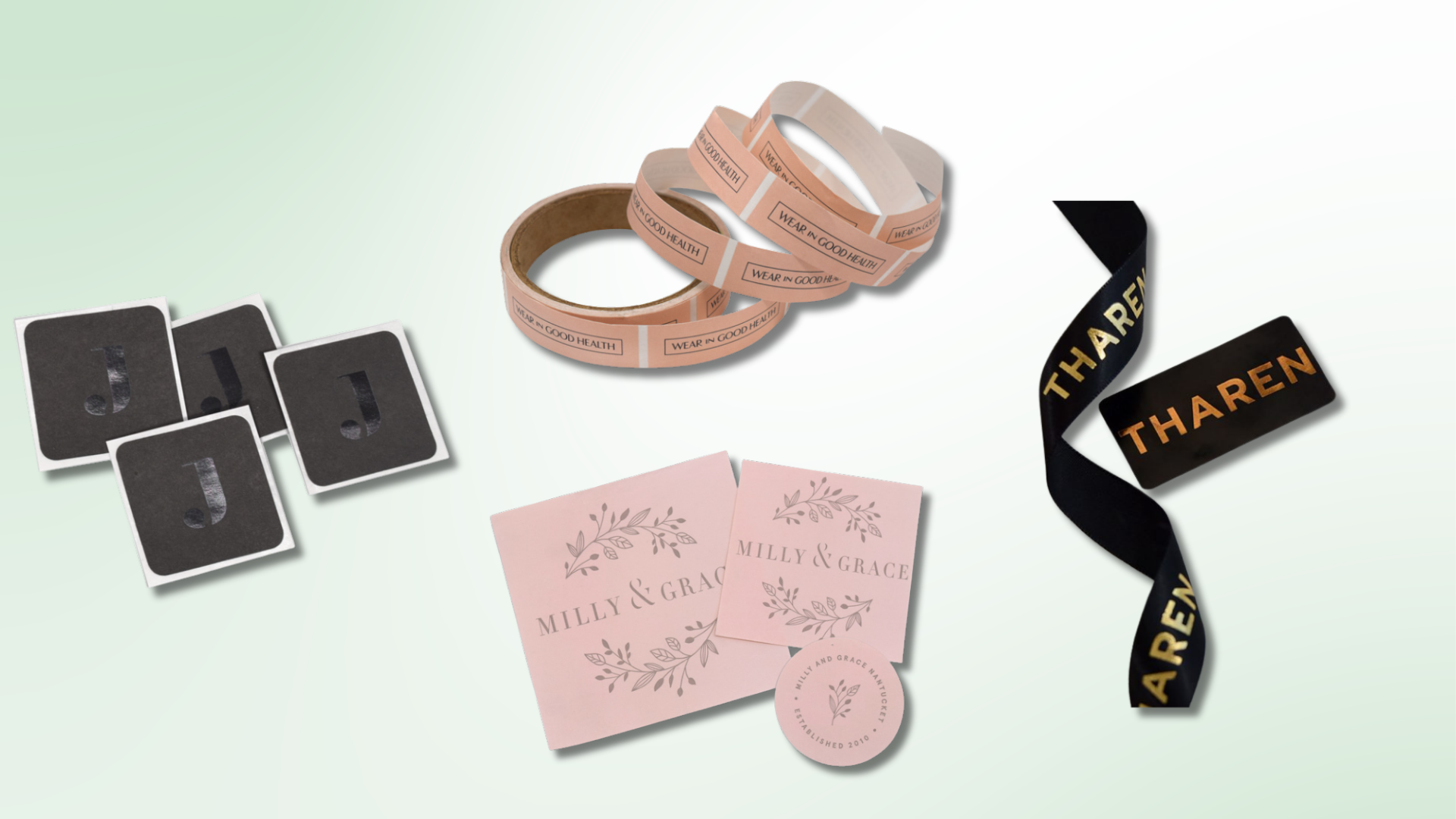
Stickers are deceptively versatile. In a packaging context, they serve four distinct functions — and the smartest brands deploy more than one. For packaging designers in particular, accents like stickers are worth thinking of as modular storytelling layers: they allow creative iteration and campaign-level flexibility without reprinting primary packaging — a significant advantage when timelines are tight or budgets are fixed.
Security seals signal quality and tamper-evidence before the box is even opened. A foil or matte seal closing a tissue wrap or a folding box flap adds a luxury cue that punches well above its cost.
Promotional stickers can carry limited-edition messaging, seasonal campaigns, or brand slogans — applied at packing without requiring new printed collateral. They’re ideal for short-run campaigns where flexibility matters.
Seasonal vs. evergreen designs is a genuine strategic decision. Evergreen stickers (logo-based, brand color) are lower risk and higher utility; seasonal designs (holiday motifs, Valentine’s, Earth Month) create urgency and shareable moments but require tighter inventory management. For a deeper look at how brands build cultural momentum through limited-run packaging, Prime Line’s post on how limited edition packaging creates cultural moments is worth a read.
Multi-pack value is the often-overlooked play: including a sheet of branded stickers as a packing insert costs pennies and routinely ends up on laptops, water bottles, and notebooks — turning customers into brand ambassadors. That visibility isn’t incidental — it’s measurable. Research from Promotional Products Association International shows that promotional products consistently outperform traditional advertising channels in consumer recall, making them one of the most efficient ways to extend brand exposure beyond the point of sale. In other words, a simple sticker doesn’t just decorate the package — it turns a one-time delivery into an ongoing impression.
“A single delivery can become multiple impressions — if the details are designed to travel.”
Explore Prime Line’s sticker and label options for customization across shapes, finishes, and quantities.
Insert Cards That Convert, Not Just Delight
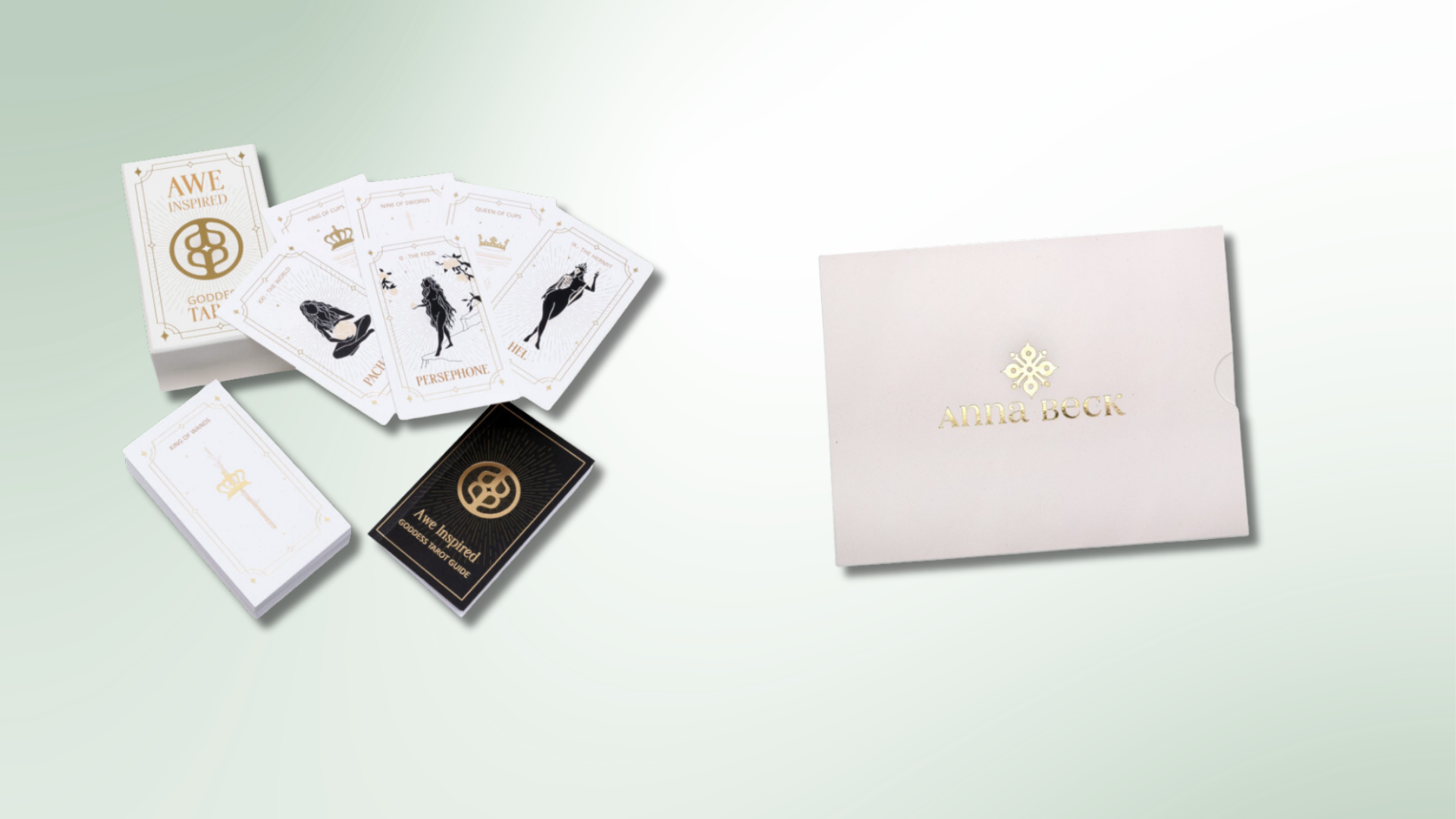
A thank-you card that says “Thank you for your order!” is table stakes. An insert card designed with intent is a conversion tool.
The most effective insert cards combine warmth with a clear next action:
- A QR code linking to a review page dramatically reduces the friction between a positive unboxing experience and a public review. Timing matters here — the customer is at peak satisfaction when they open the package. Don’t miss the window.
- Social sharing prompts with a branded hashtag invite UGC that extends your reach organically. Pair with a simple incentive (“Share and tag us for 15% off your next order”) and you’ve built a referral loop into the package itself.
- First-reorder incentives — a single-use discount code printed on the card — close the gap between one-time buyers and repeat customers. This is especially effective in beauty, food, and consumables categories where replenishment is a natural behavior.
Studies on insert card performance show they consistently lift repeat purchase rates when they include a relevant incentive, compared to packages that ship without any insert.
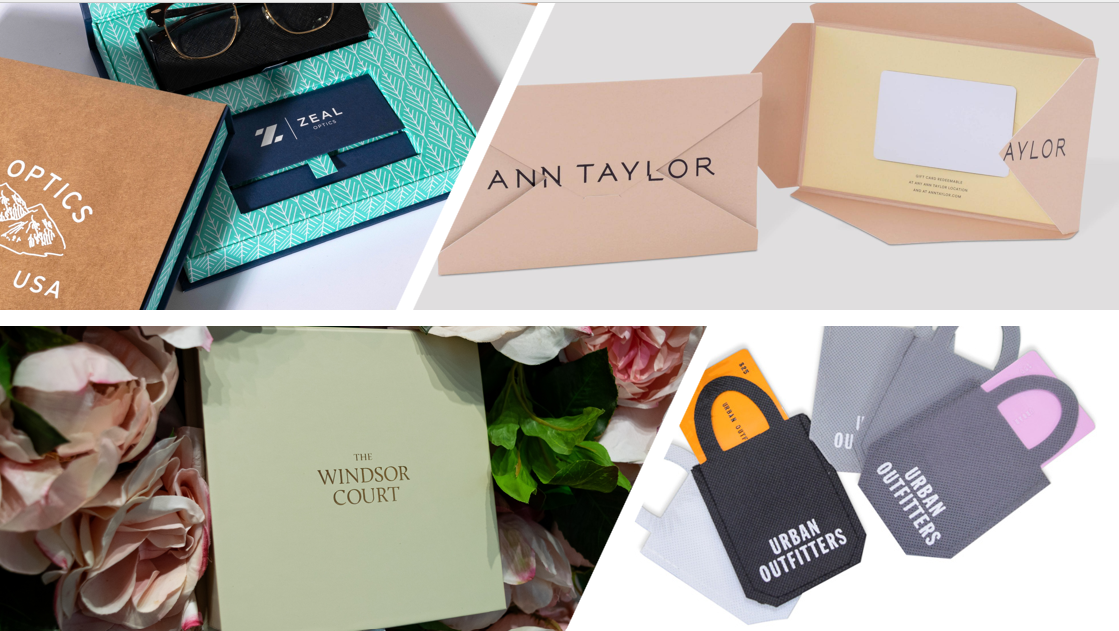
Prime Line produces custom insert cards in both small and large runs, printable on one or both sides, with options for spot UV and foil accents that reinforce brand quality signals. For brands that sell gift-ready products, custom gift card holders extend the same logic — a branded, tactile touchpoint that travels with the purchase and keeps your name in the customer’s hands long after the order arrives.
Ribbon, Twine & Elastic Closures: Cost-Effective Premium Touches
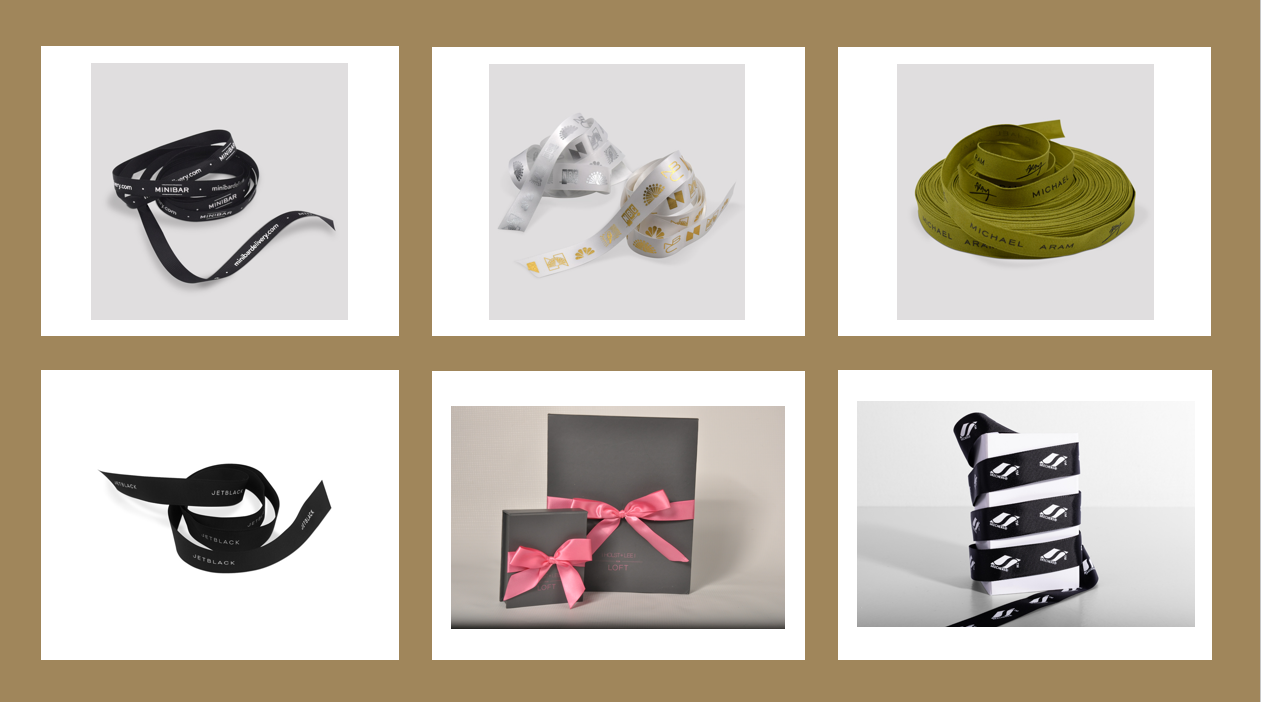
No element communicates “we put thought into this” faster than a ribbon or closure detail — and few elements are as underutilized relative to their impact.
Satin ribbon around a folding box, kraft twine on a mailer, or an elastic band closure on a gift set all serve the same function: they create a moment of anticipation before the product is revealed. In gifting contexts, these details are often what customers photograph. That’s earned media. (If you’re still deciding between a corrugated box and a mailer as your primary structure, this guide will help — both formats benefit equally from accent elements.)
The economics work. Ribbon by the roll and elastic closures at volume represent a minimal per-unit cost relative to their contribution to perceived value. They’re also among the easiest elements to phase in — requiring no change to your packaging structure. Browse Prime Line’s full accessories range for ribbon, tissue, stickers, inserts, and closure options.
Cost-Per-Impression: Packaging Accents vs. Other Channels
If a sticker turns a one-time delivery into an ongoing impression, the next question is simple: what does that impression actually cost?
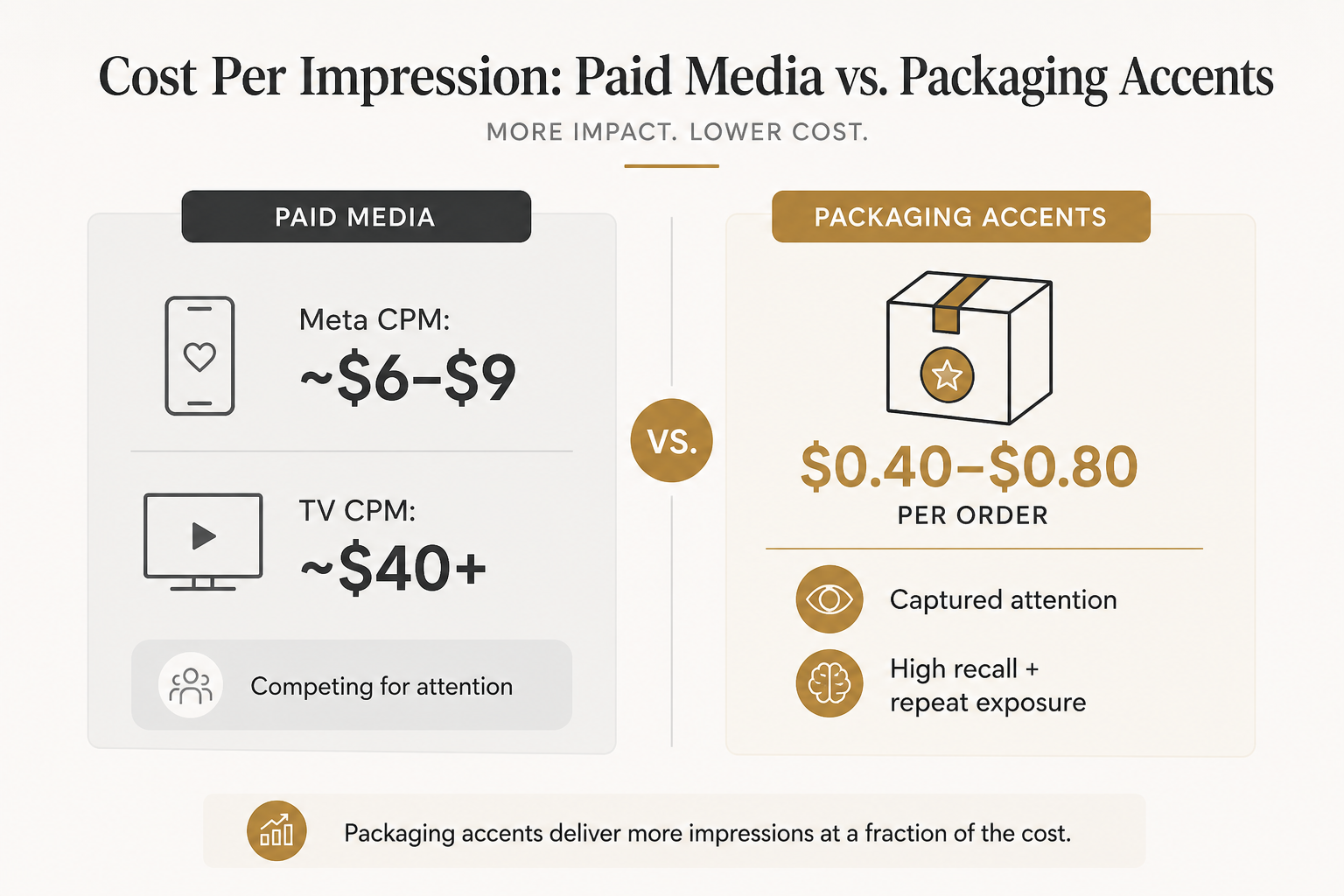
Consider the benchmarks. Meta’s average CPM hovers in the mid-single digits, with premium placements pushing higher. Broadcast primetime TV commands significantly more — often exceeding $40 CPM. These channels absorb meaningful budget, with no guarantee of attention.
Packaging operates differently. When a customer opens an order, attention is not rented — it’s owned.
Branded tissue, a sticker, and an insert card together typically add $0.40–$0.80 per order. At 1,000 shipments, that’s a $400–$800 incremental investment — often less than a single day of paid media spend. If that same packaging moment drives even a modest lift in repeat purchase, a single social share, or a customer review, the return quickly compounds — and the effective cost-per-impression drops below traditional channels.
“When your packaging earns attention, it starts behaving like media.”
This is why leading brands increasingly treat packaging not as a cost center, but as a performance channel — one that reaches the customer at the moment of highest engagement, with no competing noise.
The principle scales. Prime Line’s work with Bloomingdale’s on their “Just Imagine” campaign demonstrates how packaging can extend beyond function into visibility — turning their signature functional bag into something customers keep, photograph, and circulate. The same dynamic applies at every level: when packaging earns attention, it generates impressions that paid media can’t replicate.
When your packaging extends beyond protection into participation, it stops being an expense — and starts behaving like media.
MOQ Strategies for Smaller Brands: When to Invest, When to Wait
The MOQ question is real, and it deserves an honest answer. Not every brand is ready for full custom packaging accents across every SKU.
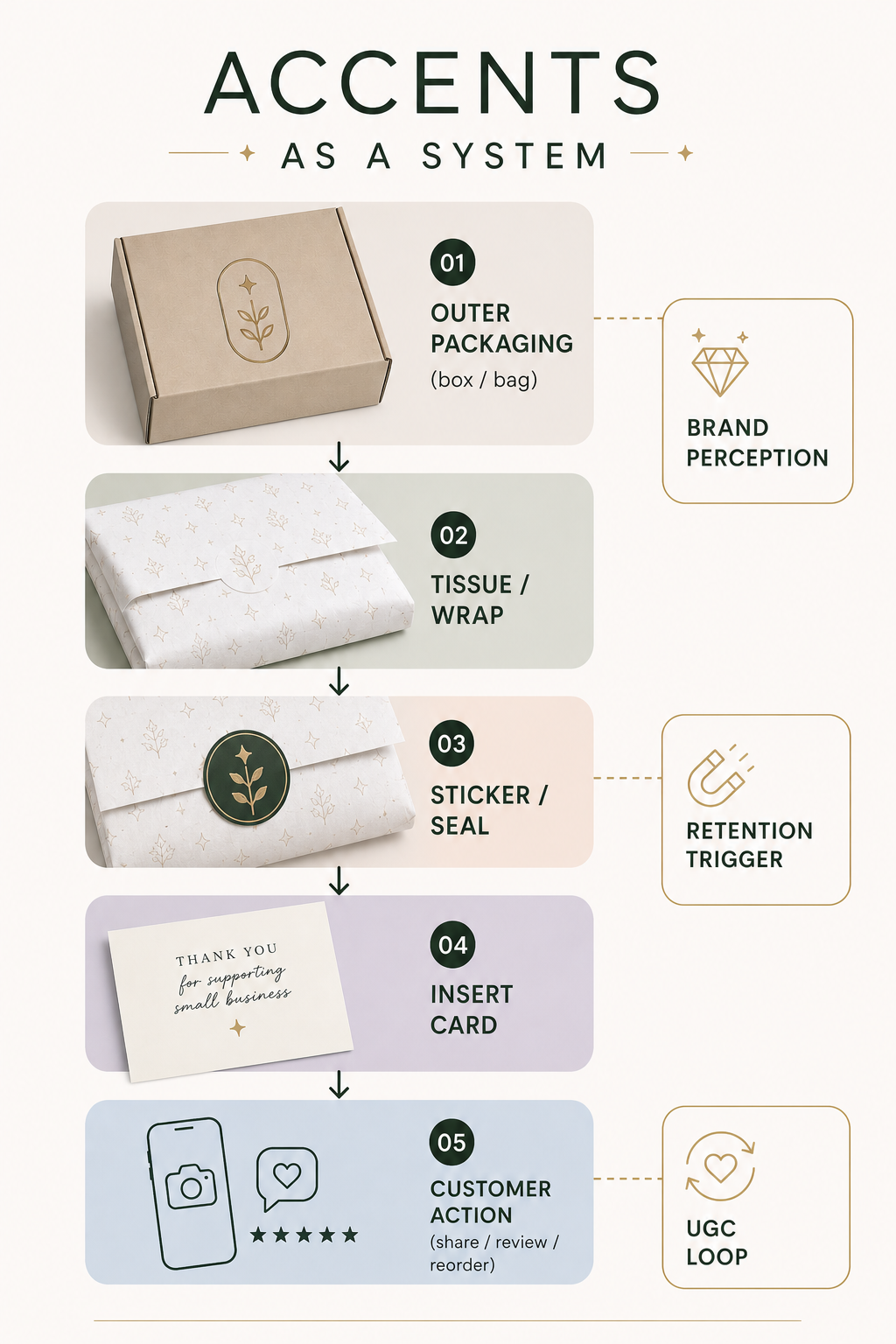
A phased approach works well in practice:
Phase 1 — Start with one hero element. Custom tissue is often the right first move: visible, tactile, brand-differentiated, and available at relatively accessible MOQs. It sets the tone without requiring a full packaging overhaul.
Phase 2 — Add stickers for flexibility. Stickers bridge the gap between generic packaging and fully custom. They’re low-commitment, high-impact, and easy to change seasonally.
Phase 3 — Introduce insert cards when the repurchase loop is a priority. Once you have conversion data and a retention strategy, insert cards become an obvious investment.
The brands winning in retail today aren’t just shipping products — they’re designing moments that extend beyond the delivery.
Packaging accents are where that shift becomes tangible. They’re flexible, measurable, and often the most efficient way to strengthen perception, drive repeat behavior, and build brand recall at scale.
The opportunity isn’t to overhaul your entire packaging system overnight. It’s to start with the elements that carry the most impact — and build from there.
At Prime Line Packaging, we help brands translate creative direction into production-ready packaging programs — from structural design to the finishing details that shape how a brand is experienced. Explore materials, formats, and real-world applications at PrimeLinePackaging.com, or start a conversation with our team.