A customer may notice the box before the ring, the pouch before the bracelet, or the insert before the necklace. Those first details set expectations for what’s inside. Packaging also needs to present the piece, keep it organized, and suit how the customer receives the order.
For a jewelry brand, choosing packaging involves more than selecting a box. Product sizes, sales channels, brand style, and daily packing routines all shape the decision. A small earring card may suit one collection, while another piece may call for a fitted insert or a presentation box.
A thoughtful packaging plan brings those choices together. It gives each product a suitable presentation while helping retail purchases, gifts, and shipped orders feel connected to the same brand. Use this guide to learn how to choose packaging for a jewelry business, so your products can shine.
Start With Your Products and Order Types
Before choosing materials or finishes, list the jewelry you sell and how customers buy it. Note which pieces drive the most orders, whether customers often buy sets, and whether you sell the same products in stores and online. Those details help define what your packaging needs to do.
Consider the most common order types:
- Retail purchases: Customers may want a package that’s easy to carry and ready to give.
- Ecommerce orders: The inner presentation needs to arrive in good condition inside an outer shipping package.
- Gift sets: Multiple pieces may need a coordinated arrangement in one package.
- Wholesale orders: The packaging process may need to support larger quantities and repeatable packing steps.
Storage and staff routines matter, too. A wide range of box sizes can offer flexibility, but it may take more storage space and more time to manage. If a few formats cover most of your products, a smaller assortment may be easier to order and use.
Start with the products and order scenarios you handle most often. Once you know what needs to fit, how customers buy it, and how staff will pack it, you can compare formats and decide where custom details will help.
Choose Packaging Formats That Fit Each Piece
Boxes, pouches, cards, and inserts each serve a different purpose. A box provides structure and a defined place to present a piece. A pouch offers a soft enclosure. A card can hold smaller items such as earrings, while an insert helps keep a product positioned inside a box.
The right combination depends on the jewelry. A ring may need a slot or cushioned setting that holds it upright. A necklace may need support for the chain and a clear place for the pendant. Earring cards or fitted inserts can help keep pairs together and aligned. Bracelets may need a form that keeps them from sliding around.
Measure the pieces you plan to package, including clasps, charms, and other parts that affect how they sit. Then test the product in a sample package. Check whether it stays in place when the box is moved, whether the lid closes comfortably, and whether the piece is easy to remove without catching or tangling.
Inserts deserve particular consideration. If the jewelry shifts during handling, the presentation can feel unfinished when the customer opens the package. The right jewelry box inserts can hold necklaces, rings, and earrings in place while giving each piece a clear presentation.
Match the Package to the Product
A package should suit the item’s size and shape without leaving it loose or making it hard to remove. A small piece in an oversized box can move around, while a snug fit may make the box harder to close or the product harder to lift out. Testing representative pieces can help reveal these issues before you settle on a format.
If your collection includes several product types, you don’t necessarily need a separate package for every item. Group similar products by size or shape and see whether one format can work for more than one piece. Keep a separate option for products with different presentation or support needs.
Consider how the package looks when it’s opened. The insert should keep the item visible and orderly. A necklace should sit so the pendant is visible. Earrings should remain together as a pair. A ring should be easy to spot and lift from its setting.
For products sold as sets, test the full arrangement rather than choosing packaging for each piece individually. The pieces need to fit together without crowding one another. A sample review can help confirm that the presentation looks intentional and is practical for staff to assemble.
Coordinate Materials, Colors, and Branding
Packaging is one of the physical places where customers can recognize your brand. Color, logo placement, material, and finish all contribute to the overall look. A refined, minimal design may suit one collection, while another brand may use a more colorful or decorative style.
Consistency across package components helps connect the experience. A box, pouch, jewelry card, and shopping bag don’t need identical designs, but they should feel like parts of the same brand. Repeating a color, logo treatment, or other visual detail can create that connection.
Start with the elements customers are most likely to notice. A logo on the box or card can identify the brand. A coordinated interior can make the opening feel considered. A luxury shopping bag can carry the same visual cues beyond checkout.
Review samples before choosing a finish or placing an order. Colors and textures may look different on a screen than they do on the actual material. A sample also lets your team check logo size, print placement, feel, and how the product fits.
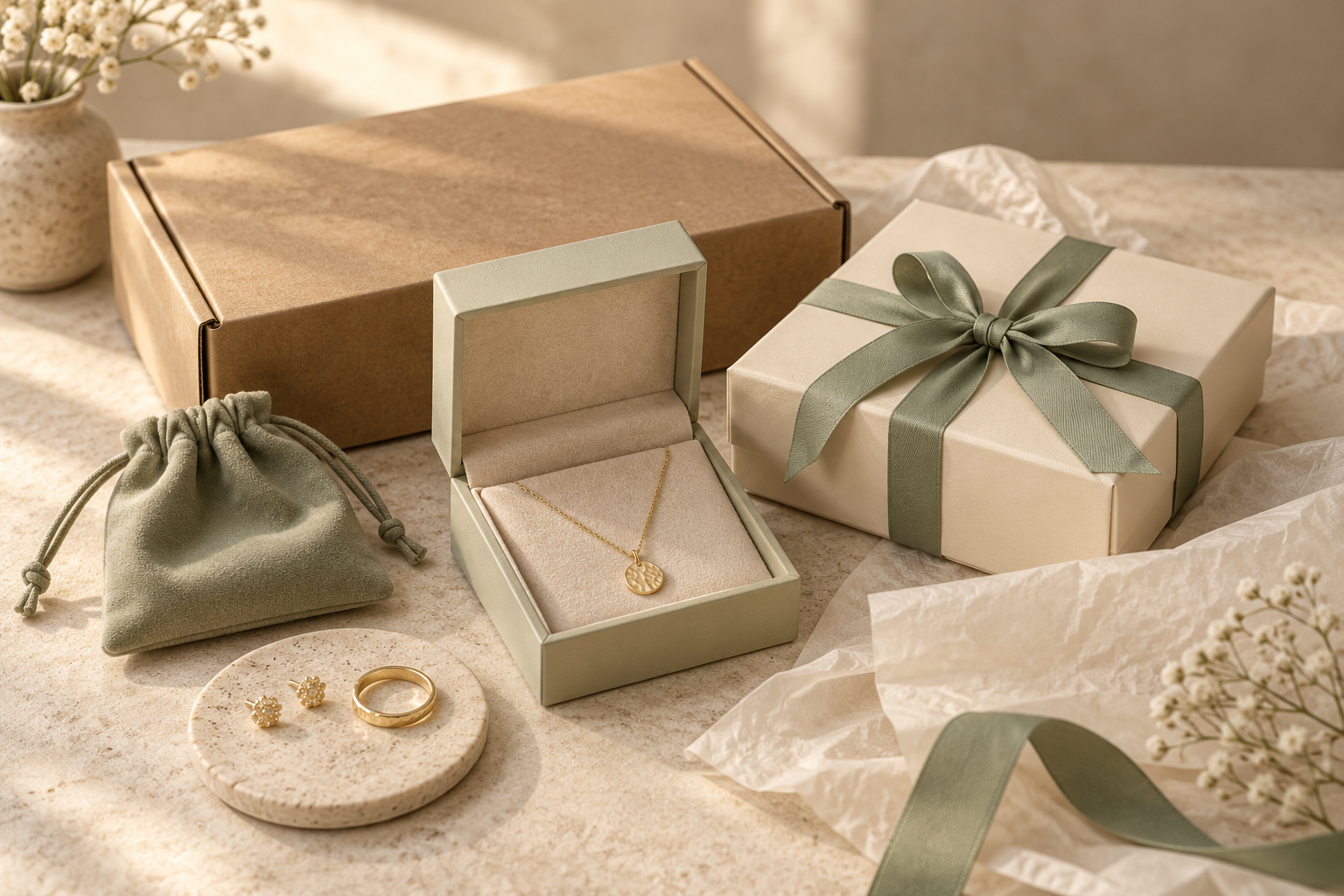
Coordinated custom jewelry packaging can connect boxes, pouches, and inserts through shared colors, logos, and finishes.
Plan for Retail, Gifting, and Ecommerce
In a retail setting, packaging may help organize a product display and give customers a convenient way to carry their purchase. Cards and boxes can keep pieces arranged at the counter or in a case. A coordinated bag can complete the handoff and make a purchase feel ready to give.
Gift purchases bring another consideration: customers may want the package to feel finished without adding their own wrapping. A box, pouch, card, or coordinated set of components can contribute to a gift-ready presentation. The best choice depends on the jewelry, the occasion, and the brand’s style.
Online orders have a different sequence. The customer first sees the outer package, then opens it to reach the jewelry and its inner presentation. The outer package supports delivery. The inner box, pouch, card, or insert introduces the product and brand.
Think through how each layer is handled. Can staff pack the order without extra steps? Can the customer open it easily? Does the product remain arranged when the inner package is removed? A well-chosen box, pouch, or card can make jewelry packaging feel gift-ready as soon as the order is opened.
Give Shipping Its Own Packaging Plan
The package that presents the jewelry and the package that carries it through delivery may have different jobs. A box or pouch can position the piece and create a polished reveal. An outer mailer or shipping box can provide another layer around that presentation.
Consider the full journey from packing table to customer. Is the jewelry held in place inside its box? Can the inner package move around inside the outer one? Could a chain tangle or a pair of earrings separate during handling? Testing a sample order can help the team spot problems before using a setup across many shipments.
The right configuration depends on the product, package dimensions, and shipping method. A single piece in a fitted insert may need different support than a larger box with several products. Don’t assume the presentation box alone will suit every delivery situation.
For delivery, jewelry shipping boxes should keep the inner presentation organized through handling.
Keep the Packaging System Manageable as Orders Grow
A packaging system should work for the people who order, store, and pack it. A large assortment offers more options, but it may require more storage and more time for staff to find the right format. A limited assortment can simplify the process, but it may not fit every product or order type.
Review your sales patterns to see which pieces and order types appear most often. Standardize around the formats that cover the largest share of orders. If gift sets or seasonal collections need their own components, plan for them separately instead of adding a unique package for every individual product.
Storage is part of the decision. Packaging needs a place to go, and staff need a clear way to identify each size or format. Labels and a straightforward inventory list can make it easier to restock and pack orders consistently.
Revisit the setup as the business changes. New product dimensions, different order volumes, or a shift toward ecommerce may affect which formats work best. A periodic review can show where packaging is going unused, where a product needs better support, or where the packing process could be simpler.
Give Every Jewelry Order a Thoughtful Finish
A well-planned packaging system brings product fit, brand presentation, and fulfillment needs into the same conversation. Formats may vary across boxes, pouches, cards, and inserts, but each component should support the jewelry and how customers receive it.
At Prime Line Packaging, we can help you review options for your products, brand, and order workflow. Explore our jewelry packaging materials and insert options and start planning a presentation that works from the first look through delivery. Start your project today!
Frequently Asked Questions About Jewelry Packaging
What Packaging Formats Work Best for Different Jewelry Pieces?
Boxes, pouches, cards, and inserts can each suit different products. Rings, necklaces, bracelets, and earrings may need different ways to stay in place and display clearly. Measure representative pieces and test them in samples before selecting a standard format.
How Should Jewelry Packaging Differ Between Retail and Ecommerce?
Retail packaging may need to support display, checkout, and easy carryout. Ecommerce orders need an inner presentation that works inside a separate outer package for delivery. Testing the complete packed order can help confirm that both layers work together.
What Is the Purpose of Jewelry Box Inserts?
An insert holds a piece in place and presents it inside a box. Its shape and layout should suit the jewelry, such as a ring, necklace, or pair of earrings. A sample can help you confirm the piece sits securely and stays easy to remove.
Do Jewelry Orders Need Both an Inner Box and an Outer Shipping Package?
The answer depends on the product and delivery setup. An inner package can present the piece, while an outer package adds another layer for shipping. Test the assembled package to see whether the product stays arranged and whether the layers fit together.
How Can a Small Jewelry Brand Keep Packaging Consistent?
Choose a few visual elements that can carry across boxes, pouches, cards, and bags. These might include a repeated color, logo treatment, or finish. Reviewing the package components together can help ensure they feel like part of the same brand.
What Should Brands Check Before Ordering Custom Jewelry Packaging?
Check product fit, package dimensions, logo placement, materials, and required packing steps. Review physical samples with actual jewelry rather than relying only on a screen or drawing. Confirm that the selected formats suit the order types you handle most often.
Can One Packaging Style Work for a Full Jewelry Collection?
Sometimes one format can serve several similar products, especially if their size and presentation needs are alike. Pieces with different shapes or support needs may require a separate insert or package format. Testing a sample from each product group can help you identify where one solution works.
How Can Packaging Help Make Jewelry Gift-Ready?
A coordinated box, pouch, or card can make the presentation feel complete when a customer gives the piece as a gift. The package should fit the product and match the brand’s style. Consider how it looks when opened and whether the customer needs to add anything before giving it.