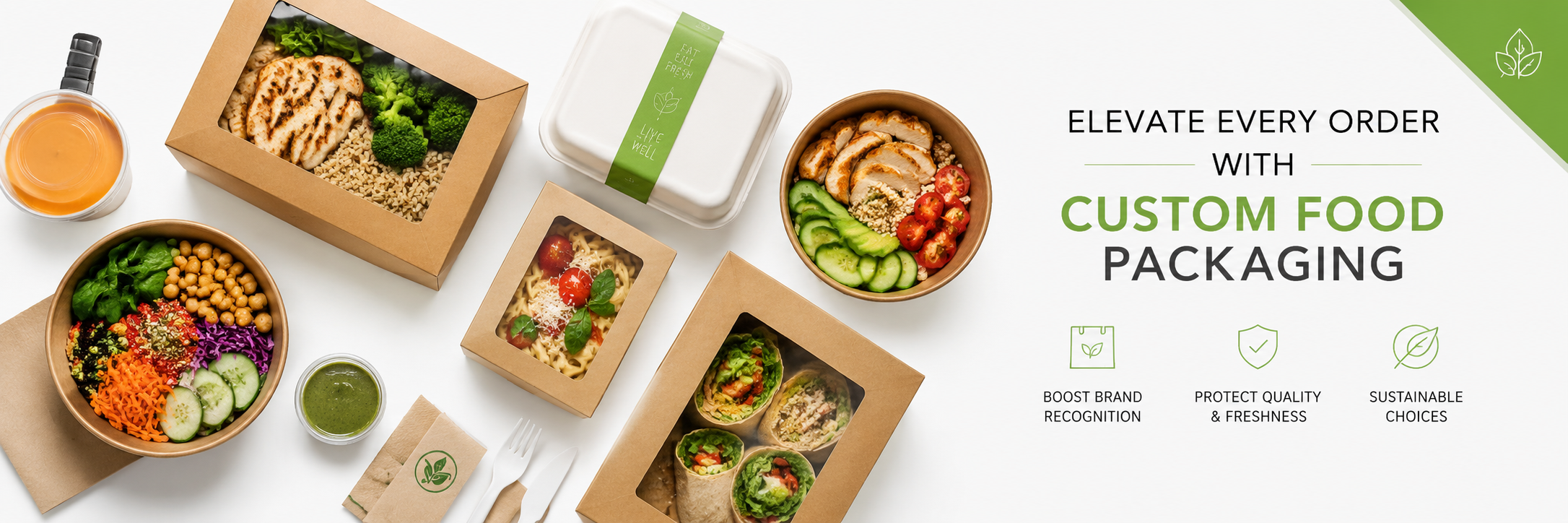
The box around a pastry, the carton holding a takeout meal, and the package protecting a collection of chocolates all have something important in common: the material must work with the food inside.
Good food packaging has to do much more than look appealing. It needs to protect the product, hold up during handling, fit the food properly, follow existing safety regulations, and support the way customers eat, carry, store, or gift it.
That makes material selection one of the first decisions brands need to get right.
Food-grade cardboard gives restaurants, bakeries, cafés, confectionery companies, specialty food brands, and retailers an incredibly versatile starting point. It can support everything from simple folding cartons to elaborate custom packaging systems, but the right choice depends on how the packaging will actually be used.
What Is Food Grade Cardboard?
Food-grade cardboard generally refers to paperboard or cardboard packaging intended for applications involving food. Depending on the package, the material may come into direct contact with the food or serve as an outer structure around a liner, wrapper, cup, tray, pouch, or another container.
A box holding individually wrapped chocolates has different requirements from a carton that directly holds cookies. A cupcake resting in a paper liner inside a box differs from a pastry placed directly against the carton surface.
The complete package also includes more than the board itself. Coatings, inks, adhesives, liners, windows, barriers, and other components must be considered based on how the finished package will be used.
Rather than selecting cardboard based on appearance alone, brands should start with the food, the conditions it will encounter, and the customer experience the package needs to create.
How Food Grade Cardboard Is Used In Food Packaging
Cardboard and paperboard can be adapted to an enormous variety of food products and service environments.
Common applications include:
- Bakery and pastry boxes.
- Cookie and brownie cartons.
- Cupcake boxes with inserts.
- Chocolate and confectionery packaging.
- Cake and pie boxes.
- Sandwich cartons.
- Takeout containers.
- Café packaging.
- Food sleeves.
- Trays and carriers.
- Catering boxes.
- Gift-ready food packaging.
The right format depends heavily on what you’re packaging.
A box designed for six decorated cupcakes needs inserts that keep each cupcake from shifting. A sandwich package may prioritize quick assembly and convenient handling. Luxury chocolates may benefit from a rigid presentation box with a custom insert that creates a completely different customer experience.
Our guide to paper packaging for food explores many of the formats restaurants and growing food brands can incorporate into a broader packaging program.
Food Contact Versus Secondary Food Packaging
One of the first questions to answer is whether the cardboard will touch the food directly.
Direct food-contact packaging is exactly what it sounds like. The food sits against the packaging material or one of its food-contact surfaces.
Secondary packaging works differently. Another material separates the food from the outer cardboard structure.
Consider a few examples:
- Cookies placed directly inside a carton involve direct contact.
- Cupcakes may sit inside individual liners before being placed in a box.
- Wrapped candies can be arranged inside a decorative presentation carton.
- A sealed takeout container may be carried inside a branded paper bag or box.
- Individually wrapped baked goods may be presented inside a larger gift carton.
Each configuration creates different material and structural requirements.
This is one reason brands should avoid treating “food packaging” as a single packaging category. What works perfectly for one product may be completely unsuitable for another.
What Makes Cardboard Appropriate For Food Packaging?
Choosing cardboard for food packaging requires considering the full environment in which the package will be used.
Important considerations include:
- Whether the material will contact food directly.
- The type of food being packaged.
- Grease and oil exposure.
- Moisture levels.
- Serving temperature.
- Expected storage conditions.
- Coatings and barriers.
- Printing and inks.
- Adhesives.
- Packaging structure.
- Transportation and handling.
A dry cookie, greasy pastry, hot sandwich, frozen dessert, and box of chocolates all place different demands on packaging.
Even foods within the same category can have very different requirements. A simple shortbread cookie may be relatively easy to package, while a heavily frosted or filled pastry may require additional protection from moisture, movement, and contact.
The smartest approach is to treat the package as a system rather than focusing exclusively on the outer cardboard.
Matching The Cardboard Structure To The Food
Materials and structure need to work together.
Start with the physical product. How large is it? How heavy is it? Is it delicate? Can it move around without being damaged? Does it need to remain upright? Will multiple products be packaged together? Will the box be stacked during storage or delivery?
A package that is too large can allow food to slide around. One that is too tight can crush delicate items or damage decorations. Thin construction may not support heavier products, while an unnecessarily elaborate box can add complexity without improving the customer experience.
Transportation deserves just as much attention.
Restaurant packaging may need to survive a delivery driver’s insulated bag and a trip across town. Bakery packaging could be stacked with several other orders. Retail food products may move through distribution, shelving, ecommerce fulfillment, and customer storage before the package has finished doing its job.
Strong packaging starts with understanding that entire journey.
Grease, Moisture And Barrier Considerations
Food can be demanding on paper-based materials.
Oil, grease, sauces, moisture, steam, and condensation can weaken untreated materials or affect how the package looks and feels. The right solution depends on the food and how long it stays in the package.
That may involve specialized barriers, liners, coatings, or a separate food-contact container inside the cardboard package.
Hot foods create additional considerations. Steam trapped inside a package can cause condensation, while ventilation may help for certain pastries and takeout foods. Greasy products need packaging designed around oil exposure rather than relying on ordinary paperboard.
Food-packaging requirements and available materials also continue to evolve. Brands should confirm that materials, coatings, inks, adhesives, and other components are appropriate for their intended application, rather than assuming any paperboard package is suitable for direct food contact.
This is especially important when changing suppliers, package structures, coatings, or the food being placed inside an existing package.
Designing Custom Food Grade Cardboard Packaging
Once the functional requirements are established, cardboard becomes a powerful branding material.
Custom printing can carry brand colors, artwork, patterns, messaging, and visual elements across the package. Structural choices can make products easier to carry, present, open, or gift.
Brands can also consider:
- Custom box dimensions.
- Inserts and dividers.
- Die-cut windows.
- Specialty shapes.
- Printed interiors.
- Foil stamping.
- Embossing and debossing.
- Matte or gloss finishes.
- Coordinated tissue or liners.
- Custom stickers and seals.
The strongest design choices support the product rather than compete with it.
A window can make decorated cookies or pastries part of the visual presentation. A custom insert can turn a collection of chocolates into a gift experience. Printed interiors can add an unexpected branding moment after the customer opens the box.
Our guide to custom food packaging goes deeper into how structure and branding can work together across different types of food businesses.
Food Grade Cardboard For Bakeries And Dessert Brands
Bakeries and dessert companies are a natural fit for custom cardboard packaging for deserts because presentation is such a large part of the purchase.
A cake, pastry, cookie assortment, or box of chocolates often serves as both food and gift.
That means packaging has to protect delicate products while making them feel special.
Cupcakes may need fitted inserts to prevent tipping. Cakes require sufficient height and a strong base. Cookies may benefit from tightly sized cartons that reduce unnecessary movement. Chocolates and confections can be arranged in inserts or trays that create a more premium presentation.
Windows can showcase colorful products without opening the package, while printed boxes allow bakeries to carry their brand experience outside the shop.
Special occasions introduce even more possibilities. Valentine’s Day, birthdays, weddings, holidays, corporate gifting, and seasonal collections can all be supported with packaging variations built around a consistent core brand.
Food-Grade Cardboard For Restaurants And Takeout
Restaurant packaging faces a different set of challenges.
Speed, portability, stacking, and transport become critical. Packaging needs to move efficiently from the kitchen to the customer without complicating service.
A restaurant may require several complementary formats, including:
- Entrée cartons.
- Sandwich boxes.
- Side-item containers.
- Bakery boxes.
- Catering boxes.
- Sleeves.
- Cup carriers.
- Branded bags.
- Outer delivery packaging.
Sizing deserves careful attention. Oversized packaging wastes space and lets food shift, while undersized packaging can damage presentation or make the container hard to close.
The package also represents the restaurant long after the food leaves the counter. A customer receiving delivery at home should still recognize the same attention to presentation they would expect inside the restaurant.
That is where custom restaurant packaging can turn a practical necessity into another part of the brand experience.
Common Mistakes To Avoid With Food Packaging Cardboard
Food packaging involves enough variables that seemingly small decisions can create problems later.
Some common mistakes include:
- Choosing packaging based primarily on appearance.
- Assuming any cardboard is appropriate for direct food contact.
- Ignoring grease and moisture exposure.
- Using packaging that is too large for the product.
- Forgetting how boxes will stack during delivery.
- Overlooking inserts for delicate foods.
- Selecting finishes without considering the intended application.
- Failing to consider temperature and condensation.
- Treating boxes, liners, inks, adhesives, and coatings as separate decisions.
- Designing a single package without considering future products or SKUs.
Prototypes and samples can be especially useful for food packaging. Seeing a package on a screen is different from loading it with the actual product, carrying it, stacking it, opening it, and evaluating how it looks when it reaches the customer.
The product should ultimately prove whether the packaging works.
Building A Coordinated Food Packaging Program
Growing brands rarely stay with one product forever.
A bakery may start with cookies and eventually offer pastries, cakes, gift boxes, and seasonal assortments. A restaurant might add catering. A specialty food company could expand into retail, ecommerce, subscription boxes, or corporate gifting.
Packaging should grow with those changes.
A coordinated program can include different carton sizes, paper bags, inserts, tissue, liners, stickers, labels, seasonal packaging, and gift boxes while maintaining a recognizable visual identity.
Keeping colors, typography, graphic elements, and finishes consistent can make several packaging formats feel like parts of one system.
It also gives brands room to create limited editions or seasonal variations without rebuilding their packaging identity from scratch.
Our look at packaging design trends for growing brands offers additional ideas for creating packaging systems that balance strong design with real-world functionality.
Create Food Packaging Around The Product
Great food deserves packaging designed around the way customers actually experience it.
At Prime Line Packaging, we help restaurants, bakeries, cafés, confectionery companies, specialty food businesses, and growing brands develop custom packaging that balances structure, product fit, materials, branding, and presentation.
Whether you’re developing one new box or coordinating an entire family of food packaging, start with the product itself.
Bring us the product. We’ll help build the packaging around it.
Contact Prime Line Packaging to start your next custom food packaging project.
Frequently Asked Questions About Food Grade Cardboard
What Is Food Grade Cardboard?
Food-grade cardboard generally refers to cardboard or paperboard intended for food packaging applications. The appropriate material depends on whether the food contacts the package directly, what type of food is being packaged, and the conditions the package will experience. Coatings, inks, adhesives, liners, and other components should also be considered as part of the finished package.
Is All Cardboard Safe For Direct Contact With Food?
No. Brands shouldn’t assume that any cardboard box or paperboard material is automatically appropriate for direct food contact. The intended application, food type, coatings, inks, adhesives, and construction all need to be considered. Packaging suppliers can help identify materials appropriate for the specific project.
What Is The Difference Between Food Grade Cardboard And Regular Cardboard?
The primary difference is the intended use. Packaging designed for food applications must meet the requirements of the food and how the package will interact with it. General-purpose cardboard may be designed for shipping, storage, retail merchandise, or other products without consideration for direct food contact.
Can Food Grade Cardboard Hold Greasy Foods?
It can, but the packaging needs to be designed for that type of product. Greasy and oily foods can penetrate or weaken some untreated paper-based materials. Depending on the food and packaging format, you may use appropriate barriers, coatings, liners, or separate containers.
Can Cardboard Packaging Be Used For Hot Food?
Cardboard packaging can be used for many hot-food applications when the structure and materials are suitable for the intended use. Heat, steam, moisture, ventilation, and condensation should all be considered during package development. A carton for a warm pastry may require a different approach than packaging for a hot entrée or sandwich.
What Types Of Food Products Can Be Packaged In Cardboard?
Cardboard and paperboard packaging can support baked goods, cookies, cupcakes, cakes, pies, chocolates, confectionery products, sandwiches, takeout foods, specialty foods, gift assortments, and many other products. Select the box structure and material around the food, rather than treating one carton type as a universal solution.
Can Food Grade Cardboard Packaging Be Custom Printed?
Yes. Custom food packaging can incorporate brand colors, graphics, patterns, messaging, and many finishing techniques. Depending on the project, brands may also use windows, inserts, printed interiors, foil details, embossing, debossing, and coordinated packaging components to create a more complete presentation.
How Do I Choose The Right Cardboard Packaging For My Food Product?
Start with the actual product. Consider its size, weight, shape, moisture, grease content, temperature, fragility, storage needs, transportation requirements, and whether it will directly contact the packaging. From there, the structure, materials, barriers, inserts, printing, and finishing options can be developed around the experience you want to create.