
Proving It Belongs There
Anyone can print a little tree logo on a shopping bag. Proving it belongs there is another matter.
Once a year, an independent auditor asks us to do just that. Where did the paper come from? Was it kept separate from everything else? Does every purchase order, packing slip, and invoice say exactly what it should? We’ve just wrapped this year’s FSC™ audit, and yes, it was as thorough as it sounds.
We’re sharing what it involves because the logo is the least interesting part of FSC™ certification. What matters is the system behind it, and knowing what to look for helps you choose a supplier you can trust.
A Quick FSC™ Refresher
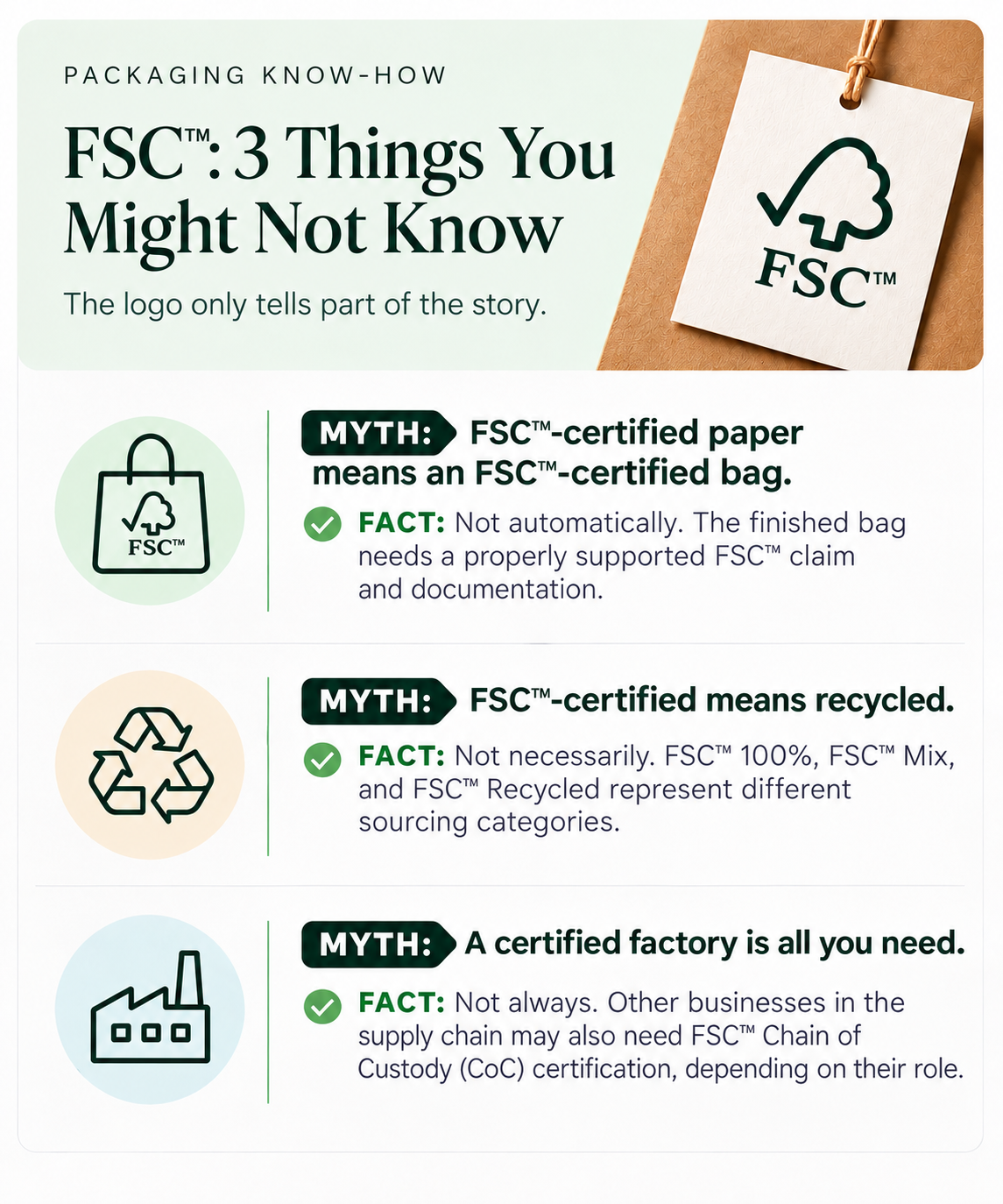
FSC™, the Forest Stewardship Council™, is an international nonprofit that sets standards for responsibly managed forests. Its Chain of Custody (CoC) certification follows certified paper from the forest through every company that handles it, keeping it separate from uncertified material along the way. If any link in that chain isn’t certified, the product cannot carry the label.
That’s where we come in. Prime Line Packaging holds a CoC certificate, audited every year by a certified third-party body, and FSC™ -certified materials are part of how we work. When you choose FSC™ paper for your custom shopping bags or packaging, you’ll pick from three claims:
- FSC™ 100%: made entirely from certified forests.
- FSC™ Mix: a blend of certified, recycled, and FSC™ -controlled material.
- FSC™ Recycled: made from reclaimed material.
A common myth: FSC™ 100% sounds like the greenest option. It’s a strong choice, with every fiber traced to a responsibly managed forest, but it still means harvesting trees. FSC™ Recycled reuses material already in circulation, easing pressure on forests altogether. That makes it our top pick for sustainability-minded brands, with FSC™ Mix in between.
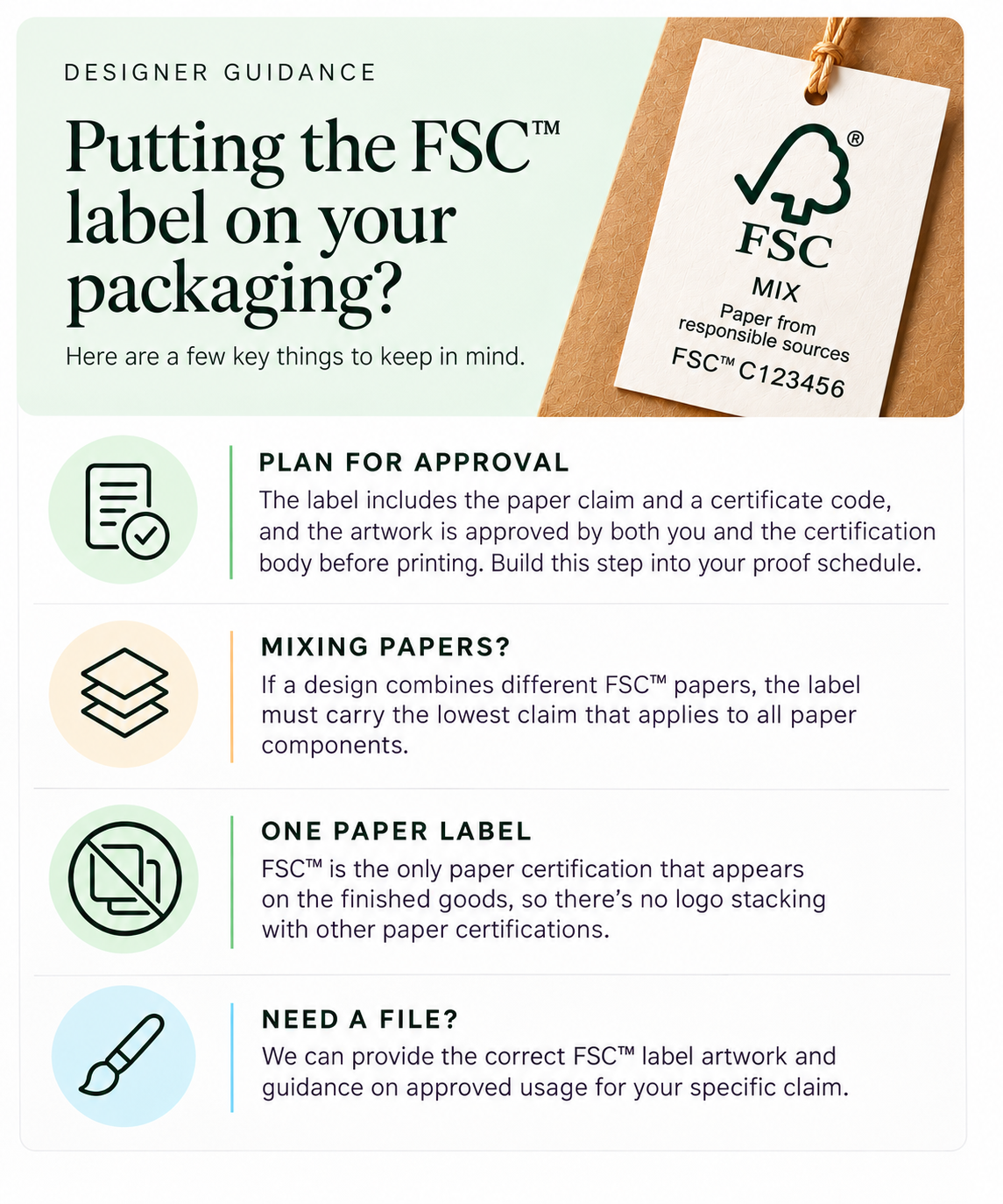
Good to know: You don’t have to print the FSC™ label to use FSC™ paper. Many customers assume it’s required, but it’s optional. Skip the label, and there’s no extra artwork approval before printing. We and the vendor simply make sure the right paper goes into your order.
What the Audit Actually Looks Like
FSC™ certificates run on a five-year cycle, with a check-in audit every single year. Ours is shaped by what we are: we’re not a forest, and we don’t run our own warehouse, so there’s no floor walk-through. Instead, it starts with paperwork. A lot of paperwork.
A single FSC™-certified shopping bag might look simple enough. Behind it is a trail of documentation connecting the paper supplier, factory, production order, shipping documents and final invoice. Multiply that by a year’s worth of orders, and you begin to understand why preparing for our annual audit is a team effort. Then the auditor goes through it line by line, because FSC™ is exacting about wording. The right paper with the wrong claim on an invoice still counts as a miss.
The auditor also talks with our Health & Safety Officer, the people who handle FSC™ orders, and anyone who can speak to working conditions. Anything that falls short has to be fixed for the certificate to stay valid.
One thing our annual audit reinforces is that certification isn’t something you earn once and put on a shelf. Suppliers change, orders change, and documentation has to keep pace. Every FSC™ order needs the same attention, whether it’s a small run of shopping bags or a large packaging program.
What Our FSC™ Audit Means for Your Packaging
An audit is really a check on everyday habits.
Verified suppliers. We verify we work with FSC™ certified and compliant manufacturing partners that can place specific FSC™ claim orders for our clients.
Accurate documentation. Your invoice and your bag will match. The claim travels with your order, from our purchase order to the supplier’s shipping documents to your final invoice, written exactly as FSC™ requires: “FSC™ Mix,” in quotes, with our certificate code.
Accountability if something goes wrong. You’ll hear from us. If a product ever ships with an FSC™ claim it shouldn’t carry, we notify affected customers and our certification body in writing within five business days, then fix the cause. We keep FSC™ order records for at least five years.
Beyond FSC™: Other Certifications Worth Knowing
FSC™ tells you where the paper came from. It doesn’t always tell you how a factory treats its workers, or whether a “recycled” or “organic” claim holds up. That’s why our certificates and standards go further: Sedex and BSCI (Business Social Compliance Initiative) for ethical audits of labor and working conditions, the Global Recycled Standard (GRS) for recycled content, and the Global Organic Textile Standard (GOTS) for organic fabrics. Learn more on our How We Work page.
The Laws Are Murky. Your Paper Trail Doesn’t Have to Be.
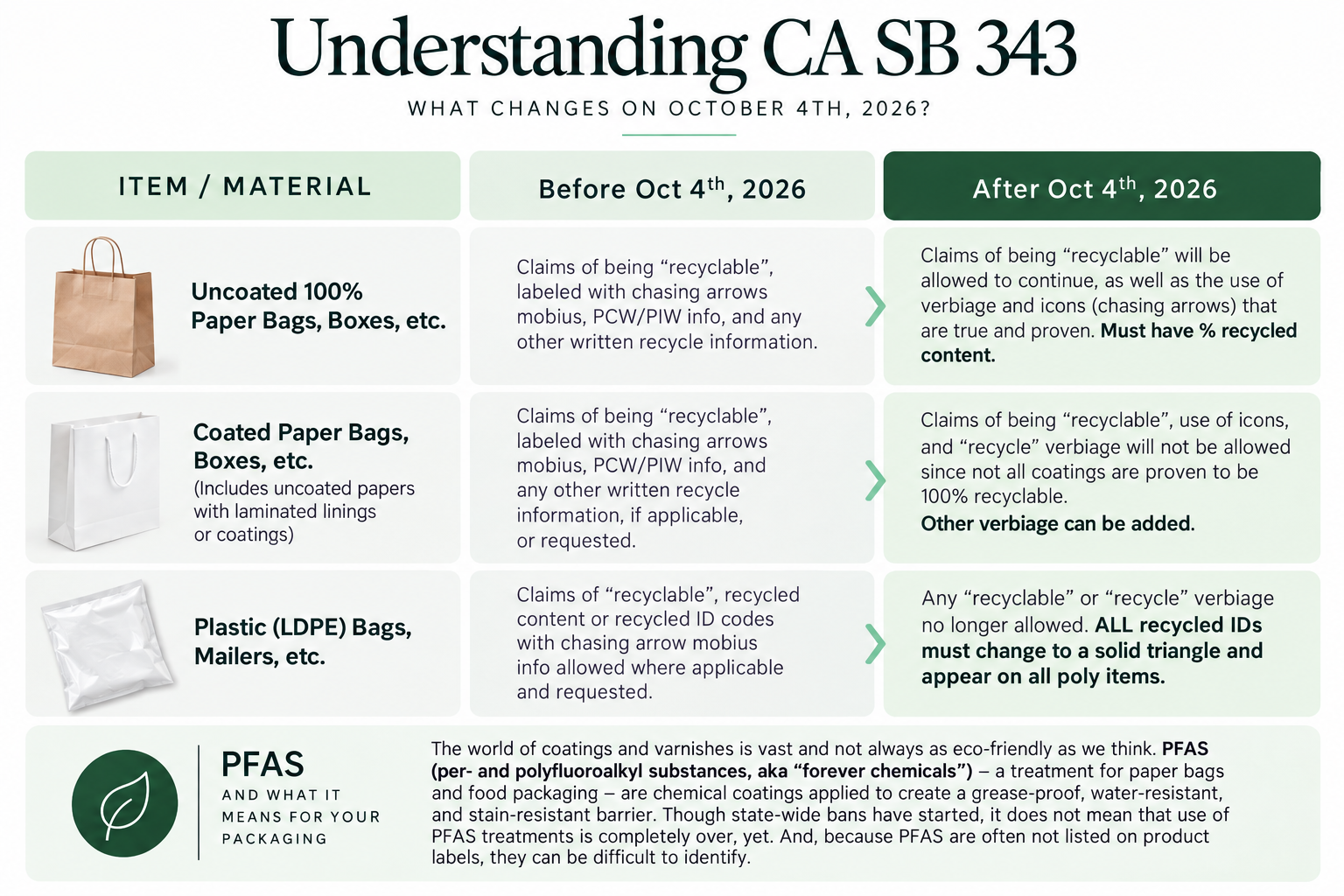
Packaging rules are changing fast, especially in California, and other states may follow its lead. Three laws we’re watching:
SB 343 restricts recyclability claims and the chasing arrows symbol. Enforcement has been paused since July 14, 2026, during a legal challenge, but we’re working as if it’s in effect, with correct recycling labels and resin codes on poly items.
SB 54, its companion law, is California’s Extended Producer Responsibility (EPR) law, making the businesses that produce packaging, not consumers, responsible for it.
SB 1053 lets stores offer recycled paper checkout bags for at least 10 cents each. From 2028, those bags need at least 50% postconsumer recycled content. Prime Line is already planning for 50%.
FSC™ certification doesn’t make packaging recyclable, but it gives you a documented foundation for credible paper-sourcing claims.
The Forest Stewardship Council™ (FSC™) is dedicated to promoting responsible forestry worldwide. www.fsc.org
Please note: This section restates publicly available regulations for general information only and is not legal advice.
Four Questions to Ask Your Packaging Partner
Whoever makes your packaging, start here:
- What’s your FSC™ certificate code? Then look it up yourself at search.FSC.org.
- Will the FSC™ claim appear on my invoice? It should, in quotes, alongside the supplier’s code.
- When was your last audit? A confident supplier won’t hesitate to tell you.
- Are the factories making my order certified, and for what? Confirm FSC™ for paper, plus social and environmental certifications like Sedex, BSCI, or GRS.
Planning your next packaging project? Let’s make sure your materials, certifications, and claims are right from the start. Talk to our team about FSC™-certified packaging.
This post is for general information only and is not legal advice. For guidance on your specific products and claims, consult qualified legal counsel.