The Science of Surprise: Unboxing Experiences That Drive Customer Loyalty
Emotionally connected customers are more than twice as valuable as highly satisfied ones.
That finding from Harvard Business Review reframes something most brands take for granted: the moment a customer opens their order. Packaging is one of the only touchpoints capable of creating genuine emotional connection before a product is ever used — and as we’ve explored in When Packaging Goes Viral: How a Free People Bag Became a TikTok Fashion Trend, the brands that understand this are turning everyday delivery moments into lasting brand equity.
Some brands pour resources into what happens before a purchase — the ad, the landing page, the checkout flow. The brands building lasting loyalty are paying equal attention to what happens after it.
Somewhere between the shipping notification and the first use of a product lies one of the most underutilized opportunities in modern retail: surprise.
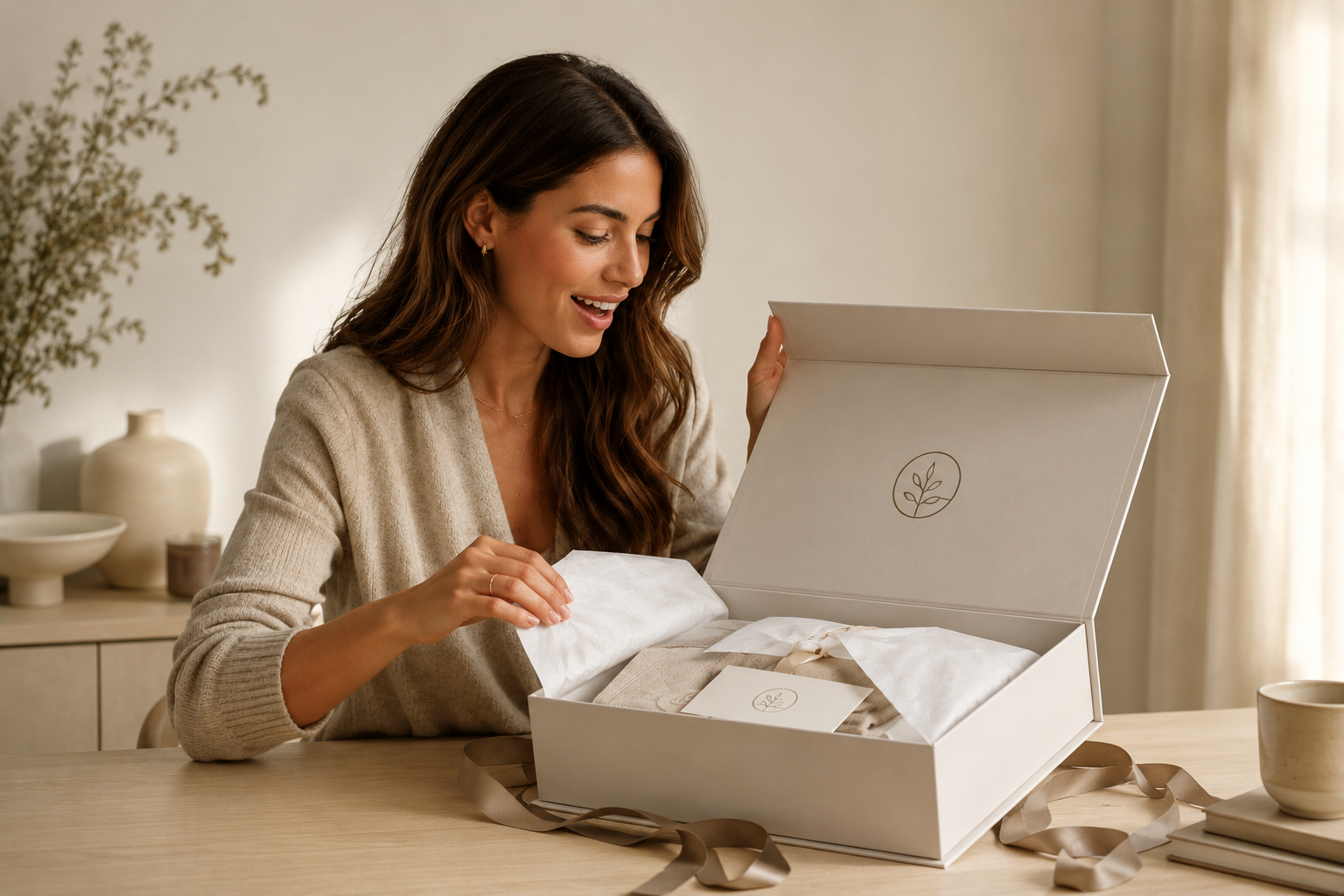
Whether it’s an unexpected reveal beneath tissue paper, a beautifully structured gift set, a handwritten note, or a thoughtfully designed insert card, small moments of delight consistently outperform brands that focus on satisfaction alone. In today’s crowded direct-to-consumer landscape, the unboxing experience has evolved from a packaging decision into a customer retention strategy — and a measurable one.
Why Unboxing Matters More Than Ever
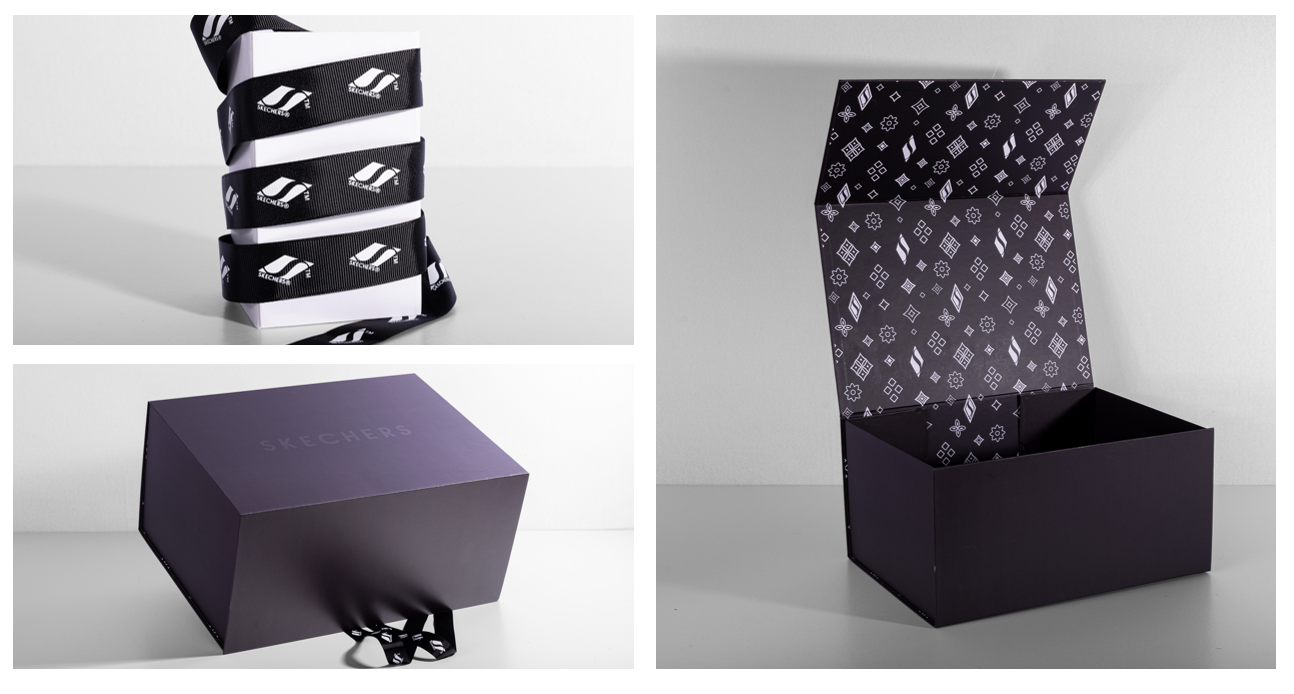
Today’s consumers expect more than a product. They expect an experience.
Research from the Paper and Packaging Board’s Packaging Matters Study found that packaging directly influences perceptions of product quality, brand trust, and overall satisfaction. For brands managing rising customer acquisition costs and increasingly selective consumers, that influence has real business implications.
Three forces are accelerating this shift:
Rising Customer Acquisition Costs Digital advertising has become more competitive and more expensive. Packaging is one of the few touchpoints that reaches every purchaser without requiring additional media spend — making the unboxing moment a uniquely cost-efficient retention tool.
Social Commerce Unboxing has become content. What was once a private customer moment is now frequently shared across TikTok, Instagram, YouTube Shorts, and creator channels, extending brand reach well beyond the original order — at no additional cost.
The Expansion of Everyday Gifting Consumers increasingly purchase products to celebrate milestones, birthdays, self-care moments, and everyday occasions. Gifting has expanded far beyond the traditional holiday season, creating new opportunities for brands to differentiate through presentation year-round.
Not Every Product Needs a Hero Gift Box
One of the most common misconceptions in packaging is that memorable unboxing experiences require luxury packaging at every price point.
The most effective brands align packaging investment with product assortment, customer expectations, and order value. For procurement teams, this is where packaging strategy can start to directly affect margin: a well-designed modular approach can deliver a premium experience without the cost structure of a fully custom program.
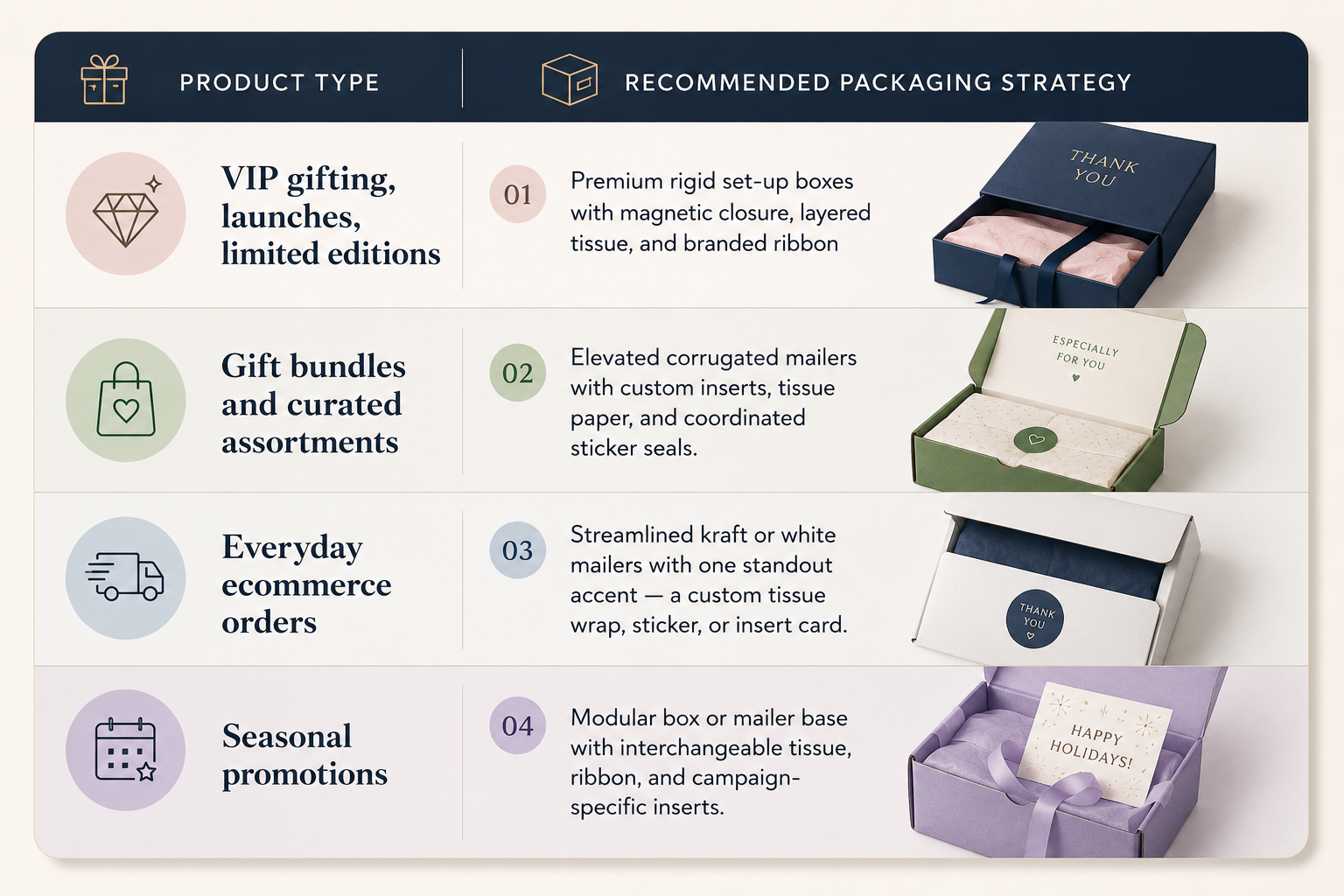
Often, a single carefully chosen detail — a custom sticker, premium tissue paper, ribbon closure, or well-designed insert card — creates more impact than a complete structural redesign. This approach can be applied equally to mailers, shopping bags, and specialty cut and sew packaging. That’s a meaningful consideration for teams managing lead times, inventory complexity, and per-unit cost simultaneously.
Sensory Design Doesn’t Have to Break the Budget
Luxury packaging is increasingly defined by how it feels, not just how it looks.
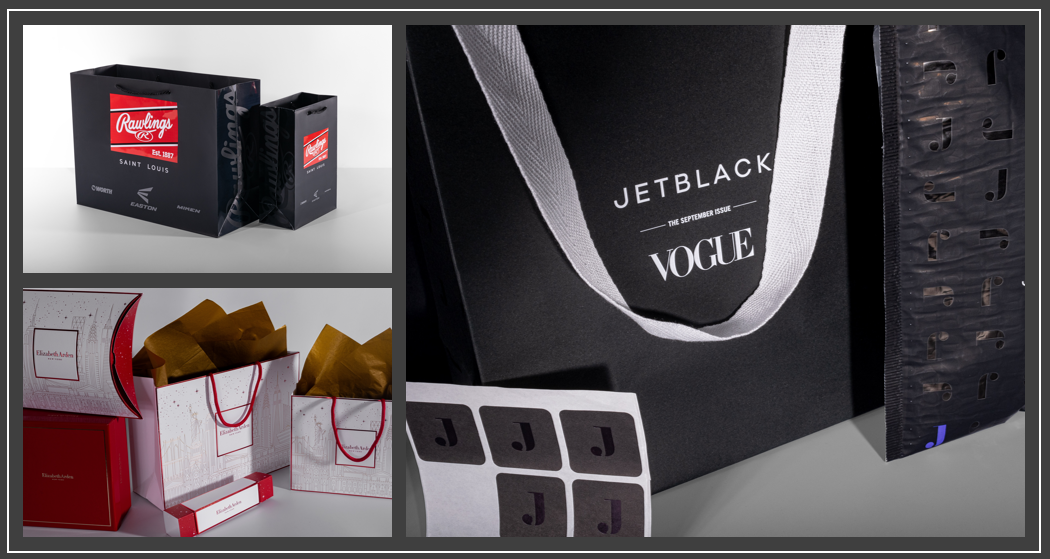
Consumers notice texture, movement, sound, and interaction. Research highlighted in Harvard Business Review’s The Science of Sensory Marketing found that sensory cues — touch, texture, scent, and sound — significantly influence how consumers evaluate quality, form memories, and build emotional associations with brands. As we explored in The Hidden Power of Touch: Why Haptics Matter in Premium Packaging, what a customer feels when they open a bag or box shapes how they remember the product inside it — often more powerfully than visual design alone.
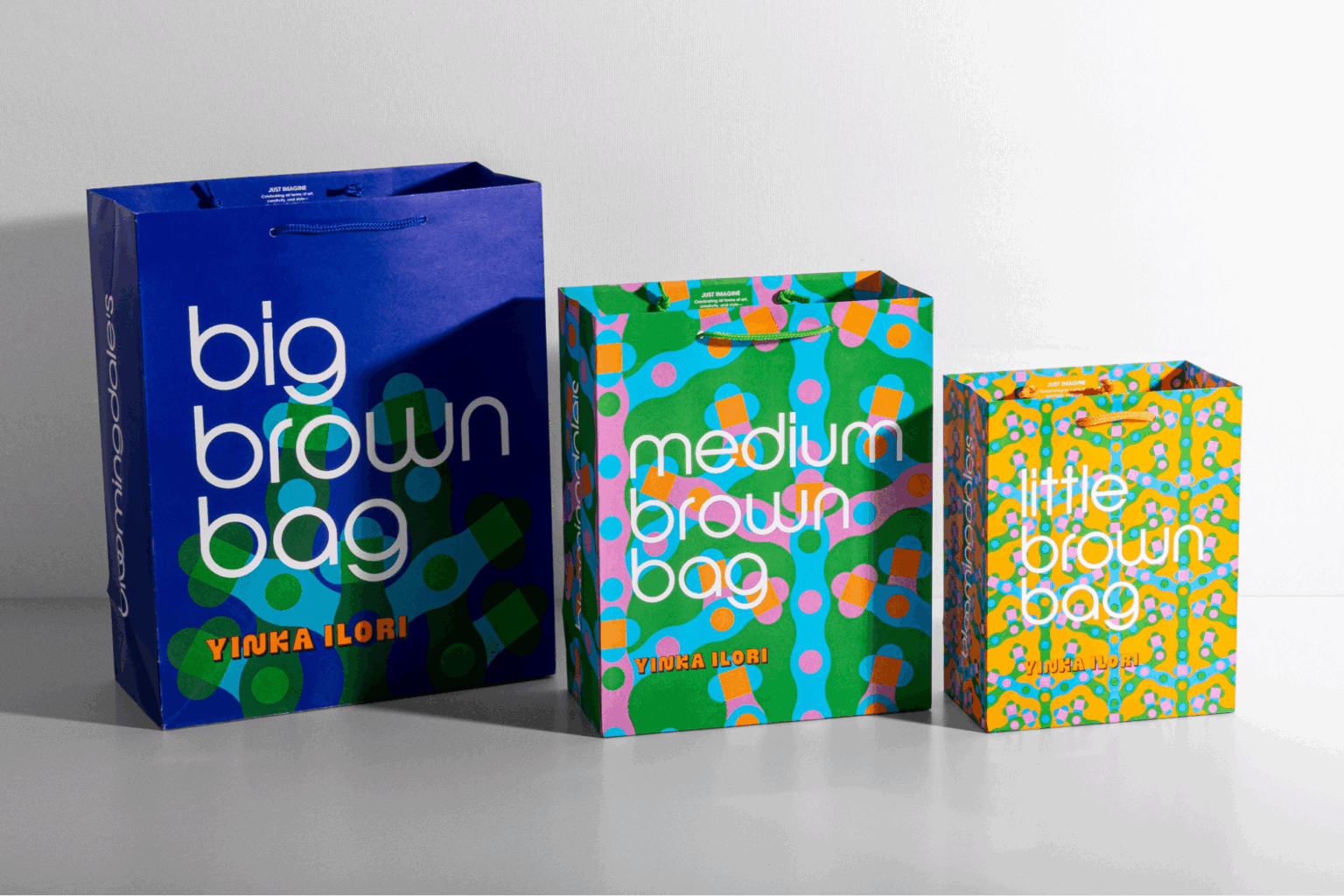
A good example of this in practice: for Bloomingdale’s Just Imagine campaign, Prime Line added spot UV treatment to the iconic Little Brown Bag — applying a tactile gloss finish to the logo on the front, back, and side gussets. The result was a sensory distinction that enhanced the unboxing experience without changing the bag’s structure or silhouette. One carefully chosen finish elevated a familiar retail staple into something worth noticing — and worth remembering.
That’s the principle in action. Sensory impact doesn’t require reinventing the package. It requires knowing which detail to amplify.
Some of the most effective enhancements include:
- Textured papers and wraps
- Embossed or debossed surface details
- Satin ribbon pulls
- Printed interior messaging
- Die-cut reveal moments
- Scent sachets for apparel, beauty, or wellness products
- Layered tissue presentations
The key is intentionality. The most memorable packaging experiences focus on one or two sensory elements executed exceptionally well — rather than layering complexity that can increase costs without always meaningfully improving the customer experience.
Designing Discovery Moments Into Gift Sets
Great gift packaging creates anticipation.
Rather than presenting everything at once, the best gift sets guide customers through a sequence of discoveries — a ribbon to pull, a layer of tissue to part, an insert card to read before the product is revealed. That sequence isn’t incidental. It’s a structural choice that shapes how a customer feels about what they’re receiving.
This is where inserts become much more than protective packaging components. Thoughtfully designed insert systems can:
- Protect products during transit
- Organize assortments elegantly
- Introduce complementary products
- Support brand storytelling
- Encourage exploration and engagement
The Waxing Poetic Storytelling Box is a good illustration of this in practice. Rather than presenting the jewelry immediately, the packaging was designed to begin the story before the lid was even lifted — with a book-style magnetic closure that opens like a journal, an acetate window that previews the product inside, and a custom foam insert that ensures it arrives presentation-ready. The reveal is sequenced. The anticipation is structural. The concept also scaled beyond a single box. Waxing Poetic produced one for each month of the year, and together the twelve formed a full calendar display in-store. On the shelf, the set worked as merchandising. In the customer’s hands, each box carried its own chapter, which made it as natural a gift as it was a personal purchase. And the box itself stays with the customer long after the jewelry is worn.
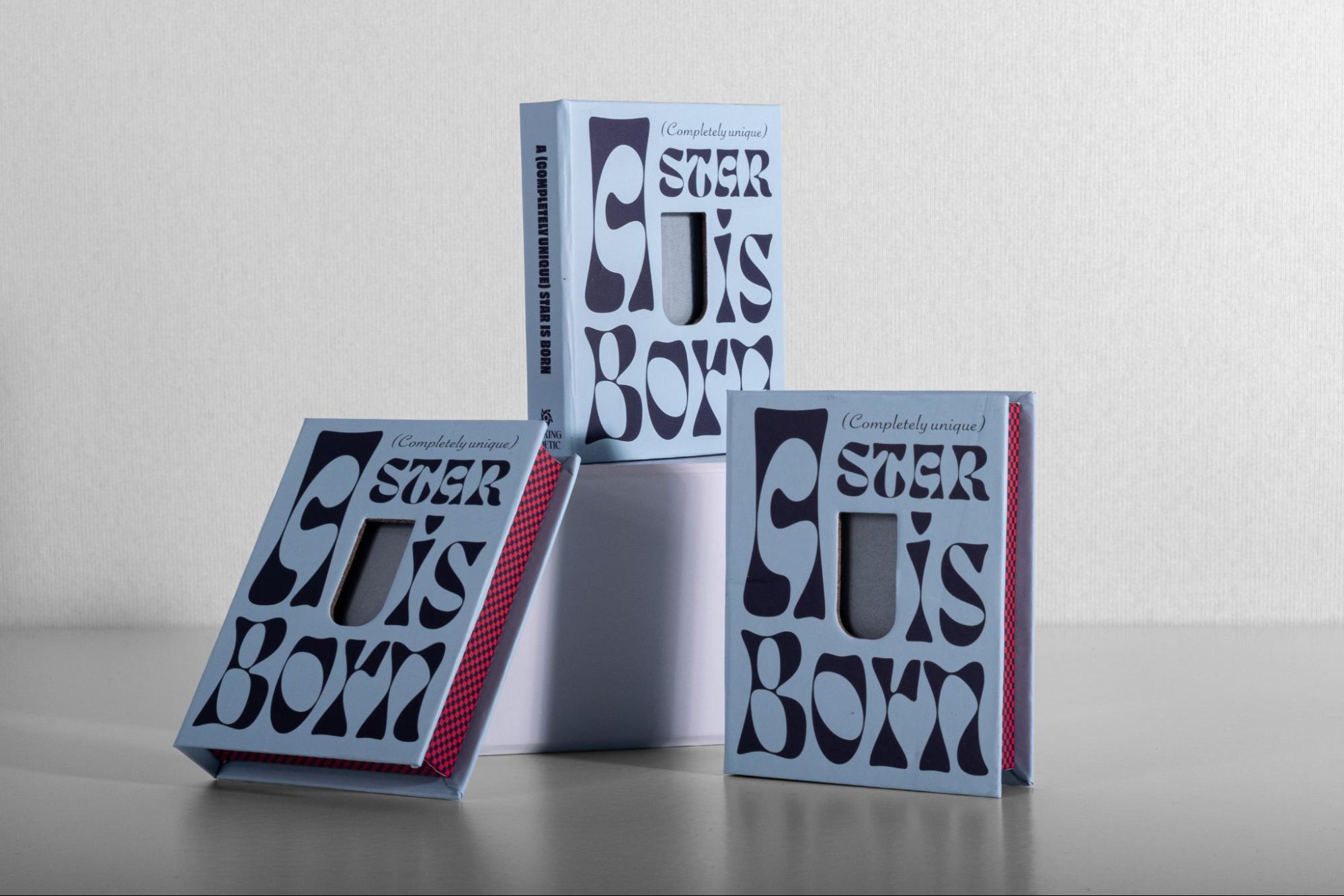
For brands creating gift sets, subscription programs, or limited-edition collections, structural design can transform packaging from a container into part of the product experience itself. The most successful designs balance protection and presentation equally — ensuring products arrive safely while still creating moments of excitement and discovery.
Packaging Designed for Sharing
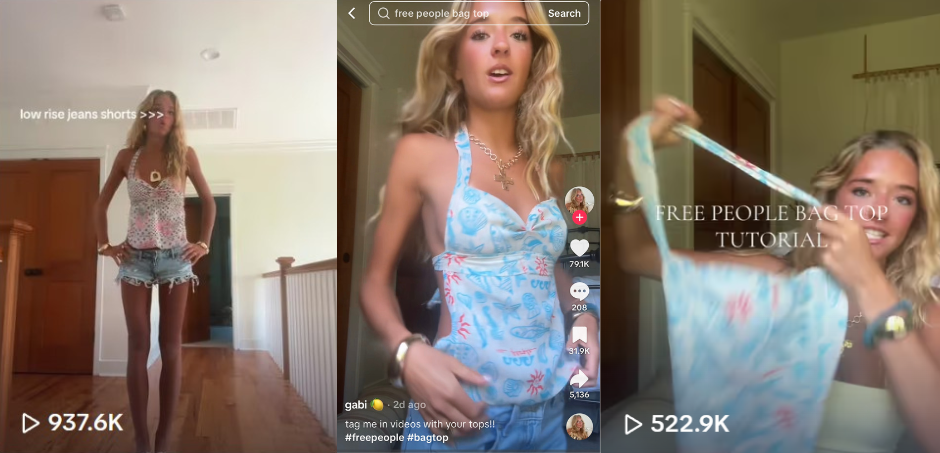
Consumers increasingly document purchases online, but highly shareable packaging rarely happens by accident.
Glossier built one of the most recognizable unboxing rituals in DTC retail not through expensive structural packaging, but through a consistent system of pink bubble pouches, sticker sheets, and branded tissue — elements that photograph well, feel cohesive, and became instantly associated with the brand. The packaging became part of the identity. Customers didn’t just share it; they expected it.
The strongest unboxing experiences are engineered for capture — with a clear reveal moment, branded interior printing, cohesive color systems, premium texture contrasts, and strong visual framing for photography and video. Interior surfaces act as branded backdrops. Inserts become part of the storytelling. The reveal itself becomes a ritual.
We explored a version of this in When Packaging Goes Viral: How a Free People Bag Became a TikTok Fashion Trend, where packaging evolved from a functional necessity into a recognizable, shareable piece of the brand identity. The implications for DTC brands are significant: every shared unboxing video, product reveal, or customer photo extends the reach of the original purchase without additional advertising spend.
In a media environment where organic reach is increasingly difficult to earn, thoughtful packaging has become both a customer experience tool and a content strategy.
The Most Effective Loyalty Tool Might Be a Simple Insert Card
Not every surprise needs to be structural.
Some of the highest-performing post-purchase tactics are also among the most affordable — and the easiest to test and iterate without redesigning core packaging systems. Strategically placed inserts can drive repeat purchase rates, referral conversions, and loyalty program enrollment without adding meaningful per-unit cost.
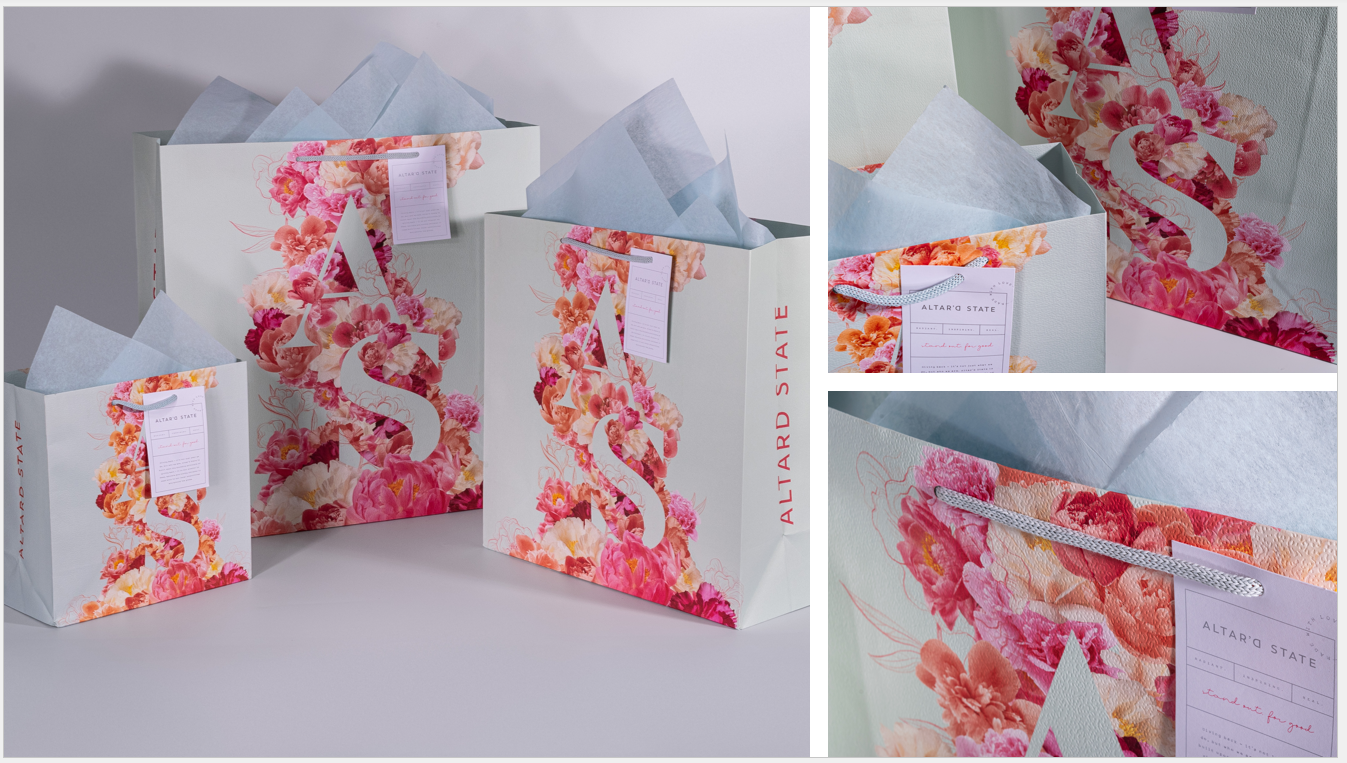
A good example of this thinking in practice: a recent Prime Line project for Altar’d State paired full-bleed floral shopping bags with coordinated tissue paper and branded insert cards tied directly to the rope handles — creating a cohesive unboxing system where every element, including the card, felt intentional rather than incidental. The insert wasn’t an afterthought. It was part of the presentation.
Across our work with apparel, beauty, and specialty retail brands, we’re seeing insert programs used increasingly as live testing environments — brands swap messaging, offers, and QR destinations seasonally without touching their core packaging structure. It’s one of the most operationally efficient ways to keep the post-purchase experience feeling fresh.
Popular examples include:
- Referral incentives
- QR-linked loyalty programs
- Founder notes
- Product education cards
- Surprise discounts
- Re-gift messaging
- Seasonal thank-you cards
These additions extend engagement beyond the transaction itself while giving brands the flexibility to test campaigns and offers in real time — without the lead times or minimum order quantities of a structural packaging change.
Why Modular Packaging Systems Are Winning
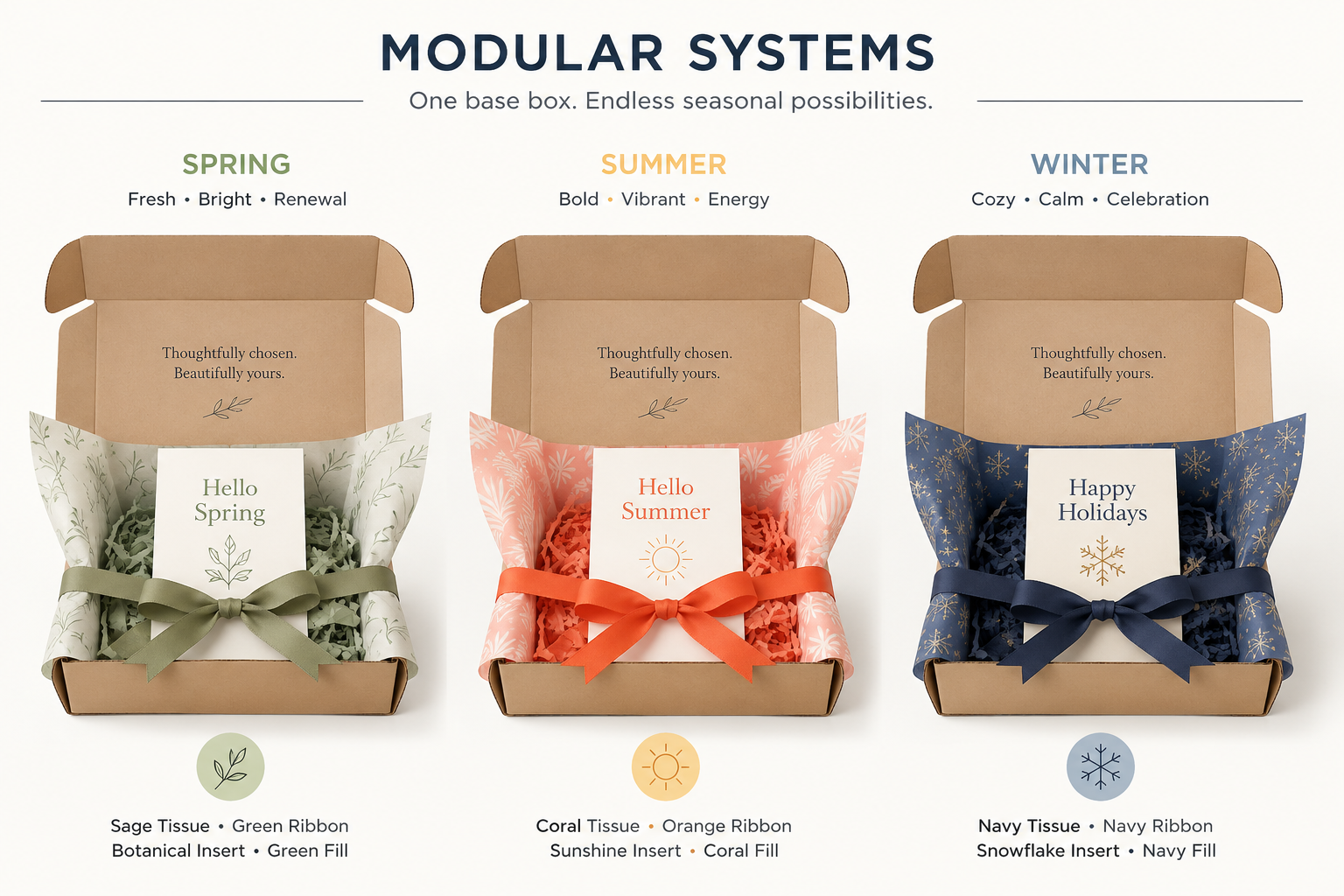
One of the clearest trends we’re seeing across apparel, beauty, specialty retail, and gifting right now is a move away from fully custom seasonal packaging toward modular packaging systems.
Rather than redesigning boxes or bags multiple times a year — with the associated tooling costs, minimum order quantities, and inventory risk — brands are building flexible programs around a consistent structural foundation:
- A core mailer or box structure
- Seasonal tissue paper
- Interchangeable ribbons
- Limited-edition stickers
- Campaign-specific inserts
- Promotional sleeves
This approach creates freshness without sacrificing operational efficiency. It reduces inventory complexity, shortens lead times, and minimizes obsolete packaging after seasonal campaigns end — three outcomes that matter as much to procurement as they do to brand.
For more on the specific accents that make modular systems work, see Packaging Accents: The Small Details That Make a Big Impact.
What This Means for Your Business
The brands creating the strongest customer loyalty today aren’t necessarily shipping the most expensive packages.
They’re creating intentional moments — and building packaging systems that can deliver those moments consistently, seasonally, and at scale.
Whether that moment comes from a premium rigid gift box, a tactile reveal beneath custom tissue paper, a discovery-driven insert system, or a simple thank-you card tucked inside an everyday order, the goal is the same: transforming delivery into an experience worth remembering, sharing, and coming back for.
The research is consistent. Emotional connection — not satisfaction — is one of the strongest drivers of long-term customer value. For DTC brands managing rising acquisition costs and increasingly competitive markets, the unboxing experience represents one of the most cost-efficient ways to build that connection at scale.
At Prime Line Packaging, we work with brands across apparel, beauty, gifting, and specialty retail to build packaging programs that balance presentation, performance, and operational efficiency — from premium gift boxes and custom inserts to modular seasonal systems designed to grow with your business.
If you’re ready to turn your packaging into a more deliberate part of your customer experience strategy — one that drives repeat purchases, earns organic shares, and strengthens brand loyalty with every order — let’s talk about what that looks like for your business.