Custom Packaging For Clothing: Creating A Stronger Brand Experience From Store To Unboxing
Fashion is built around presentation. The cut of a jacket, the texture of a fabric, the color of a shoe, and the details of an accessory shape how customers experience a brand. Packaging deserves the same attention because it’s often one of the first branded elements customers see and one of the last they take home.
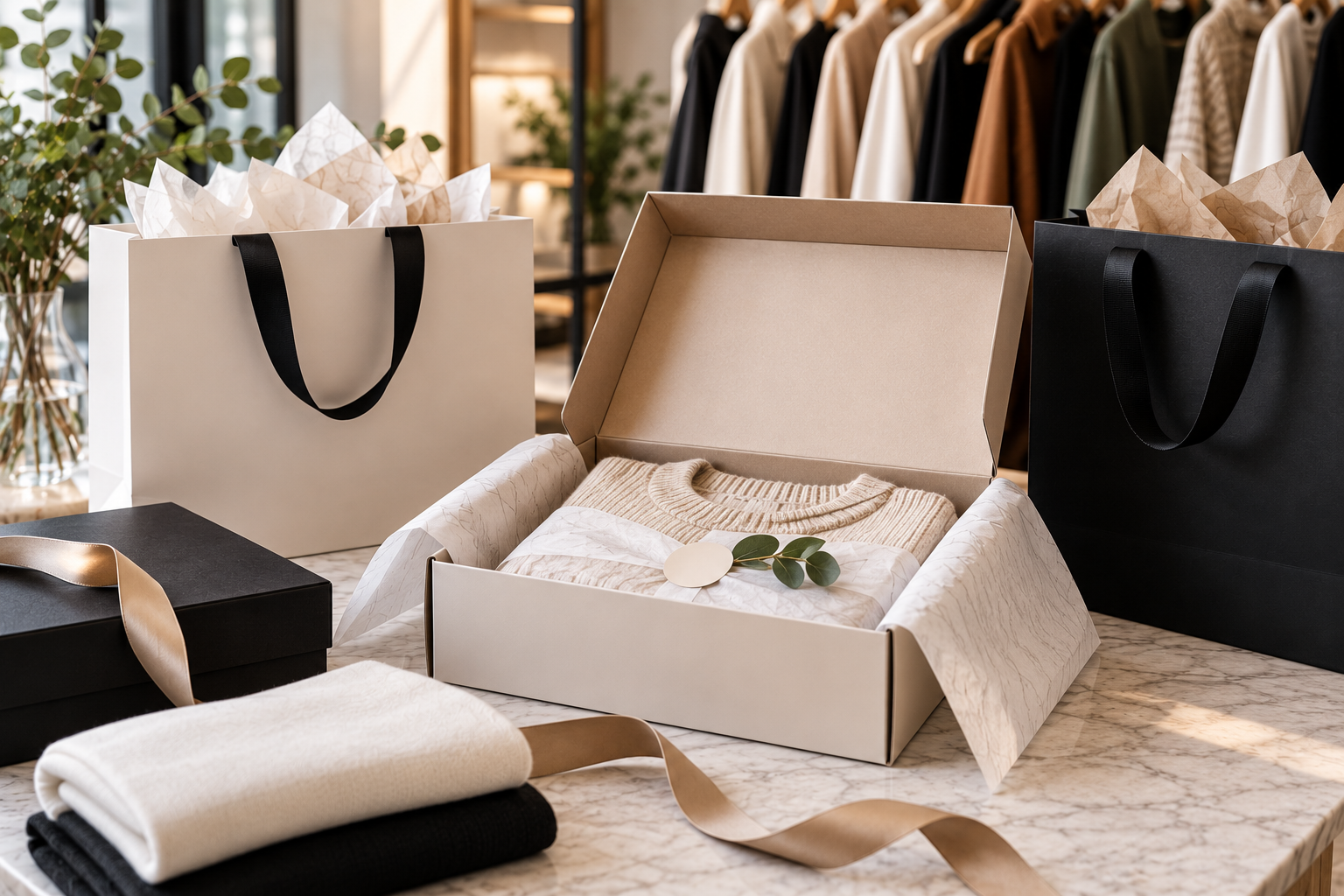
Thoughtful custom packaging for clothing can protect products while extending their identity. A well-designed shopping bag, folding box, tissue wrap, or ribbon can make the purchase feel more complete without distracting from the apparel itself. Packaging works best when it feels like a natural extension of the brand, not a separate afterthought.
Packaging Can Extend A Fashion Brand Beyond The Garment
A customer may leave the store wearing one brand while carrying another brand’s shopping bag through a crowded shopping district. That bag stays visible long after the transaction ends. Ecommerce packaging creates a similar opportunity because the package becomes the physical introduction to a brand customers may previously have experienced only through a screen.
Packaging can reinforce several parts of the customer experience:
- Consistent colors and typography can strengthen brand recognition.
- Thoughtful presentation can support the perceived value of the clothing inside.
- Coordinated boxes, bags, and accessories can make a product line feel more polished.
- Gift-ready details can add value for customers shopping for special occasions.
- Distinctive packaging can help customers remember where they made their purchase.
The strongest apparel packaging blends function with presentation and gives customers a sense of anticipation before the product is fully revealed. That balance matters most for apparel packaging designed to double as gift wrap.
Choose Packaging Around The Clothing You Sell
An apparel brand selling T-shirts has different packaging needs than one specializing in tailored coats, footwear, handbags, or jewelry. Start with the products, not a generic structure that forces an entire assortment into one format.
Folding boxes can work well for garments, shoes, and accessories because they provide a clean presentation while remaining practical to assemble and store. Euro tote bags can carry purchases out of a retail location while providing a large surface for branding. Premium collections may call for more substantial box structures or additional presentation details.
A complete apparel packaging program might include:
- Folding boxes sized around frequently sold garments or accessories.
- Euro tote bags in several dimensions for different purchase sizes.
- Tissue paper to wrap and separate folded apparel.
- Ribbons or closures that coordinate with the primary brand colors.
- Boxes with interior printing for higher-end collections or gift purchases.
The strongest structure suits the merchandise, sales environment, and intended customer experience.
Euro Tote Bags Bring Fashion Branding Into The Street
Euro tote bags are particularly well suited to fashion retail because they combine carrying function with strong visual presence. Their structure gives brands room to experiment with kraft, textured, pearlized, laminated, and other paper styles while keeping the overall presentation polished.
Their customization possibilities also give apparel brands room to create something recognizable. Exterior and interior printing can carry graphics or colors, while finishes can change the way the bag looks and feels.
Options can include:
- Spot-color or CMYK printing for custom graphics.
- Matte or gloss lamination for different surface treatments.
- Spot UV for selective contrast.
- Foil stamping or metallic printing for selected details.
- Soft-touch lamination for a smoother tactile finish.
- Embossing or debossing for dimensional branding.
Handle choices can also shape the finished look. Materials such as cotton twill, twisted rope, grosgrain, and paper twist can create very different retail impressions, especially when paired with grommets, die cuts, or ribbon closures. These details help make euro tote bags a strong fit for apparel retail.
Folding Boxes Create A Clean Apparel Presentation
Folding boxes offer a different experience. They organize products neatly, provide useful exterior and interior surfaces for design, and store efficiently until they’re needed.
They work especially well for clothing, footwear, and accessories because the box can be tailored to the product’s dimensions while still leaving room for custom artwork, metallic foil, spot UV, pearlized papers, and other finishing details.
The box should still be sized around the actual product. Excess space can make a compact garment feel lost inside the package, while an undersized structure can lead to awkward folding and a poor reveal. Testing the finished garment inside a physical sample can help confirm proportions before a larger production run.
A well-planned folding box can also serve as both product packaging and gift presentation without forcing customers to rewrap the purchase.
Create Packaging That Can Double As Gift Wrap
Clothing is frequently purchased as a gift, especially around holidays, birthdays, anniversaries, and other celebrations. Packaging that already looks polished can make that purchase easier for the customer.
A decorative folding box can eliminate the need to find a second box and wrap it separately. A euro tote with a carefully selected handle and coordinated tissue can serve the same purpose for retail purchases.
Gift-oriented details might include:
- Branded tissue folded neatly around the garment.
- Coordinating ribbon or decorative closures.
- Seasonal artwork used within an established brand system.
- Interior graphics that appear after the box is opened.
- A note card or designated space for a personal message.
The presentation can feel special without becoming complicated. Customers generally appreciate packaging that looks complete right away.
Use Finishes To Reflect The Fashion Brand
Fashion brands already make careful choices about texture, color, material, and detail. Packaging can follow the same design thinking.
A minimalist apparel company may prefer matte surfaces, understated typography, and subtle embossing. A more expressive fashion label might use vivid printing, foil details, contrasting interiors, or patterned graphics. Neither direction is inherently better because the packaging needs to feel appropriate for the brand it represents.
Options include foil stamping, spot UV, embossing, debossing, pearlized papers, gloss treatments, and soft-touch surfaces.
The key is restraint. Adding more effects doesn’t automatically make a package look more premium, especially if the finishes compete with the logo, artwork, or apparel itself.
Keep Packaging Consistent Across Collections And Locations
Fashion changes constantly, but the brand still needs recognizable anchors. Seasonal collections, capsule releases, and limited editions can look different without making customers wonder whether they came from the same company.
A consistent packaging system might keep the logo position, typography, base palette, or handle style while letting graphics and accent colors change. That creates enough flexibility for fashion while preserving familiarity.
Seasonal and limited-edition packaging can still feel fresh while staying connected to the core brand. The same approach can work across bags, boxes, tissue, and gift-oriented details, especially when apparel packaging is designed as one coordinated system.
Consistency also becomes increasingly useful as brands expand into additional stores or product categories. Established packaging standards make it easier to keep the experience connected.
Design For Both Retail And Ecommerce
Retail and ecommerce introduce customers to packaging in very different ways. In a store, the shopping bag may be handed directly to the customer after the purchase. Online, the package needs to travel before the customer experiences the product.
The visual identity should still feel related across both channels. Boxes, bags, tissue, cards, and other components can share the same colors, typography, patterns, or logo treatment even if their structures differ. Ecommerce packaging also needs to account for shipping and the garment’s condition after transit, while retail packaging needs to be comfortable to carry and practical for store employees to pack.
The goal isn’t to make every package identical. It’s to make every customer interaction unmistakably part of the same brand.
Build An Unboxing Experience Without Overcomplicating It
Unboxing can add personality to an apparel purchase, but it doesn’t require a complicated layering system.
Branded tissue can keep a garment neatly folded while adding color. Interior printing can introduce a graphic that customers don’t see until the package opens. A simple card can communicate a message without crowding the exterior design. Custom ribbons can add another level of presentation for gift purchases or higher-end collections.
These details can work especially well in apparel packaging that creates a more polished gift-ready experience. Every component should earn its place. Packaging becomes less enjoyable when customers have to work through unnecessary layers simply to reach the clothing.
Avoid Common Apparel Packaging Mistakes
A beautiful concept can still fail if it doesn’t work with the actual product. Physical testing deserves just as much attention as artwork.
Common mistakes include:
- Choosing box dimensions before testing folded garments inside them.
- Using oversized structures that make smaller items look lost.
- Designing shopping bags without considering the weight of typical purchases.
- Combining too many finishes and graphic treatments.
- Creating ecommerce packaging that feels unrelated to the retail experience.
- Changing the packaging identity completely with every seasonal collection.
- Selecting appearance over durability or everyday usability.
- Skipping physical samples before approving larger production quantities.
Strong custom packaging for clothing should still look polished after storage, filling, carrying, transport, and opening. Packaging needs to succeed outside the design file.
Create A Packaging System That Can Grow With The Brand
Apparel companies rarely stay static. A clothing label may expand into accessories, footwear, gift items, new garment categories, additional store locations, or larger ecommerce operations.
A flexible packaging system makes those changes easier to manage. Brands can establish several core bag and box sizes, repeatable design standards, and recognizable finishing details that they can adapt instead of rebuilding for every new product.
A coordinated mix of folding boxes, tissue, ribbons, and gift-ready apparel packaging can support one side of the customer experience, while custom euro tote bags can extend the same identity into the retail environment.
Ready To Create Packaging That Fits Your Fashion Brand?
Prime Line Packaging works with fashion labels, boutiques, retailers, ecommerce businesses, and accessory brands to create packaging around the products they actually sell.
Start with your garment dimensions, product categories, expected quantities, branding files, preferred structures, and finishing ideas. From there, we can help create boxes, bags, and presentation pieces that protect the product while giving customers an experience that feels consistent with your brand.
Start a project with Prime Line Packaging and tell us what you’re creating.
Frequently Asked Questions About Custom Packaging For Clothing
What Types Of Packaging Are Used For Clothing?
Apparel brands can use folding boxes, rigid boxes, euro tote bags, tissue paper, ribbons, and other packaging formats depending on the product and sales channel. A boutique selling lightweight garments may need a different combination than a retailer selling footwear and heavier clothing. Many brands use several coordinated packaging formats instead of relying on one package for everything.
Can Clothing Packaging Be Custom Printed?
Yes. Bags and boxes can include custom logos, colors, typography, graphics, patterns, and interior printing. You can also add additional treatments, depending on the package structure and desired appearance. Keeping core visual elements consistent across different pieces can make the complete packaging system feel more connected.
What Packaging Is Best For A Clothing Boutique?
The best packaging depends on the merchandise, typical purchase size, store positioning, and desired presentation. Euro tote bags offer a polished carrying option, while folding boxes work well for clothing, accessories, footwear, and gift purchases. Many boutiques benefit from combining bags, boxes, and tissue rather than choosing a single format.
Can Clothing Boxes Double As Gift Packaging?
Yes. Folding and other decorative boxes can be designed to provide a finished presentation without requiring customers to rewrap the purchase. Tissue paper, ribbons, interior printing, or seasonal artwork can add another level of detail. Gift-ready apparel packaging can make the purchase feel more complete from the moment it’s handed over.
What Are Euro Tote Bags Used For In Fashion Retail?
Euro totes are premium paper shopping bags commonly used by fashion and higher-end retail brands. They can carry clothing, shoes, jewelry, cosmetics, and accessories while providing ample space for custom branding. Retailers can adjust the materials, printing, handles, and finishes to match their visual identity.
Can Apparel Packaging Include Custom Tissue And Ribbon?
Yes. Tissue and ribbon can be coordinated with the larger packaging design to create a more complete presentation. They can repeat colors, patterns, logos, or other details used elsewhere in the brand. These additions can be particularly useful for gift purchases and higher-end collections.
How Can Apparel Brands Create A Premium Packaging Look?
A premium presentation starts with good proportions, appropriate materials, clear typography, and a design that fits the brand. Foil, embossing, specialty papers, distinctive handles, and interior printing can add detail where appropriate. The most effective designs usually choose a few strong treatments instead of applying every possible finish to the same package.
Should Ecommerce And Retail Packaging Match?
They should feel related, even when the structures differ. Shared colors, typography, logos, patterns, or other recognizable details can connect the online and in-store experience. This lets each package do its job while keeping the brand consistent.
How Do I Start A Custom Clothing Packaging Project?
Begin with the products you need to package, garment dimensions, expected quantities, product categories, branding files, and preferred package types. It also helps to know whether the packaging will primarily serve retail, ecommerce, gifting, or several channels. Contact Prime Line Packaging with those details so we can start developing a coordinated packaging direction for your apparel brand.