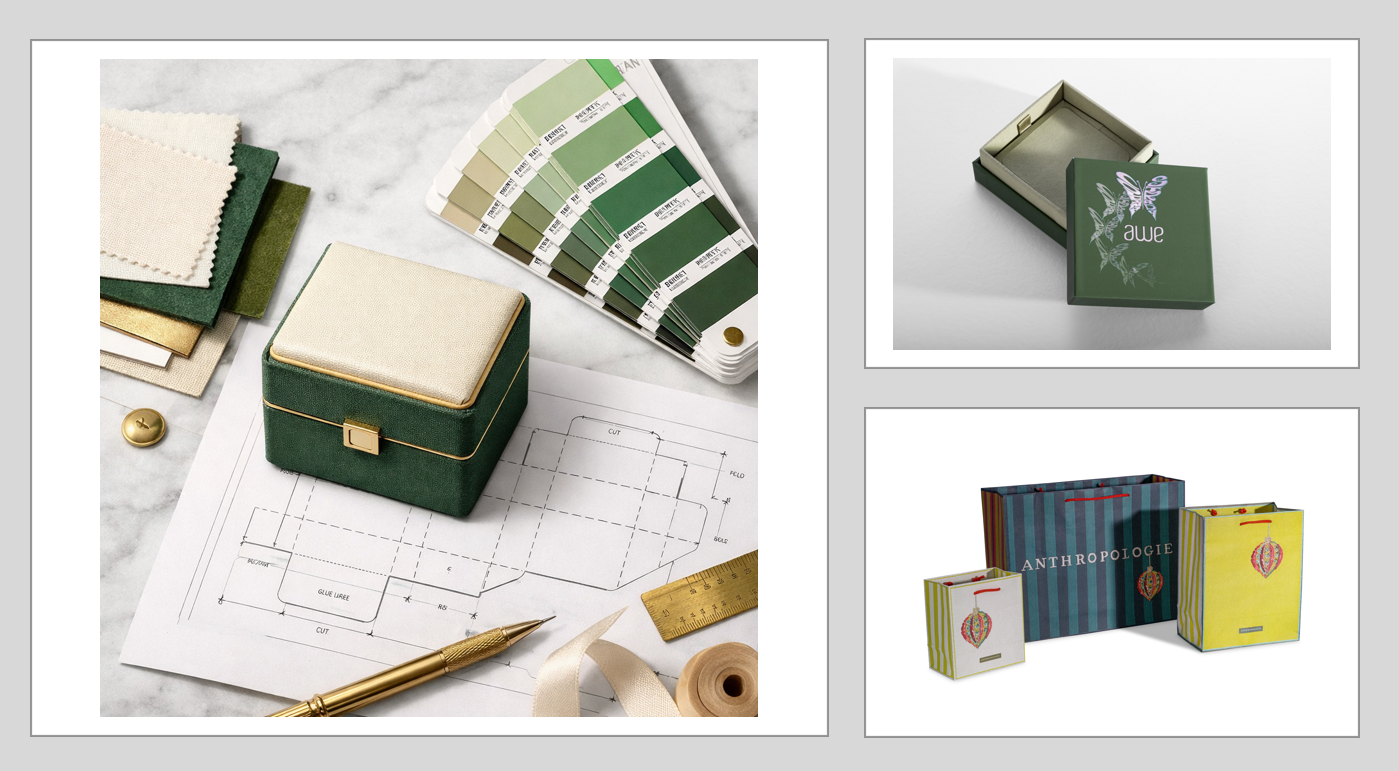
From Sample to Production: A Quality Control Playbook for Custom Packaging
There’s a moment every packaging professional knows well: the pre-production sample arrives, and it’s either a quiet triumph or the beginning of another revision round. And when it’s the latter — when round four is underway three weeks before a floor set, or a finish that looked perfect in the lightbox is reading completely differently under store fluorescents — the cost isn’t just a reprint. It’s a buyer conversation, a missed window, sometimes a season. The gap between a beautiful concept and a flawless production run isn’t luck. It’s process. Here’s how to close it.
Know Your Samples Before You Sign Off on Anything
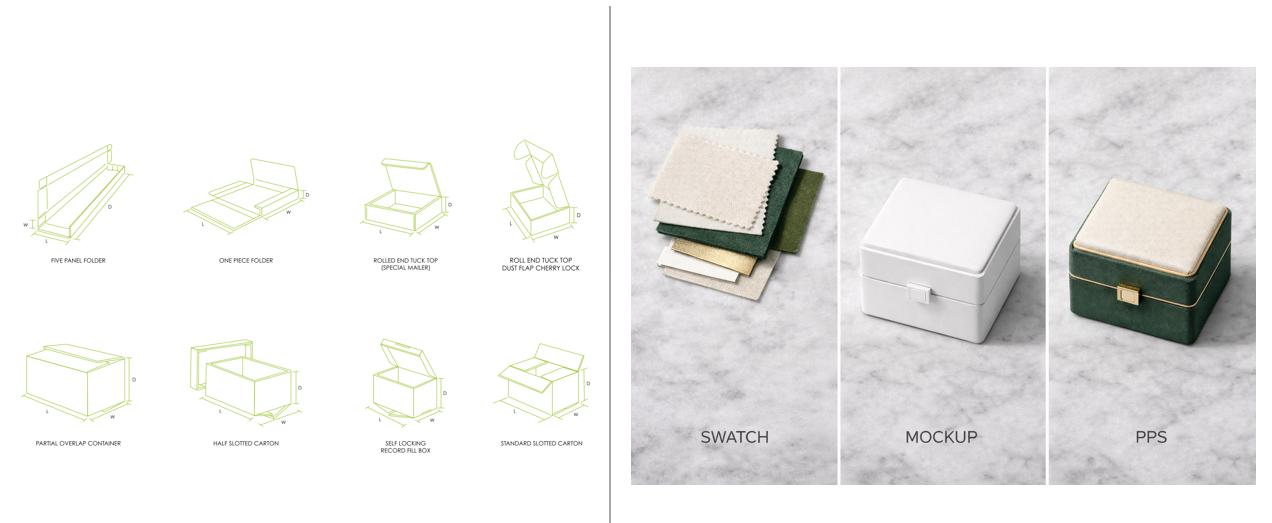
Understanding exactly what each sample type is designed to reveal — and what it can’t tell you — is what makes a review cadence sharp and efficient.
Material swatches are your earliest touchpoint. They communicate texture, weight, sheen, and color before any structure is involved. If you’re evaluating a soft-touch laminate, a beater-dyed specialty paper, or a particular foil substrate, the swatch is where you confirm that the material behaves the way you expect. At Prime Line, paper selections and material options are available to view through the Materials page before any sample is ever ordered — useful for aligning on materials early, before the clock is running on production.
Mockups — sometimes called white samples are dimensionally accurate but typically unprinted or digitally output. Mostly used for new product structure development these are used for validating size, proportion, handle placement, closure mechanics, and how a finished piece will hold product. They iterate quickly, are economic, and are invaluable for stakeholder alignment before investing in full production tooling.
Pre-production samples (PPS) are where it gets real — and where the most important decisions get locked in. Created before manufacturing starts, a PPS allows buyers to review design, materials, labeling, and construction details before large-scale production begins. At Prime Line, once artwork is approved, pre-production samples are submitted for sign-off before the order moves into full production — with a top-of-production pull following as a final checkpoint before cartons ship. It’s your last opportunity to catch a color shift, a handle that pulls differently under load, or a laminate behaving unexpectedly on production substrate rather than sample stock. It rewards close attention.
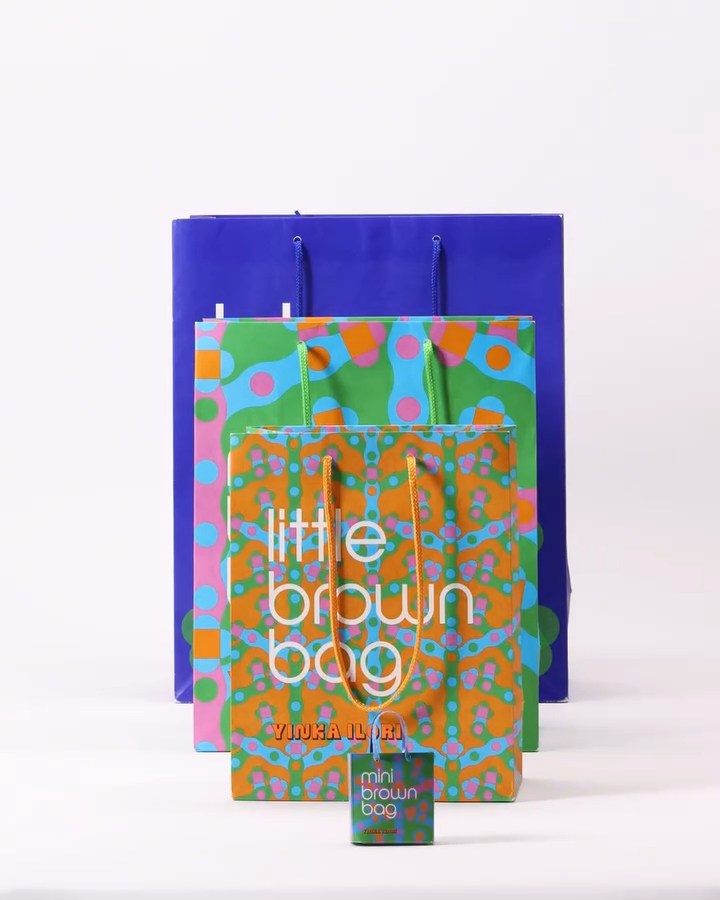
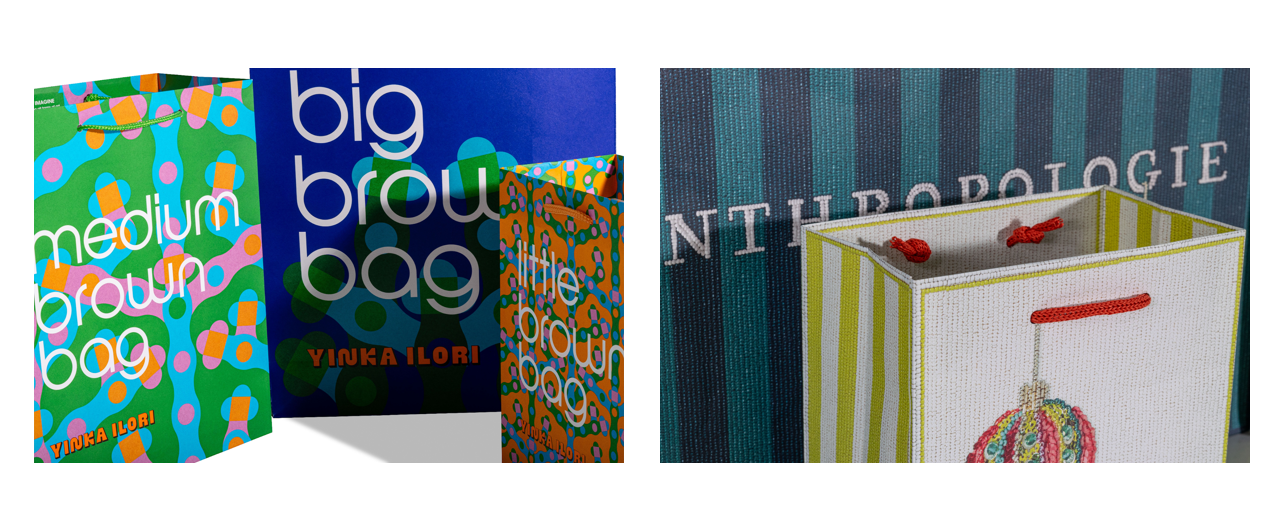
When Prime Line produced the iconic Bloomingdale’s campaign bags in collaboration with artist Yinka Ilori, color matching across materials was critical — particularly for the orange bag. A separate round of sampling was conducted specifically to ensure the braided rope handle would coordinate seamlessly with the paper, ultimately identifying an identical orange stock handle that eliminated the need and cost of custom dyeing — a meaningful saving for a seasonal campaign without any compromise on the final result.
Building a Leaner Sample Review Cadence
Sample rounds are expensive in time, not just cost. Each one can typically add weeks to a project timeline — weeks that often collide with launch windows, seasonal deadlines, or key milestones. The goal isn’t to compress review steps; it’s to make each one count.
A few things high-performing teams tend to do well here:
Define sign-off roles before sampling begins. Knowing in advance who owns which decision — design approves aesthetics, operations approves construction, a brand lead gives final PPS sign-off — means feedback arrives faster and with clearer authority. The golden or final PPS serves as a reference point for the packaging partner during production, and ideally the design team, packaging partner, and quality staff should all retain a copy.
Review concurrently, not sequentially. When stakeholders review a sample at the same time using shared annotations and common photo references, you get consolidated feedback in one pass rather than layered reactions across multiple rounds.
Keep structural review and finish review separate. These are genuinely different decisions requiring different expertise and different reference materials. Mixing them under time pressure is how subtle finish issues slip through to production.
One underrated benefit of a tight cadence: it also keeps you ahead of retailer compliance requirements. Major retailers — from Nordstrom to Target to Sephora — have specific packaging standards around everything from handle construction to print legibility. When review roles are clear and sample stages are properly sequenced, compliance issues surface during sampling rather than at the vendor compliance stage, where they’re considerably more expensive to resolve.
Visual QA: Photo Standards That Actually Work
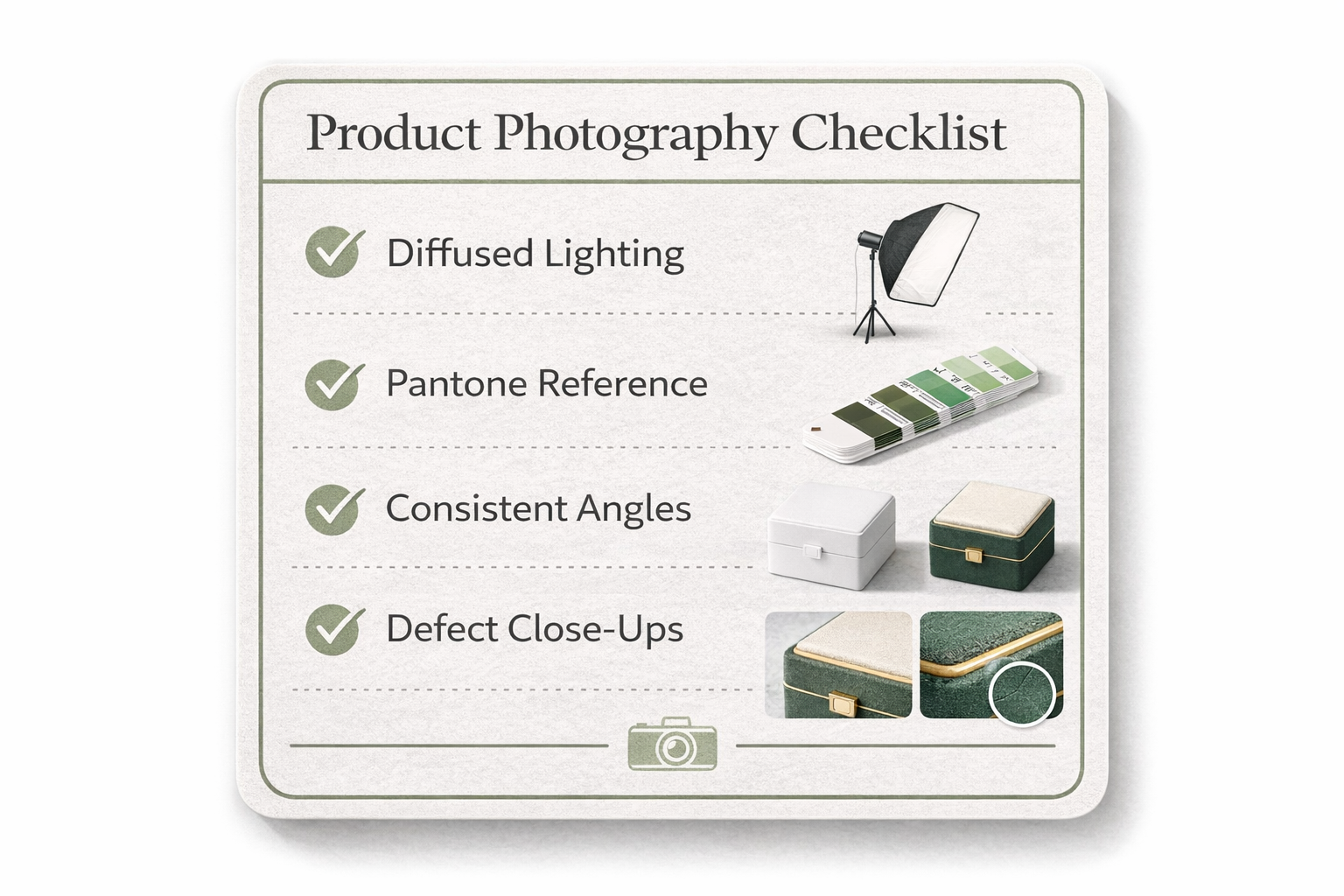
Whether you’re managing production domestically or internationally, your quality communication is only as good as your visual documentation. Standardized photo protocols are a straightforward way to remove ambiguity from the review process and keep everyone working from the same reference. It’s also one of the areas where small investments in consistency pay back disproportionately — a standardized photo protocol costs nothing to implement and can save an entire revision round by making feedback unambiguous the first time.
A few elements that make a real difference:
- Neutral, diffused lighting. Direct flash obscures soft-touch finishes and creates hotspots that distort color accuracy. A lightbox or consistent daylight-equivalent setup removes those variables entirely.
- Pantone reference targets in frame. For color-critical work — foil shades, PMS-matched papers, lamination tints — including a Pantone fan or color chip in every review photo creates an unambiguous shared reference across teams and time zones.
- Consistent angles across rounds. Front, back, and both gussets at the same angle and distance every time. This makes visual comparison between rounds straightforward rather than interpretive.
- Defect close-ups with scale. When flagging a printing artifact, scuff, or adhesion issue, a cropped close-up with a ruler or coin for scale is far more actionable than a full-shot image where the problem is barely visible.
The payoff is fewer disputed approvals, faster sign-off, and a clear paper trail if questions arise post-delivery — all of which matters when you’re coordinating across design, production, and brand teams simultaneously.
Finish Durability Testing: What You’re Actually Validating
Treatments like soft-touch lamination, matte or gloss coating, foil stamping, and UV spot work define how premium custom packaging looks and feels — and they also need to survive the supply chain. A finish that scuffs in transit or a foil that lifts at the edges can quietly undermine a lot of upstream investment.
Abrasion damage can occur during shipment, storage, handling, and end use, resulting in significant decreases in product appearance and legibility. The industry-standard test for printed materials is ASTM D5264, the Sutherland Rub Test, which determines the amount of scuff or abrasion damage that may occur to printed materials during shipment, storage, or handling — and it’s applicable across corrugated boxes, folding boxes, labels, and flat graphic packaging.
For surface coatings, scratch testers employ a weighted needle run across the printed surface to simulate the potential scratching that material may encounter in its lifecycle — verifying coating strength and resistance to confirm the final product meets quality standards. For laminated surfaces, cross-hatch adhesion testing evaluates whether a film is properly bonded to substrate — a critical check for soft-touch and anti-scratch laminates, which can be susceptible to delamination under temperature variation during shipping.
The complexity of wear processes has led to the development of numerous standard test methods — rub, abrasion, scratch, and mar testing each employ a different technique, and materials are often ranked and compared using them in combination.
Running these tests at the pre-production sample stage — rather than post-production — keeps quality issues at the revision level rather than the production-run level.
What Goes Into a Great Packaging Partner’s Quality Framework

One of the less visible but most consequential differences between packaging partners is what happens behind the scenes — specifically, how rigorously they manage the manufacturing network producing your work.
At Prime Line, managing the manufacturing network is part of the service. With a carefully vetted global partner network and decades of category expertise, Prime Line selects the most appropriate production partner for each project — matched by format, finish, volume, and timeline — and holds those relationships to structured performance standards that protect quality, consistency, and delivery reliability at every stage.
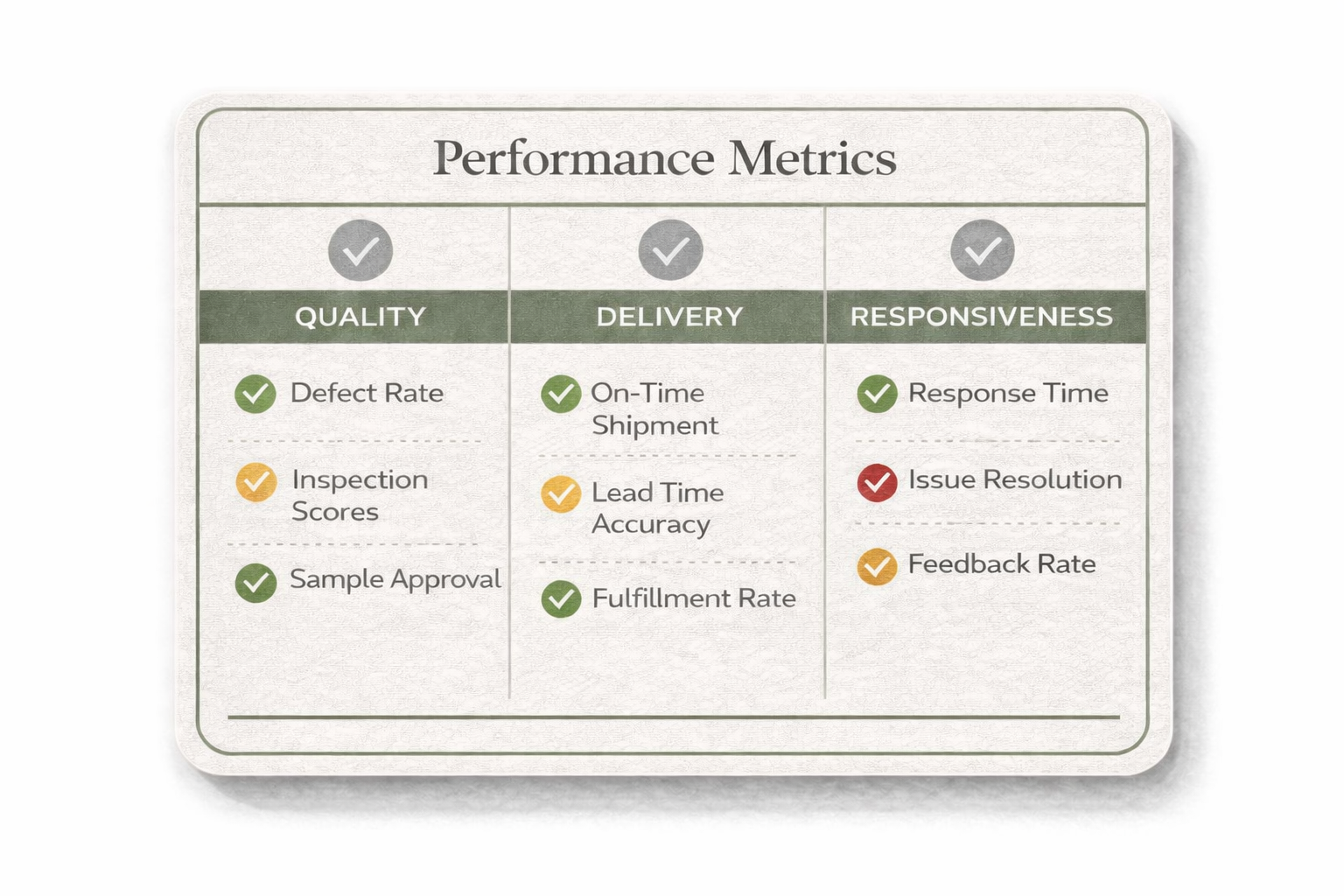
The metrics that drive that framework will be familiar to anyone who has managed vendor performance:
Quality: Defect rate (expressed as a percentage or PPM), first-pass yield, and non-conformance rate against spec. Product quality rate — the percentage of units received without defects — reflects manufacturing consistency and quality control capabilities, and monitoring it is what allows benchmarks to be set and inspection costs to be kept in check.
Delivery: On-time rate, lead time adherence, and schedule stability. For custom packaging tied to launch dates or seasonal programs, a late delivery carries real downstream cost that rarely stays in the packaging budget alone.
Responsiveness: How quickly issues are acknowledged, corrective action plans submitted, and non-conformance reports closed out. A production partner that responds promptly but fails to prevent recurrence may appear cooperative but lacks true problem-solving capability — tracking corrective action effectiveness is what separates reactive partners from those who actively improve.
These aren’t metrics that get reviewed once a year. Structured remediation plans with clear targets, training or process support, and defined deadlines are what keep production relationships on a productive track — and when something does need addressing, having that framework in place means it gets resolved systematically rather than reactively.
For Prime Line’s clients, this means the complexity of managing a global manufacturing network is handled — so the focus can stay where it belongs: on getting the packaging right.
The Bottom Line
The path from sample to successful production run is built on clarity: clear sample types, clear review roles, clear visual standards, clear durability benchmarks, and a packaging partner with the operational rigour to back it all up. Each element compounds the others. When they’re all in place, custom packaging programs move faster with fewer surprises — and what reaches the customer, and the sales floor, reflects exactly what was signed off. In a category where packaging is often the first physical expression of a brand, that alignment isn’t just operational. It’s a form of brand protection.
Contact Prime Line Packaging to learn how our sampling, design, and production process supports your quality standards from first concept through final delivery.