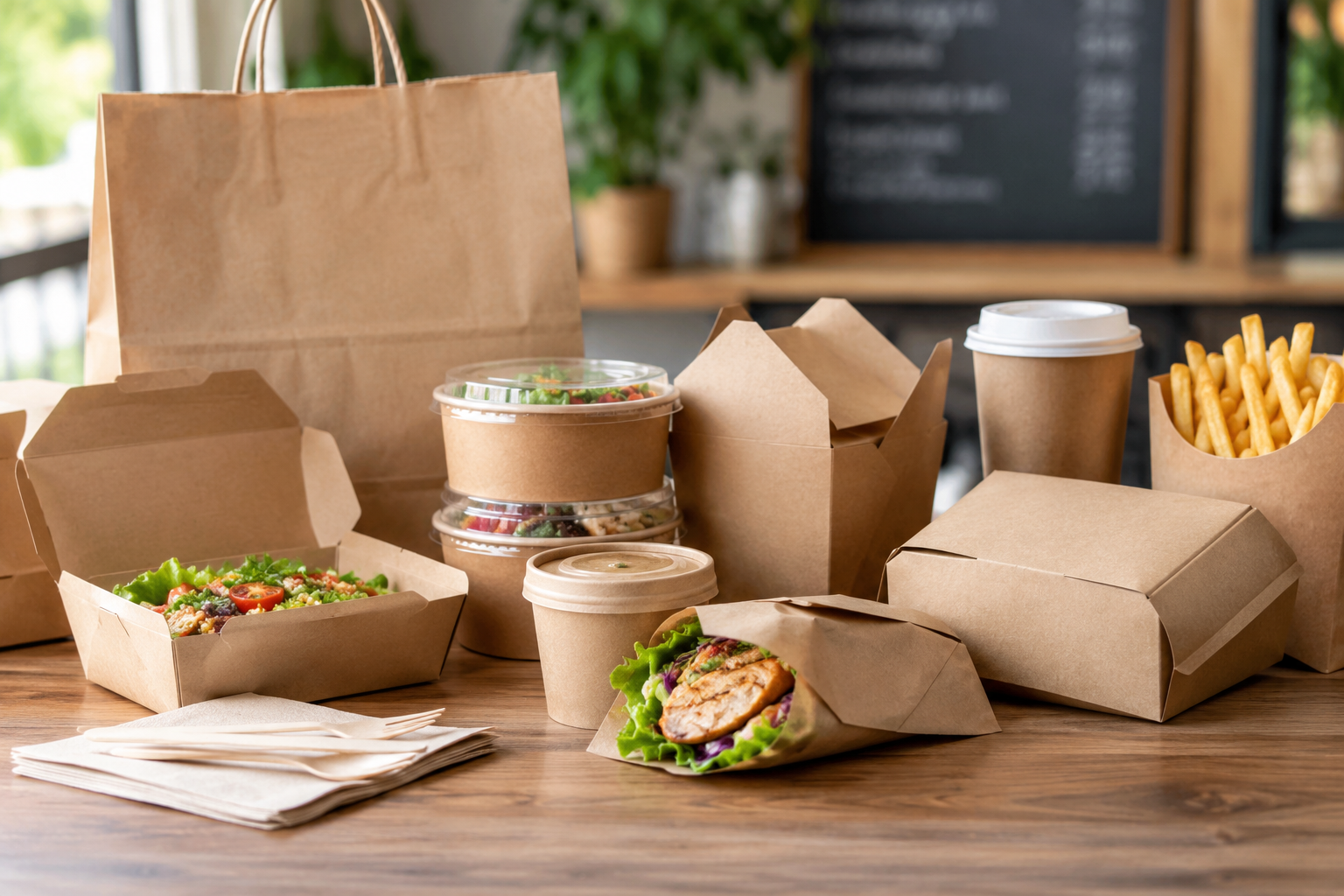
Paper Packaging For Food: Practical Options For Restaurants, Takeout, And Growing Brands
Food packaging has a tough job. It needs to hold the product securely, make life easier for restaurant teams, travel well, and reach the customer looking like someone actually cared about the presentation. Add branding into the mix, and something as simple as a bag or carton becomes a much bigger part of the customer experience.
That’s what makes paper packaging for food such a useful category for restaurants, cafés, bakeries, specialty food businesses, and growing brands. Paper bags, cartons, bakery boxes, wraps, liners, and other formats can each serve a different purpose while still feeling like part of one coordinated packaging program.
At Prime Line Packaging, we believe packaging should start with the product and how people actually use it. A great-looking box doesn’t help much if it’s awkward for employees to pack, too large for the portion, or unable to handle the trip from the restaurant to the customer.
Why Paper Packaging Works Across So Many Food Businesses
Food businesses rarely need just one type of package. A restaurant might need cartons for entrées, smaller boxes for sides, bags for complete orders, and liners for dine-in service. Bakeries have different requirements, while cafés and specialty food retailers may need several package sizes for products that differ substantially in weight and shape.
Paper-based formats give brands plenty of room to build a coordinated system around those different needs. Boxes can carry detailed graphics, while shopping and takeout bags can feature bold logos or repeating patterns. Liners, wraps, and other pieces can extend the same visual identity into smaller customer touchpoints.
Suitable packaging options cover this mix of functionality and brand differentiation, including paper bags, restaurant liners, takeout packaging, and other formats that carry a consistent visual identity.
Match The Package To The Food Inside
Good food packaging starts with a simple question: what actually needs to go inside it?
A pastry shouldn’t be treated like a loaded sandwich. A large prepared entrée has different needs than cookies, bread, or a collection of smaller side dishes. Food weight, portion size, temperature, moisture, and expected travel time can all influence the best package.
Depending on the menu, a packaging program might include:
- Paper takeout bags that comfortably carry multiple boxes or containers.
- Paperboard cartons sized around specific entrées or side dishes.
- Bakery boxes that protect pastries, cakes, cookies, and other delicate products.
- Paper wraps or sheets for sandwiches and individual menu items.
- Branded liners that extend the restaurant identity into dine-in service.
- Outer cartons that give retail food products a more finished presentation.
The package should fit closely enough to support the product without making the food look crowded. Oversized packaging can create unnecessary movement and make portions appear smaller than they actually are.
Takeout Packaging Needs To Survive The Trip
The packaging challenge changes the moment an order leaves the counter.
Takeout meals may be carried several blocks, stacked inside larger bags, placed in a car, handled during delivery, or opened considerably later than they would be during dine-in service. A package that performs perfectly on a table may not perform nearly as well after twenty minutes of movement.
Structural strength becomes particularly important. Closures should remain secure, cartons need to support their contents, and bags should comfortably handle the combined weight of the order.
Proper portion fit, structural strength, stacking performance, leak resistance, and packaging that protects the food’s appearance during transit are all necessary. Customers may never see the kitchen, but they’ll see the condition of their food when they open the package.
Turn Everyday Food Packaging Into Brand Packaging
A takeout bag can be more than something customers throw their order into. For several minutes, it becomes one of the most visible pieces of branding a restaurant has.
The same is true for cartons, bakery boxes, liners, and wraps. Each item gives the business another chance to build recognition outside the restaurant.
Branding options can include:
- Prominent logo placement that remains easy to identify.
- Consistent colors across bags, boxes, and other packaging.
- Typography that matches menus, signage, and other brand materials.
- Custom illustrations or patterns that create a distinctive visual style.
- Printed messages that add personality without cluttering the design.
- QR codes that connect customers with menus or other useful information.
Prime Line Packaging’s food packaging coverage describes packaging as a mobile branding opportunity and stresses consistency across logos, colors, typography, and package styles.
Strong branding doesn’t require printing something on every inch of the package. Often, a clean design with a few repeatable elements is easier to remember.
Create A Consistent Packaging System Across The Menu
Restaurants with large menus can easily end up with packaging that looks like it came from five different businesses. One box uses one color. The bag uses another logo treatment. The bakery carton looks unrelated to both.
A packaging system solves that problem. Different structures and sizes can still share the same visual language. Logos can appear in familiar positions. Colors can remain consistent. A pattern used on a large takeout bag can reappear on a smaller carton or food liner.
That consistency becomes even more useful as the business grows. New menu categories can be added without reinventing the whole packaging program, and additional locations can use the same established system.
Design For Retail, Takeout, And Delivery
Food businesses often sell in more than one environment, and each one puts different pressure on packaging.
Retail packaging may need to sit neatly on a shelf or display while clearly communicating the product and brand. Takeout packaging needs to be fast for restaurant employees to pack and simple for customers to carry. Delivery packaging adds movement, stacking, handling, and longer travel times to the equation.
That’s why you should discuss the intended sales channel early in the packaging process.
A beautiful carton that’s frustrating during a busy lunch rush isn’t a successful carton. The same goes for a takeout bag that looks great but doesn’t comfortably fit the restaurant’s most common order combination. Real-world use needs to guide design decisions.
Use Printing And Design With Purpose
Paper and paperboard can provide a strong canvas for custom artwork, but more printing doesn’t automatically make a package more memorable.
Some restaurants benefit from bold full-color graphics. Others look stronger with one carefully placed logo and a restrained color palette. Repeating patterns, illustrated elements, typography, and seasonal artwork can all work when they fit the larger brand.
The best approach is intentional. Packaging should be recognizable without making customers fight through visual clutter to understand what they’re looking at.
Keep Packaging Practical During Busy Service
Employees use food packaging long before customers see it. That operational side deserves just as much attention as the graphics.
During a busy service, staff members shouldn’t have to wrestle with complicated folds or confusing closures. Boxes should be easy to fill. Bags should open quickly and provide enough room for typical orders. Different formats should also be simple to store without taking over valuable workspace.
Practical considerations include:
- Packaging that can be packed quickly during high-volume periods.
- Sizes that match common portions and order combinations.
- Closures that are reliable without being frustrating.
- Boxes and bags that store efficiently before use.
- Structures that remain easy for customers to open once they receive their food.
Packaging that saves a few seconds on every order can become especially valuable during a busy dinner or lunch rush.
Build Packaging With Future Growth In Mind
A growing restaurant or food company shouldn’t have to rebuild its packaging identity every time it adds a new item.
Planning a flexible system makes expansion easier. A brand might establish several standard box sizes, a family of coordinating bags, and a repeatable printing style that can accommodate future products.
Thinking ahead also helps businesses avoid investing heavily in a format that only works for one narrow application. Keeping emerging packaging trends in mind can also help brands better position themselves for future success.
Avoid Common Food Packaging Mistakes
Food packaging decisions are easiest to fix before production begins. Testing the actual product inside the proposed package can reveal problems that aren’t obvious from a digital design.
Common mistakes include:
- Selecting packaging for appearance without testing the food inside it.
- Using cartons that are far larger than the actual portion requires.
- Ignoring grease, moisture, heat, or condensation when selecting materials.
- Choosing bags that don’t comfortably support common order combinations.
- Giving every package a completely different visual identity.
- Filling the artwork with too many competing messages.
- Skipping realistic takeout or delivery testing.
- Ordering larger quantities before confirming dimensions and performance.
Packaging needs to look good after it has been filled, stacked, carried, transported, and opened. That’s the real test.
Build A Complete Food Packaging Program
Strong paper packaging for food isn’t about finding one box that solves every problem. It’s about putting together the right mix of cartons, bags, wraps, liners, bakery boxes, and other pieces for the business.
Each format should support the food inside while still feeling connected to the overall brand. Done well, the entire packaging program can make takeout more organized, reinforce recognition, support busy service, and help customers receive their food in an intentional presentation.
Ready To Create Better Packaging For Your Food Brand?
Prime Line Packaging works with restaurants, cafés, bakeries, food retailers, and growing brands to create packaging built around real products and real service requirements.
Bring us your menu, product dimensions, quantity needs, current packaging challenges, branding files, and ideas for printing or presentation. We can help develop a coordinated packaging direction that works for your food, your employees, and your customers.
Start a project with Prime Line Packaging and tell us what you need packaged.
Frequently Asked Questions About Paper Packaging For Food
What Types Of Paper Packaging Can Be Used For Food?
Food businesses can consider paper bags, paperboard cartons, bakery boxes, wraps, liners, and other structures depending on the application. The best format depends on factors such as portion size, weight, temperature, moisture, and how the food will be transported. A complete menu may require several formats rather than relying on one package for everything.
Can Paper Packaging Be Custom Printed?
Yes. Custom printing can incorporate logos, colors, typography, patterns, illustrations, and other visual elements. Brands can carry the same design system across several packaging formats so bags, boxes, and liners feel like parts of one collection. The design should remain clear and practical for the package being used.
What Paper Packaging Is Best For Takeout Food?
The right choice depends on the specific menu item. Hot entrées, pastries, sandwiches, side dishes, and full orders can each require different packaging structures. Review portion size, moisture, weight, closure needs, and travel conditions before selecting the final format.
Can Paper Packaging Handle Hot Food?
Some paper and paperboard formats can be appropriate for hot foods, depending on their construction, material specifications, and intended use. Select the package for the actual food application, not just its appearance. Testing under realistic service conditions is a smart step before committing to larger quantities.
How Do Restaurants Keep Food Packaging From Leaking?
Proper sizing, secure closures, and food-appropriate materials can help reduce leaks. Consider sauces, grease, oils, and moisture before selecting a package. Testing filled containers under realistic takeout and delivery conditions can also identify weaknesses before production.
Can Paper Packaging Be Used For Bakery Products?
Yes. Bakery products can be packaged in boxes, bags, wraps, and other paper-based formats depending on their size and fragility. Cakes, cookies, pastries, breads, and specialty items each have different protection and presentation needs. Packaging should keep products organized while giving customers an appealing presentation.
How Can Restaurants Customize Paper Food Packaging?
Restaurants can add logos, brand colors, custom patterns, illustrations, typography, and printed messages to create a recognizable look. They can repeat these elements across several packaging types for stronger consistency. The goal is to make the package feel unmistakably connected to the restaurant without overcrowding the design.
How Do I Choose The Right Size Food Packaging?
Start with the actual portion rather than guessing from package specifications alone. Test the food inside a physical sample and check fit, closure, stability, and presentation. Packaging that’s too large can allow movement and make portions appear smaller, while a container that’s too tight can affect closure and appearance.
How Do I Start A Custom Food Packaging Project?
Gather details about your menu, portion sizes, existing packaging, expected quantities, branding, printing preferences, and how customers receive their food. Knowing whether products will be sold for dine-in, takeout, delivery, retail, or several channels will also help shape the project. Contact Prime Line Packaging with those details so we can start developing a coordinated packaging program around your business.