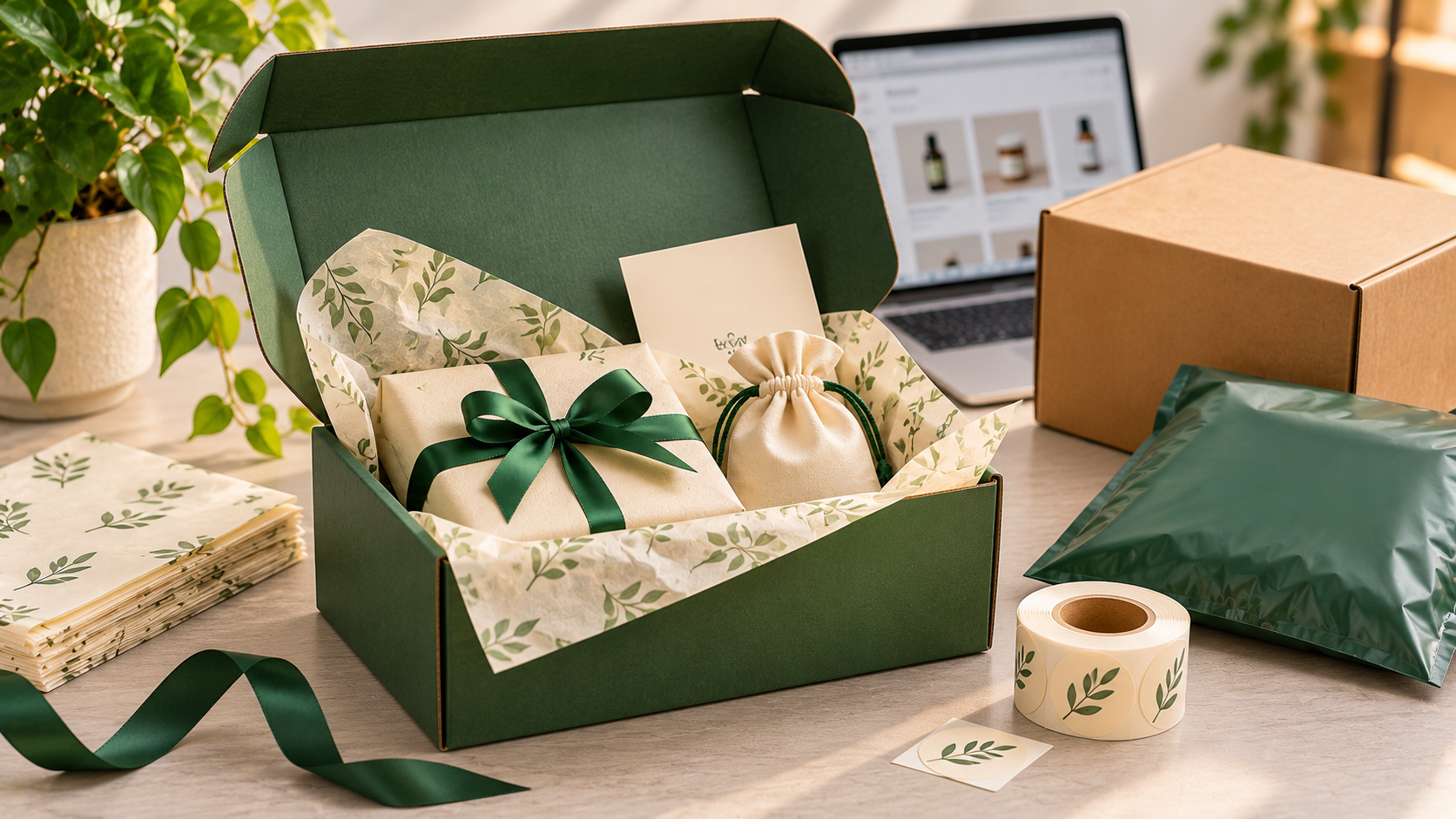
A customer orders a $65 skincare set from your Shopify store. A few days later, it arrives in an ordinary brown shipping box with loose packing material and a generic receipt. Everything is intact, and the delivery was on time, but nothing about the experience feels particularly memorable. Now imagine that same order arriving in a beautifully designed box with coordinated tissue paper, a carefully arranged product insert, and a small branded card tucked inside. Suddenly, the purchase feels like something special.
That’s the opportunity custom packaging creates for Shopify businesses. Your online storefront might feature professional photography, beautifully designed product pages, and a carefully developed brand identity, but customers experience the physical packaging when their orders arrive. It’s one of the few opportunities ecommerce brands have to connect with shoppers beyond a screen.
The right packaging doesn’t have to be complicated or expensive. From branded shipping boxes and lightweight poly mailers to decorative pouches and custom tissue paper, Shopify retailers have plenty of ways to make deliveries more recognizable, attractive, and functional. The challenge is choosing packaging that supports the products, protects merchandise during shipping, and creates a consistent experience without making fulfillment unnecessarily expensive.
Why Custom Packaging Matters for Shopify Stores
Shopify lets businesses create attractive online stores, manage inventory, accept payments, and sell products across channels. Yet the customer experience after checkout is just as important as the shopping process itself. Once an order leaves the warehouse, the shipping package becomes one of the most visible representations of the brand.
A plain cardboard box can get the job done, but it doesn’t necessarily communicate anything about the company that sent it. Custom packaging allows retailers to incorporate recognizable colors, logos, patterns, and finishing details into the delivery experience. These elements help create continuity between the online storefront and the physical merchandise customers receive.
Packaging can also contribute to customer retention by making purchases feel more considered. A shopper who receives an attractive, carefully arranged order may be more inclined to remember the brand, share a photograph, or consider another purchase. These outcomes aren’t guaranteed, but thoughtful packaging creates an additional opportunity to leave a positive impression.
The strongest ecommerce packaging accessories work together to create that impression. Tissue paper, protective inserts, decorative ribbon, and branded stickers can turn ordinary shipping materials into a cohesive presentation while helping keep merchandise organized during delivery.
Choose the Right Packaging for Your Shopify Products
No single packaging solution works for every Shopify store. An apparel company shipping lightweight T-shirts has different requirements than a candle business sending fragile glass containers or a beauty retailer shipping several small products in the same order. Choosing the right packaging begins with understanding the merchandise and how customers receive it.
Product dimensions, weight, fragility, shipping distance, and order combinations should all influence packaging decisions. The goal is to avoid paying for unnecessary space or materials while maintaining adequate protection and an attractive presentation. A smaller, appropriately designed package can often create a more polished experience than an oversized box filled with loose packing materials.
Custom Poly Mailers for Apparel and Soft Goods
Poly mailers are a practical option for Shopify businesses selling clothing, accessories, fabric products, and other merchandise that doesn’t require rigid protection. They’re lightweight, relatively compact, and available in different sizes and constructions. Their printable exterior also gives retailers a convenient way to display brand colors, logos, and graphics.
For example, a streetwear company might use black poly mailers with a bold contrasting logo, while a children’s clothing store could choose playful colors and simple illustrations. A premium fashion brand might prefer a restrained design with a minimal logo and coordinated interior packaging. These choices allow the delivery to reflect the same visual identity customers recognize from the online store.
Many businesses begin with a single mailer design that accommodates several product categories. As order volume grows, additional sizes or seasonal variations can be introduced to create a more tailored presentation. Well-designed custom poly mailers can provide practical shipping functionality while carrying the brand beyond the checkout page.
Custom Shipping Boxes for Fragile and Premium Products
Shipping boxes are generally better suited to merchandise that needs structural protection. Candles, glassware, skincare bottles, electronics accessories, home décor, and curated product bundles may require corrugated packaging with appropriate cushioning or dividers. The right box should accommodate the products securely without leaving excessive empty space.
Custom printing lets businesses add branding to the outside of their shipping boxes, while interior printing can create an extra visual moment when customers open the package. Some retailers prefer simple exterior graphics with more decorative details inside. Others use a consistent color palette across the entire package, including the box, tissue paper, and inserts.
The key is remembering that a shipping box must still perform its primary function. Decorative finishes shouldn’t compromise durability, closure integrity, or product protection. Businesses evaluating custom shipping boxes should consider shipping conditions, product dimensions, construction, and branding together rather than treating packaging design as an isolated decision.
Gift Boxes and Pouches for Premium Merchandise
Some Shopify products benefit from a presentation package inside the shipping container. Jewelry, watches, fragrances, accessories, and luxury beauty products are good examples. These items may arrive in a rigid gift box, decorative pouch, or structured presentation case that’s designed to make the product feel more special once the shipping materials are removed.
Gift boxes and pouches can also help retailers offer bundled products or gift-ready purchases. A jewelry brand might place a bracelet inside a fabric pouch before securing it within a shipping box. A cosmetics retailer could use a rigid presentation box to organize several products into a coordinated set.
These details help create a more intentional unboxing experience, especially for customers buying merchandise as a gift. Retailers can choose materials and finishes that complement their brand identity while ensuring the interior packaging works with their shipping and handling requirements.
Create an Unboxing Experience Customers Remember
The moment a customer opens an order is an opportunity to reinforce the brand experience established online. Rather than focusing exclusively on the exterior shipping package, Shopify merchants should consider what customers see as they remove each layer of packaging.
A simple approach is to begin with branded tissue paper, followed by a neatly arranged product and a small printed insert. More elaborate presentations might incorporate fitted compartments, decorative seals, printed interior panels, or coordinating gift boxes. The specific combination depends on the product category, price point, and overall brand identity.
An effective unboxing experience doesn’t necessarily require several layers of packaging. In fact, too many decorative components can make an order frustrating to open. The best designs balance anticipation with convenience, allowing customers to access their purchases easily while still enjoying a thoughtful presentation.
Businesses that want a memorable unboxing experience can focus on coordinated materials, product placement, and a consistent visual style. Each component should add real value rather than simply adding another item to the package.
Use Packaging Accessories to Reinforce Your Brand
Packaging accessories offer Shopify retailers a flexible way to improve presentation without immediately investing in completely new shipping containers. For smaller businesses, this can be an especially practical starting point. A standard shipping box becomes more distinctive when paired with branded tissue paper, a decorative sticker, and a simple printed card.
As a brand develops, accessories can evolve alongside its packaging collection. Businesses may introduce printed ribbons, custom inserts, hang tags, or seasonal finishing details while maintaining the same basic shipping structure. This flexibility makes it easier to adjust the presentation for product launches, limited collections, and special occasions.
Several accessories are worth considering:
- Branded Tissue Paper: Adds color, helps organize products, and creates a more coordinated interior presentation.
- Custom Stickers: Can seal tissue paper, decorate boxes, or reinforce recognizable brand elements.
- Printed Inserts: Provide product instructions, care information, or a short message from the business.
- Decorative Ribbon: Creates a gift-ready appearance for selected merchandise and premium collections.
- Fitted Inserts: Help position products securely while improving the appearance of gift boxes and product sets.
- Branded Tape: Extends the visual identity to shipping containers without requiring fully printed boxes.
Selecting the right custom packaging accessories largely depends on understanding which details will contribute most to the customer experience. A beauty business might prioritize tissue paper and printed inserts, while an apparel brand could focus on stickers and hang tags. The most effective combination complements the product without adding unnecessary packing steps.
Keep Packaging Costs Under Control as Your Shopify Store Grows
One of the biggest challenges for growing ecommerce businesses is balancing packaging quality with operational expenses. Custom packaging can improve brand presentation, but businesses still need to account for material costs, shipping expenses, storage requirements, and the time required to pack each order.
A Shopify business shipping 20 orders a week may have the flexibility to assemble elaborate gift presentations. That same process becomes more demanding when the business begins shipping hundreds of orders each day. Packaging that looks beautiful in a product photograph may not be the most practical choice for a busy fulfillment operation.
A scalable packaging strategy often begins with a small collection of dependable materials. Businesses can select a few box or mailer sizes that accommodate their most common products and use consistent branding across those formats. Decorative accessories can then be added selectively based on product value, gifting requirements, or promotional campaigns.
Before ordering custom packaging, retailers should evaluate several operational factors:
- Package Dimensions: Choose sizes that fit common order combinations without excessive unused space.
- Material Costs: Compare packaging structures and finishes based on the presentation required.
- Shipping Weight: Consider how packaging materials affect total shipment weight and carrier charges.
- Storage Space: Account for how boxes, mailers, and accessories will be stored before use.
- Packing Speed: Test how quickly employees can assemble and seal packages.
- Inventory Requirements: Plan packaging quantities around realistic sales volume and purchasing needs.
Testing several packaging configurations before committing to larger quantities can help identify practical problems early. Businesses should also monitor damaged shipments, packing time, and customer feedback when evaluating whether a packaging change is worthwhile.
Match Your Packaging to Your Shopify Brand Identity
A Shopify storefront communicates its brand through typography, colors, photography, product descriptions, and overall design. Packaging should feel like a natural extension of those elements, not a completely separate visual experience.
A minimalist skincare company might choose ivory boxes, understated printing, and soft neutral tissue paper. A streetwear label could use bold typography and contrasting colors, while a premium jewelry retailer might prefer rigid boxes with metallic finishing details. Each design can communicate a different personality while still meeting practical packaging requirements.
Consistency becomes especially valuable when businesses sell through multiple channels. A retailer operating a Shopify store, physical boutique, and wholesale distribution program can benefit from recognizable packaging elements across all three. Customers should be able to connect the merchandise and presentation with the same brand regardless of where the purchase originated.
This doesn’t mean every package must look identical. Different products may require different structures, materials, or levels of protection. Maintaining a shared color palette, graphic treatment, and recognizable branding creates cohesion while allowing each product category to use the packaging it needs.
Plan Seasonal Packaging Without Redesigning Everything
Seasonal collections give Shopify retailers a chance to introduce fresh packaging designs without changing their entire brand presentation. Holiday promotions, product launches, anniversary collections, and gift-focused campaigns can all benefit from special packaging details.
The most efficient approach is often to retain the existing packaging structure while introducing seasonal accessories or printing variations. A clothing brand might use its usual mailer with a holiday-themed sticker and coordinated tissue paper. A beauty retailer could introduce a decorative sleeve around an existing gift box, while a jewelry company might offer a limited-edition pouch for seasonal purchases.
This approach creates a sense of occasion while keeping the core packaging system consistent. Businesses can also plan seasonal quantities more carefully and avoid committing to large amounts of specialized packaging that may be difficult to use after the promotion ends.
Attractive holiday retail packaging can incorporate gift boxes, shopping bags, decorative ribbons, and coordinated accessories without redesigning every packaging component. For Shopify merchants, the opportunity is to make seasonal purchases feel special while keeping fulfillment practical.
Measure Whether Your Custom Packaging Is Working
Custom packaging should support both brand presentation and business performance. While it’s hard to assign a precise financial value to an attractive shipping box, Shopify retailers can track practical indicators to see whether their packaging choices are delivering real results.
Customer feedback is a good starting point. Post-purchase surveys can ask shoppers about packaging quality, ease of opening, and whether products arrived safely. Customer service inquiries can also reveal whether certain packaging materials are creating problems during delivery.
Businesses should monitor shipment damage rates, replacement costs, and packing time alongside packaging expenses. If a new box structure reduces damaged orders but significantly increases shipping costs, the business needs to evaluate the complete financial picture. Similarly, a decorative presentation that requires several additional minutes per order may not scale efficiently.
Repeat purchases, customer photographs, and social media mentions can provide additional context about the brand experience, although these results shouldn’t automatically be attributed to packaging alone. The goal is to identify packaging decisions that improve presentation while supporting reliable and efficient fulfillment.
Build a Better Shopify Brand Experience With Prime Line Packaging
Your Shopify store may be where customers first encounter your brand, but packaging determines how that brand arrives at their doorstep. From the exterior shipping container to the smallest interior finishing detail, every component contributes to the experience of receiving and opening an order. Choosing the right materials can help create attractive presentations while supporting the practical demands of ecommerce fulfillment.
At Prime Line Packaging, we help businesses develop custom boxes, shopping bags, mailers, pouches, and packaging accessories that reflect their products and brand identities. Whether you’re refining an existing packaging collection or introducing a new product line, the goal is to create packaging that balances structure, protection, appearance, and operational requirements.
Bring us the product. We’ll help build the packaging around it. Give your Shopify customers a delivery experience that feels every bit as considered as the products they’ve purchased.
Frequently Asked Questions About Shopify Custom Packaging
What Is Shopify Custom Packaging?
Shopify custom packaging refers to branded boxes, mailers, pouches, tissue paper, and other packaging materials used to fulfill orders from a Shopify store. These materials generally come from packaging suppliers rather than being created automatically through the ecommerce platform. Businesses can choose packaging designs that reflect their brand identity while protecting their merchandise. The specific materials depend on the products being sold and how orders are shipped.
Can I Use Custom Boxes for Shopify Orders?
Yes, Shopify merchants can use custom shipping boxes to fulfill orders. Businesses can work with packaging suppliers to select box sizes, construction styles, printing, and finishing details that suit their products. Make sure the boxes protect items during transit and fit the merchandise properly. Packaging dimensions and weight should also be considered when configuring shipping operations.
What Is the Best Custom Packaging for a Small Shopify Business?
The best starting point depends on the products and available budget. Apparel businesses may find branded poly mailers practical, while stores selling fragile merchandise may need protective corrugated boxes. Smaller retailers can also introduce stickers, tissue paper, and printed inserts before investing in more elaborate packaging. A simple, consistent system is often easier to manage as order volume increases.
How Much Does Custom Packaging Cost for Shopify Stores?
Custom packaging costs vary based on materials, dimensions, printing requirements, finishing treatments, and order quantities. A simple printed mailer and a premium rigid gift box will have very different production costs. Businesses should also account for shipping, storage, packing time, and potential inventory requirements. Requesting estimates for several packaging configurations can help determine which option fits the budget.
Can Custom Packaging Improve Customer Retention?
Thoughtful packaging can contribute to a positive customer experience and help reinforce brand recognition. An attractive, carefully prepared order gives shoppers another opportunity to interact with the business beyond its website. Packaging alone doesn’t guarantee repeat purchases, but it can complement product quality, customer service, and reliable delivery. Retailers can monitor customer feedback and repeat purchase trends when evaluating packaging changes.
Are Poly Mailers or Boxes Better for Shopify Shipping?
Poly mailers often suit lightweight, flexible products such as clothing and certain accessories. Boxes provide more structural protection and may be better for fragile, heavy, or irregularly shaped merchandise. The best choice depends on product characteristics, shipping conditions, and packaging requirements. Some businesses use both formats to accommodate different categories within their catalog.
Can I Add Branded Inserts to Shopify Orders?
Yes. Printed inserts, thank-you cards, product care instructions, and promotional cards can be included in orders. These materials can reinforce branding while giving customers useful information. Businesses should keep inserts concise, relevant, and easy to handle during fulfillment. A simple card with product instructions may offer more practical value than several unrelated promotional materials.
How Do I Choose a Custom Packaging Supplier for Shopify?
Look for a supplier that understands ecommerce shipping requirements and retail presentation. Ask about available materials, construction styles, printing options, sample availability, minimum quantities, and production schedules. Share product dimensions, weights, and expected order combinations so packaging recommendations match real fulfillment needs. A supplier that can coordinate several packaging components may also help maintain consistency across a growing product catalog.