Is Your Packaging Fulfillment-Ready? A Guide for Brands
Beautiful packaging that fails a fulfillment center’s dimensional scan, jams a conveyor, or can’t accommodate a return is more than a logistics headache — it’s a brand liability. As retail fulfillment grows more complex, the brands that win are the ones that build operations-readiness into their packaging strategy from the start.
Here’s what that actually looks like.
Fulfillment Centers Have Rules — Know Them Before You Spec
If your product ships through Amazon FBA, a 3PL, or a major retailer’s distribution network, your packaging must comply with specific dimensional and structural requirements — or face rerouting, re-boxing fees, or outright rejection.
Amazon’s Seller Incentives Packaging Program (SIPP), for example, classifies products as sortable or non-sortable based on package dimensions. Non-sortable items — those exceeding 18″ x 14″ x 8″ or 20 lbs — are processed separately and at higher cost. Walmart Fulfillment Services similarly caps standard case dimensions at 25″ x 20″ x 14″ and 30 lbs. Exceeding these thresholds means your product bypasses automation entirely.
Beyond dimensions, barcode placement matters. Fulfillment centers rely on automated scanning, and labels positioned on seams, curved surfaces, or corners frequently misread. A clear, flat labeling zone — typically the broadest face of the box — reduces scan errors and keeps pick-pack workflows moving.
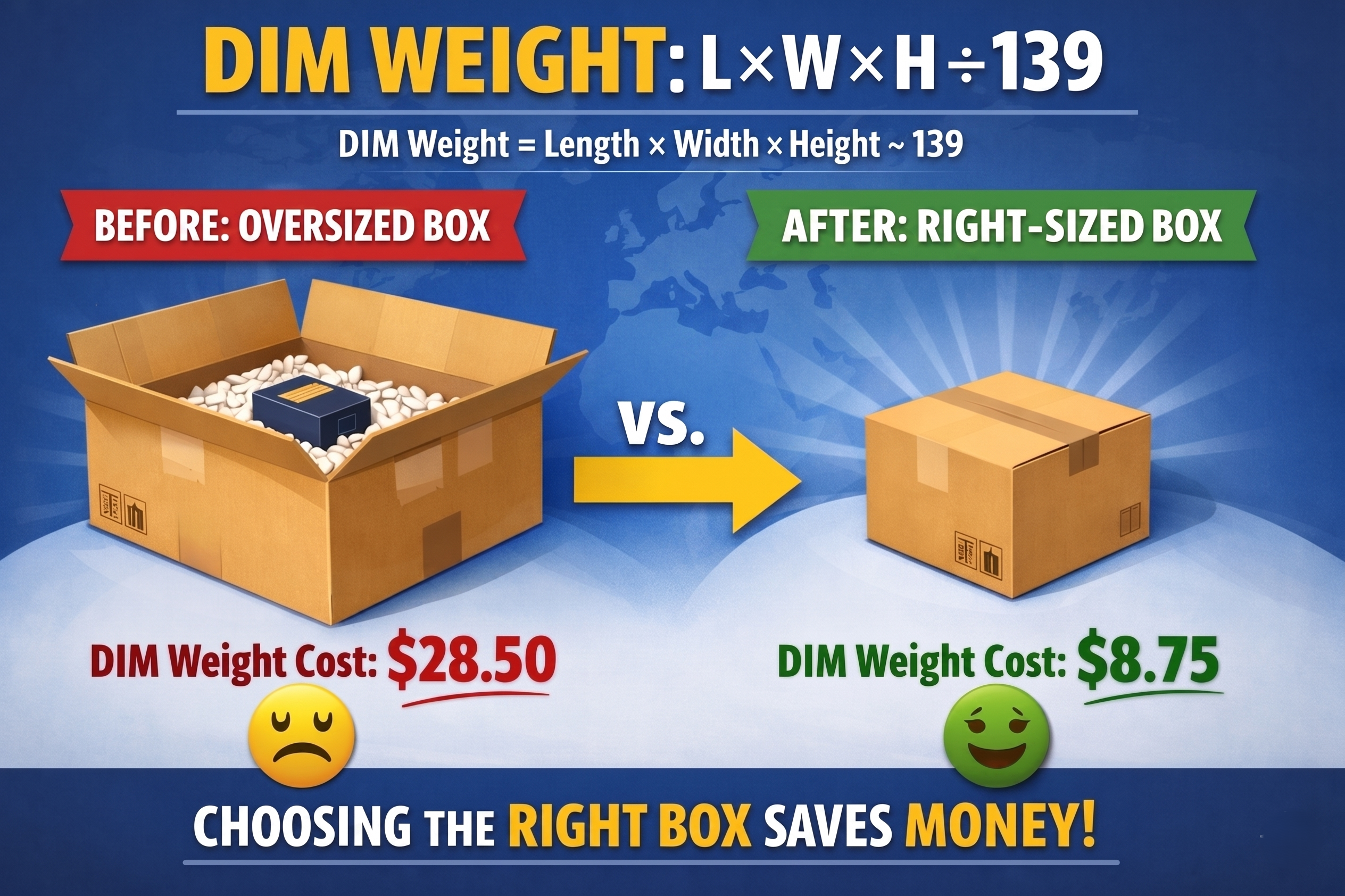
Dimensional (DIM) weight pricing is another variable that gets overlooked at the design stage. As of mid-2025, both FedEx and UPS now round up every fractional inch before calculating billable weight — meaning even a slightly oversized box can push you into a higher cost tier. Right-sizing your packaging isn’t just an aesthetic choice; it directly affects your shipping costs at scale.
Mixed-SKU Orders Require Modular Thinking
Multi-item orders are now the norm, not the exception. Whether you’re shipping a skincare set, a gift bundle, or a mixed-apparel order, your packaging needs to accommodate variable configurations without sacrificing protection or presentation.
The most effective approach is modular insert systems: removable dividers and partitions that can be reconfigured for different product combinations without requiring a new box size. This is especially valuable for brands managing seasonal collections or product launches, where SKU configurations shift frequently.
Corrugated boxes can be built with custom inserts designed around your specific product range — holding items securely in transit while keeping the unboxing experience intentional and on-brand. For softer goods, custom pouches within a shipper box add structure and a premium layer without adding significant weight or cost.
The goal is to standardize your box footprint while building flexibility into the interior — fewer box sizes to manage in the warehouse, with inserts doing the work of product accommodation.
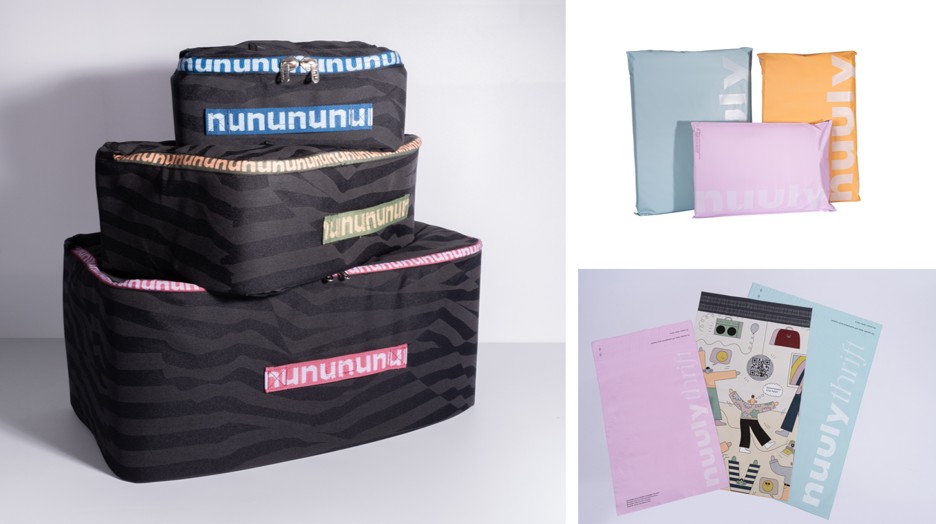
A strong real-world example of this principle in action: Nuuly, the subscription clothing service, ships multiple garments to customers each month in custom-designed packing cubes — sized and structured to hold several items neatly, while also functioning as the return vessel when customers send pieces back. Produced by Prime Line, the packing cubes do triple duty: organizing the outbound shipment, communicating brand identity, and eliminating the need for separate return packaging entirely. Their branded flat mailers handle lighter-weight shipments within the same program, keeping the packaging system consistent across order types. That kind of systems thinking — where a single packaging solution handles fulfillment, unboxing, and returns — is exactly what operations-ready design looks like in practice.
Returns Are Part of the Packaging Brief

According to Capital One Shopping Research, online return rates average 24.5% compared to just 8.72% for in-store purchases — nearly three times higher. That gap is partly a product problem — but it’s also a packaging problem. Unfriendly-return packaging increases customer friction, can drive negative reviews, and adds labor cost to your reverse logistics.
Return-ready packaging has three components:
Resealable closures. Poly mailers with dual adhesive strips allow customers to reseal the package and use the original mailer for the return — no hunting for a box, no tape required. This is table stakes for apparel and accessories brands.
Clear return instructions. Printed instructions on the interior of the mailer or inside the box lid remove ambiguity from the process. Customers shouldn’t need to visit your website to figure out how to return an item.
Damage-evident design. Security features like tamper-evident closures signal to the customer that the package hasn’t been opened — and give you documentation if a claim is needed. They also reduce the likelihood of fraudulent returns.
Warehouse Handling Is a Physical Environment — Design Accordingly
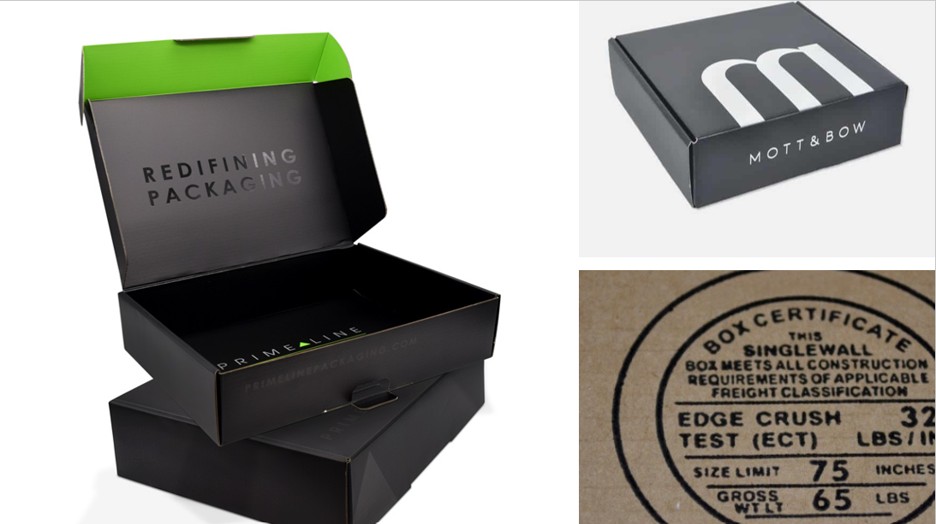
Packaging that looks pristine in a photoshoot may not survive a real fulfillment workflow. Boxes travel across conveyor belts, get stacked on pallets, and sit in environments with variable temperature and humidity. Structural specs matter.
Stacking strength is measured by Edge Crush Test (ECT) rating. For standard e-commerce shipments, 32 ECT corrugated is the baseline; heavier or fragile products warrant 44 ECT or higher. Under-specifying here leads to crushed product, damaged goods, and returns.
Conveyor compatibility means avoiding oversized handles, protruding embellishments, or closures that catch on sorting equipment. Abrasion-resistant coatings also help — Packaging World Insights notes that scuff-resistant surfaces maintain brand presentation integrity through automated handling environments that standard printing finishes don’t survive.
Box dimensions should also account for pallet configuration. Standard U.S. pallets are 48″ x 40″; packaging designed to tessellate efficiently onto that footprint reduces wasted space and lowers freight cost. It’s a detail that rarely makes it into a packaging brief but has real impact at volume.
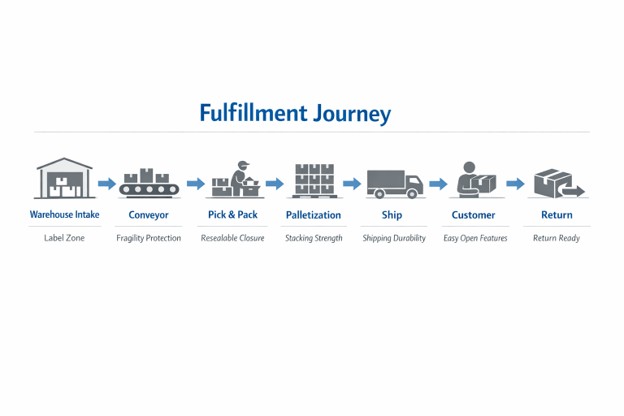
Cross-Channel Fulfillment Needs Packaging That Does Double Duty

BOPIS (Buy Online, Pick Up In-Store) now accounts for an estimated $154 billion in U.S. retail sales — and growing. As brands use stores as fulfillment nodes, packaging that was designed purely for warehouse shipping often fails in the store environment.
Ship-from-store operations require packaging that’s quick to assemble, clearly labeled, and appropriate for hand-off to a customer at a service desk — not just drop-shipping. That means clean, presentable exteriors (not just functional shippers), manageable size for store staff to handle, and enough branded consistency that the BOPIS order feels as intentional as an in-store purchase.
Inventory flexibility is also a factor. Brands running cross-channel fulfillment benefit from packaging that works across contexts — a corrugated mailer that looks as good handed over at a pickup counter as it does arriving at a doorstep reduces the need to maintain separate packaging SKUs for different fulfillment channels.
The Integration Opportunity
Fulfillment-ready packaging isn’t a compromise on brand — it’s a higher bar. It requires thinking upstream about how packaging will be scanned, sorted, stacked, shipped, and potentially returned before it ever reaches a customer’s hands.
The brands that get this right treat packaging as a systems problem, not just a design one. That means involving operations stakeholders early, testing against real fulfillment center requirements, and working with a supplier who understands both sides.
Prime Line Packaging works with retail brands across the U.S. to develop packaging collections that meet the demands of modern fulfillment — from corrugated shippers and poly mailers to modular inserts and return-ready closures. If you’re rethinking your e-commerce packaging strategy, let’s start a conversation.