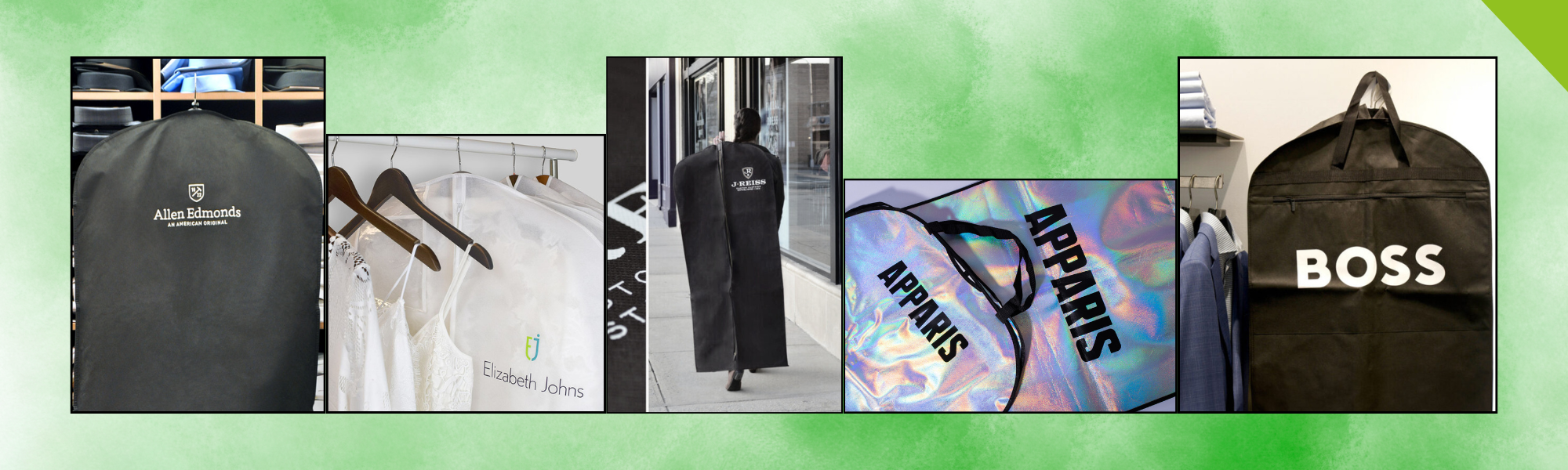
Whether your brand ships 50 orders a month or 5,000, the packaging protecting those garments carries your story forward into customers’ lives. Custom garment bags have transcended their utilitarian origins to become powerful brand assets across the fashion industry—from emerging DTC brands to established retailers, forward-thinking companies are reimagining garment bags as customer retention tools rather than cost centers.
The branded garment bags backstage at fashion weeks aren’t just protective coverings—they’re silent brand ambassadors. Whether you’re packaging pieces for runway shows or shipping orders from your boutique, the same strategic principles apply. Reusable garment bags travel to hotel rooms, appear in closets worldwide, and increasingly serve dual purposes—protecting purchases at retail while doubling as practical travel companions.
Garment bag packaging has quietly evolved from utilitarian necessity to strategic branding tool. With California’s SB 54 setting precedent for packaging EPR requirements—including recyclability outcomes and producer responsibility frameworks that are influencing national packaging decisions—fashion brands are recognizing sustainable garment bags as critical tools for navigating regulatory compliance, elevated unboxing experiences, and the practical realities of consumer travel needs. The global reusable packaging market projected to reach $167.64 billion by 2034 reflects this shift toward packaging longevity.
When clothing rental pioneer Nuuly reimagined their subscription model, they replaced rigid corrugated boxes with flexible, reusable garment bag cases made from post-consumer recycled materials—creating soft-sided solutions that collapse for storage yet protect garments through repeated shipping cycles while customers use them as travel garment bags and packing cubes.

Material Innovation for Custom Garment Bags: Beyond the Basic Dust Cover
Canvas garment bags project heritage and durability—the choice for brands targeting consumers who value multi-generational quality. The natural fiber tells a timelessness story and responds beautifully to water-resistance treatments that enhance longevity. Canvas’s substantial hand-feel communicates quality and permanence, making it ideal for luxury positioning.
Woven polypropylene (PE) represents the workhorse category in sustainable garment bag packaging. Cost-effective and durable, woven PE bags accept high-quality printing and resist moisture naturally. Innovations in weave density and finishing treatments continue elevating perceived value, enabling brands to achieve premium aesthetics at accessible price points.
Polypropylene nonwoven (PPNW) is one of the most versatile and widely used materials for garment bags. It offers flexibility in both look and cost, depending on weight and finish. For higher-end programs, a heavier PPNW provides a more substantial feel and elevated presentation. For brands working within tighter budgets, lighter-weight PPNW offers a cost-effective solution while still protecting garments effectively. For customers prioritizing sustainability, PPNW can also be produced using RPET materials, delivering a more eco-conscious option without sacrificing performance. As with other breathable materials, the right selection depends on the customer’s brand positioning, budget, and overall packaging goals.
Breathable material technologies represent the frontier. These engineered materials allow moisture vapor transmission while blocking dust and light. Growing adoption of recycled materials and advanced polymers reflects brands’ response to Extended Producer Responsibility regulations, with sustainable options now accounting for significant market share across North America and global markets.
Vinyl and PEVA options provide exceptional clarity and moisture protection. Clear vinyl garment bags offer product visibility that’s valuable in retail environments, bridal showrooms, and rental applications where customers need to see the garment before opening the bag. PEVA (polyethylene vinyl acetate) delivers similar protective benefits with enhanced flexibility and a more sustainable profile than traditional PVC, making it popular for brands prioritizing transparency in both materials and presentation.
Cotton brands serving bridal, eveningwear, or investment-piece markets often choose this material for its dual functionality, delivering both performance and the natural fabric aesthetic customers appreciate.

Quick Material Selection Guide:
- Canvas → Heritage brands, luxury positioning, customers who value longevity
- Woven PE → High-volume needs, cost-conscious programs, durable everyday protection
- Breathable Material → Delicate fabrics, long-term storage, technical performance focus
- Vinyl/PEVA → Retail visibility, bridal/rental showrooms, moisture protection with option for product transparency
- Cotton → Bridal/eveningwear, investment pieces, premium with breathability
Need help determining which material aligns with your brand positioning and budget? Consider your typical customer’s usage scenario and how long you want the bag to remain in their life.
Hardware and Construction: The Details That Signal Quality
Closure systems communicate brand values instantly. Heavy-duty zippers with branded pulls suggest permanence. Snap closures offer quick retail access. Drawstring closures signal sustainability through material minimalism.
The hang-tab decision goes deeper than most brands consider. Reinforced grommets distribute weight effectively but require precise placement. Fabric loops offer clean aesthetics but demand quality stitching. For premium garments, the hang-tab becomes a proxy for overall construction integrity.
Corner reinforcements, French seams, and bar-tack stitching separate single-use bags from true reusable packaging. These details cost incrementally more but dramatically extend functional life. Research from TOMRA suggests reuse systems can reduce packaging pollution by up to 66%—a compelling case for durability investment.

Branded Garment Bags: From Logo Placement to Complete Experience
Sophisticated programs treat garment bags as storytelling canvases, not logo billboards. Tonal embossing offers understated luxury—logos reveal themselves through texture and light, appealing to consumers fatigued by overt branding.
Printed panels enable narrative flexibility. Brands reserve premium all-over printing for flagship products while using strategic panels on mid-tier offerings. Digital printing makes smaller runs economically viable, enabling seasonal graphics without prohibitive costs.
Interior liners and integrated dust bags create complete packaging systems. Contrast-color linings provide visual drama. Detachable pouches add perceived value while solving storage challenges.
Hang-tags deserve strategic consideration. QR codes linking to styling videos, authentication, or resale platforms turn passive packaging into active engagement. As circular fashion gains traction with RFID tracking systems enabling lifecycle management, garment bags increasingly companion pieces through multiple owners.

Functional Specifications for Reusable Garment Bags: Protection That Performs
Breathability remains non-negotiable for long-term garment storage. Sealed bags trap moisture, creating ideal mildew conditions. Mesh panels, breathable film zones, or strategic perforations solve this while maintaining dust protection. The challenge involves balancing air circulation with protective coverage based on storage duration and climate.
Transparent ID windows prevent unnecessary handling. For stockrooms managing hundreds of SKUs or consumers with extensive wardrobes, this detail matters. Material choice impacts longevity—rigid vinyl maintains clarity but can crack over time; flexible film resists damage but may cloud.
As garment bags increasingly serve double duty—protecting retail purchases while functioning as travel companions for business trips and destination events—collapsibility and portability become critical specifications. The most versatile designs collapse flat when empty, eliminating wasted luggage space, yet maintain structure when filled. Custom garment bags engineered with travel in mind incorporate features like reinforced carry handles, luggage sleeve compatibility, and sizes optimized for airline carry-on compliance—transforming packaging into a value-added travel accessory that extends brand utility beyond the point of purchase.
Strategic SKU Architecture: Engineering Value Across Price Points
Sophisticated garment bag programs mirror product line tiering. Entry-level items receive simple woven PE bags with screen-printed logos—functional protection maintaining brand presence at accessible cost points. Mid-tier products warrant cotton with zipper closures. Flagship pieces justify canvas or breathable material bags with complete finishing packages.
This tiered approach manages per-unit costs while creating perceived value hierarchy and addressing minimum order quantity realities. Consolidating volume across fewer SKU variations improves pricing while multiple bag styles differentiate product categories.
The packaging-as-marketing ROI calculation extends beyond initial cost. A garment bag with genuine reusability lives in customers’ homes for years, creating thousands of brand impressions at a fraction of traditional advertising costs.
As Extended Producer Responsibility regulations tighten, packaging design decisions are increasingly driven by EPR reporting requirements, with brands seeking earlier collaboration to develop garment bag packaging that optimizes both performance and regulatory compliance. Custom garment bags serve as protective packaging, brand ambassador, and increasingly, a statement about values and craft—a reusable asset that carries brand narrative forward long after the initial transaction.
Key Considerations When Evaluating Garment Bag Programs
When reviewing options with your team, consider these cross-functional perspectives:
For Marketing & Brand Teams: Does this bag extend our brand experience beyond purchase? Will customers want to keep and reuse it? Does it photograph well for social sharing?
For Sustainability Leaders: How does this align with our environmental commitments and public sustainability goals? Can we credibly communicate the bag’s reusability and material story? Does it support our circular economy initiatives?
Interested in exploring how custom garment bags can elevate your brand’s packaging strategy? Reach out to Prime Line Packaging to learn more about branded garment bag solutions tailored to your needs.